Summary
Ancient Egyptian architecture was built for eternity. Houses and palaces were made of mudbrick and have mostly disappeared, but tombs and temples, the houses of the dead and of the gods, were built in stone and still stand after thousands of years. Their forms, the pyramid, the pylon gateway, the column hall and the obelisk, are some of the most recognisable buildings in the world.
Mudbrick for the Living, Stone for Eternity
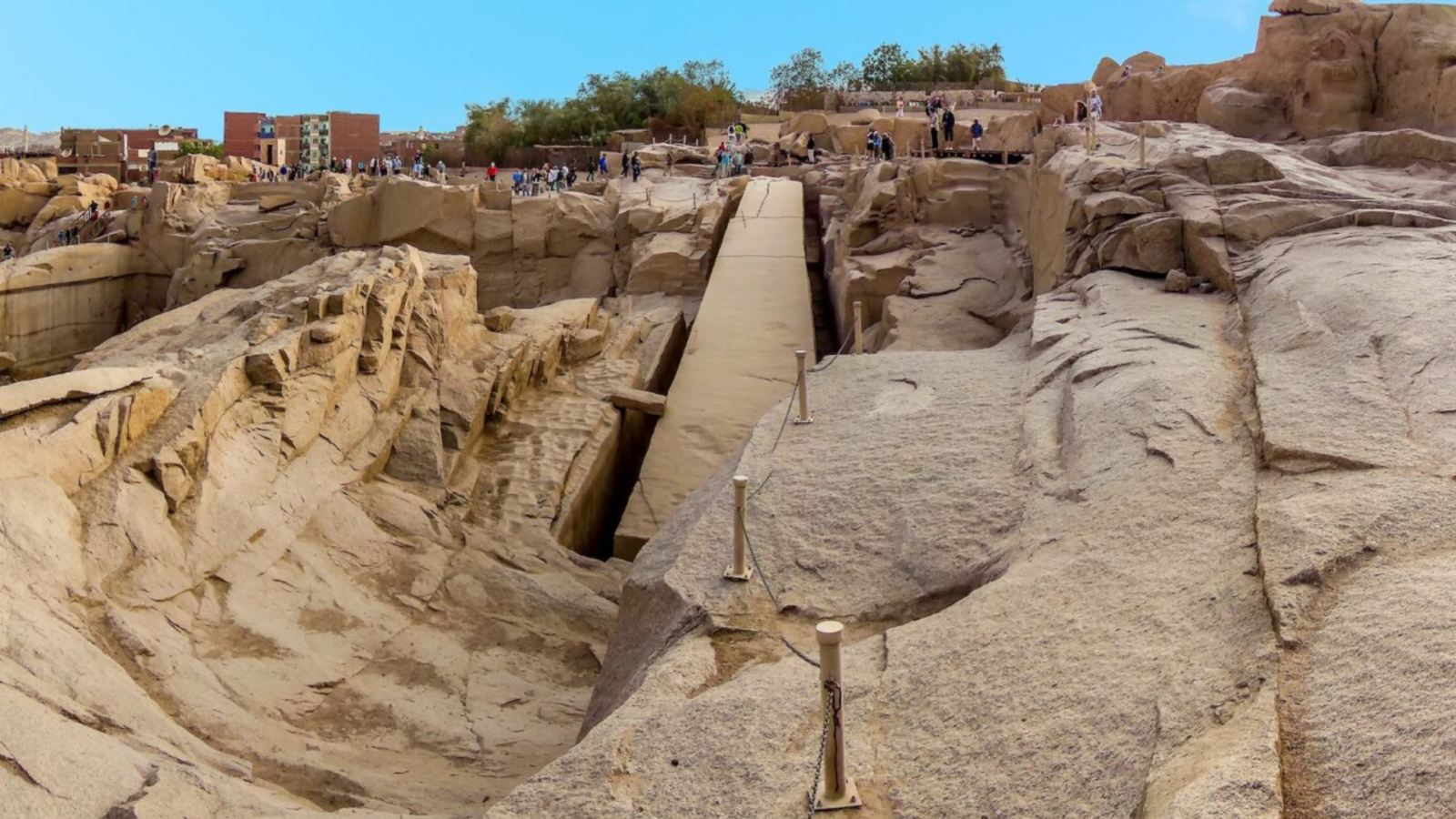
Most Egyptians lived in houses of sun-dried mudbrick, made from Nile mud and straw, and even royal palaces were built of it. Stone, quarried with great effort, was reserved for buildings meant to last forever. Limestone came from the hills along the Nile, sandstone from Gebel el-Silsila in the south, and granite from Aswan, where the pharaohs‘ masons left an unfinished obelisk still lying in the quarry.
From Mastaba to Pyramid
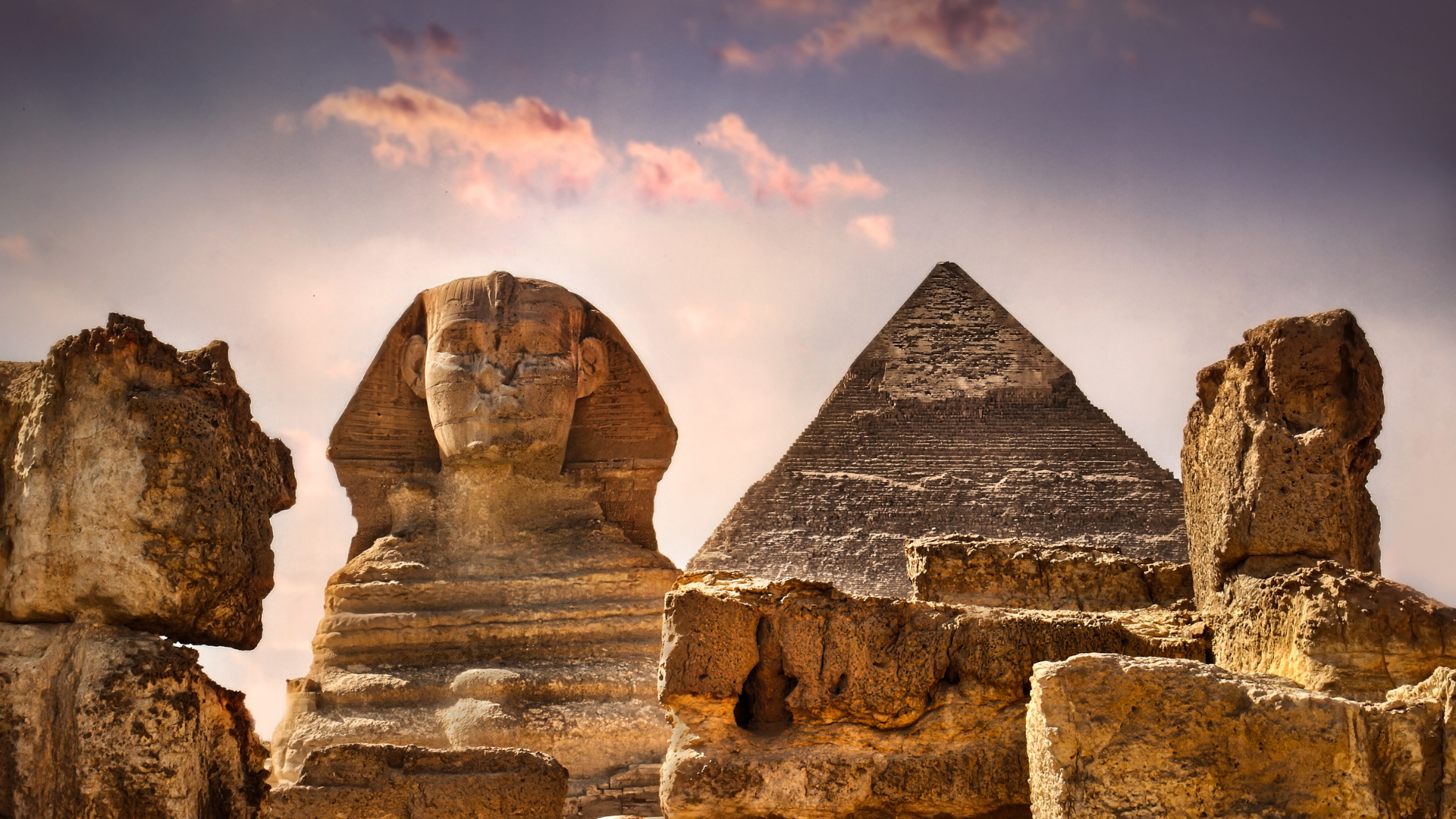
Early kings and nobles were buried under mastabas, flat-topped rectangular tombs. Imhotep’s Step Pyramid of Djoser stacked six of them in stone, and within a century the builders had reached the smooth-sided Red Pyramid and the Great Pyramid. Read how the pyramids were built.
The Plan of an Egyptian Temple

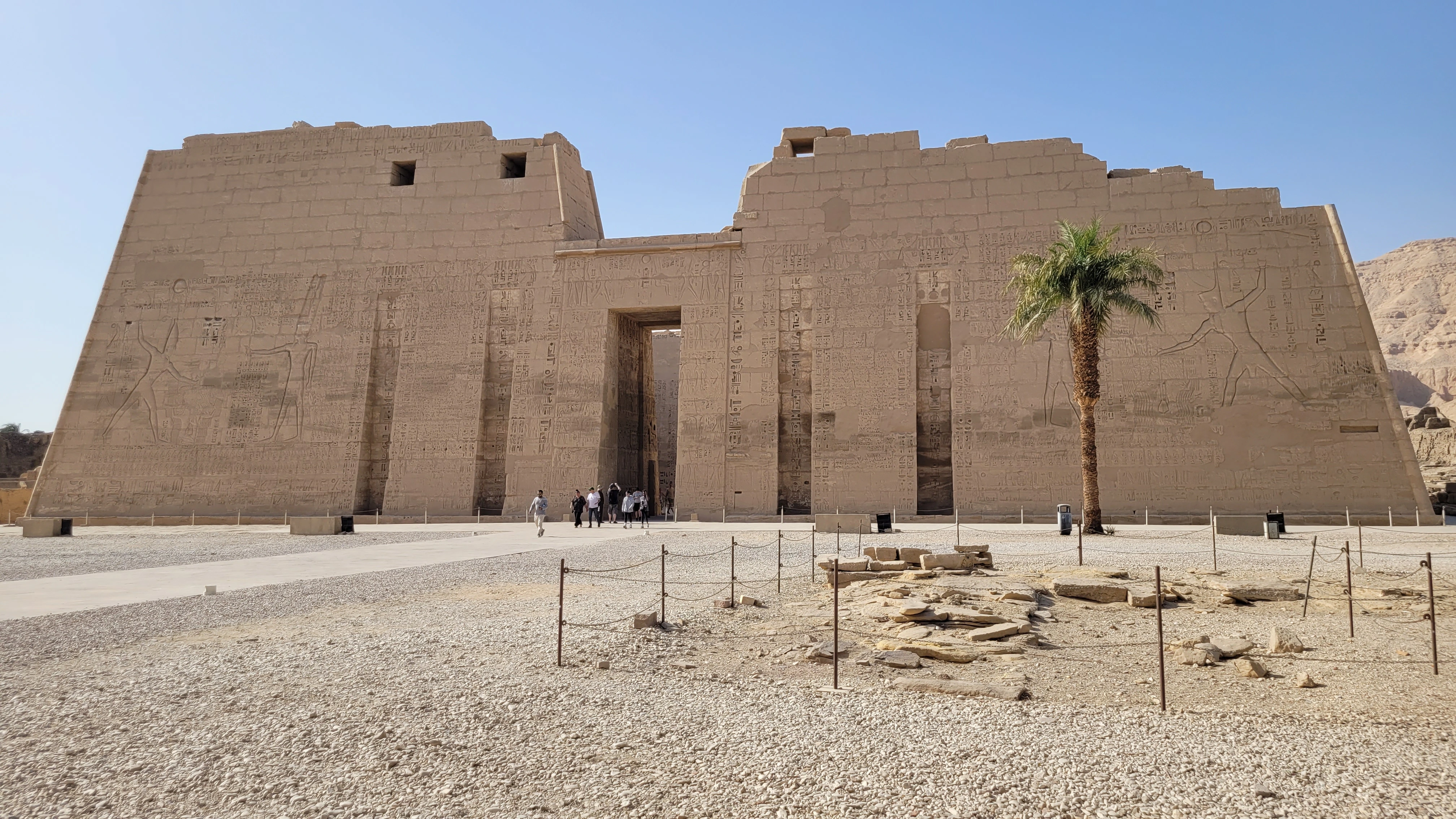
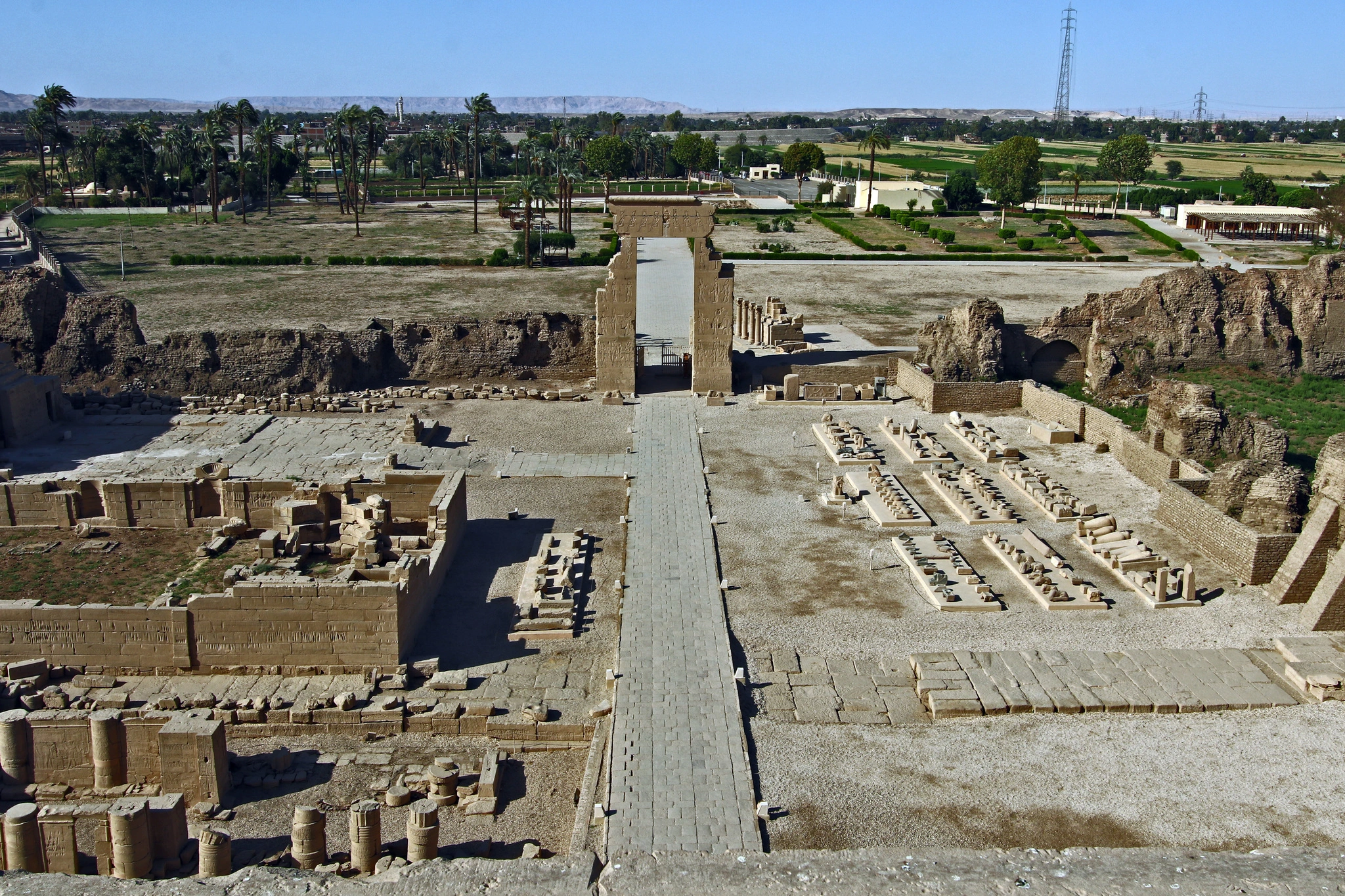
The great cult temples of the New Kingdom and the Ptolemaic period follow the same plan, a journey from the bright outside world into the dark home of the god:
- The pylon: a massive gateway of two towers, carved with the king defeating his enemies. Flagpoles once stood in its niches.
- The open courtyard, often lined with columns, where the public might gather on feast days.
- The hypostyle hall: a roofed forest of columns, lit by small windows high up.
- The sanctuary, where the god’s statue lived in a shrine, entered only by the king and the high priests.
As you walk in, the floor rises and the ceiling drops, and the rooms grow smaller and darker. The temple was a model of the world at creation: the columns are papyrus plants growing from the marsh, and the ceiling is the sky, often painted with stars. Edfu shows the plan complete.
Columns, Obelisks and Avenues
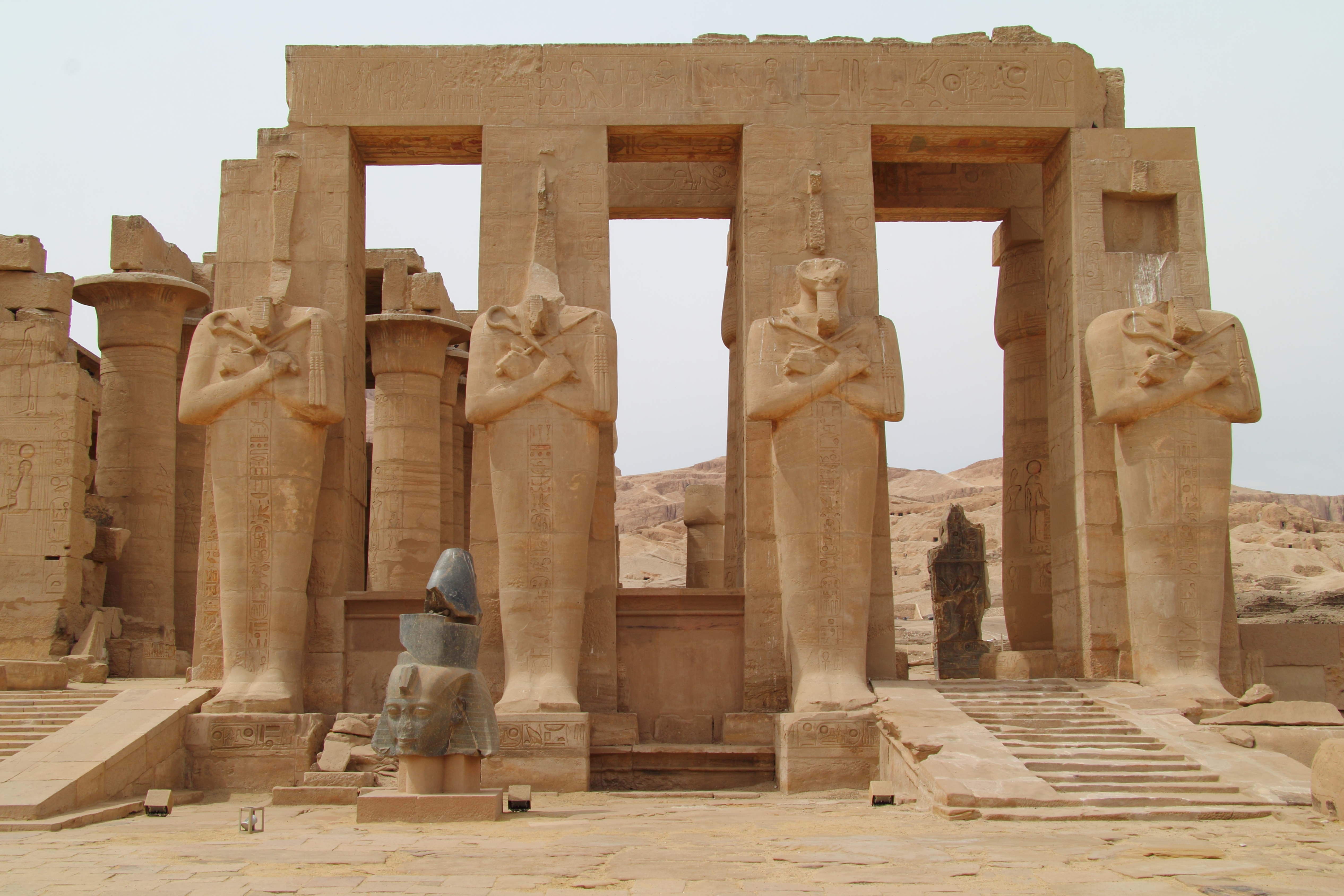
- Columns imitate plants: papyrus (open or closed flowers), lotus and palm. Hathor columns carry the face of the goddess, and Osiride pillars the figure of the king as Osiris, as at the Ramesseum and Abu Simbel.
- The Great Hypostyle Hall at Karnak has 134 columns; the twelve in the central aisle are about 21 metres high.
- Obelisks, single shafts of granite topped with a gilded pyramid, stood in pairs before temple gateways. The unfinished obelisk at Aswan would have been about 42 metres tall. Many now stand in Rome, Paris, London and New York.
- The Avenue of Sphinxes runs 2.7 km between Karnak and Luxor Temple and was reopened in 2021.
Rock-Cut Tombs and Temples
In the New Kingdom, kings stopped building pyramids, which were too easy to rob, and cut their tombs deep into the rock of the Valley of the Kings: long corridors descending to a burial hall, every wall painted with guides to the afterlife. Temples could be carved from cliffs too: the most famous are the two temples of Abu Simbel, cut out of the sandstone by Ramesses II and moved, block by block, to higher ground in the 1960s to save them from Lake Nasser.
8-Day Cairo, Siwa and White & Black Desert Adventure
Planning the trip itself? Start here.
View This TripBuilt to the Sun and Stars
Egyptian builders aligned their monuments with the sky. The pyramids of Giza face the cardinal points almost exactly. The axis of Karnak lines up with sunrise at the winter solstice. At Abu Simbel, twice a year, the rising sun shines 60 metres into the temple to light the statues in the sanctuary.
Masterpieces to See
- Hatshepsut’s temple at Deir el-Bahari, three terraces built against the cliffs by her architect Senenmut.
- Karnak and Luxor Temple, two thousand years of building in one place.
- Edfu and Dendera, complete Ptolemaic temples with their roofs intact.
- Philae, moved stone by stone to an island near Aswan.
- The Giza pyramids and the Step Pyramid.
See them on a Nile cruise, our Luxor tours or a full Egypt tour package. Learn about the gods these temples were built for.
Keep Exploring Ancient Egypt
- Ramesses II
- The Egyptian pharaohs
- How the pyramids were built
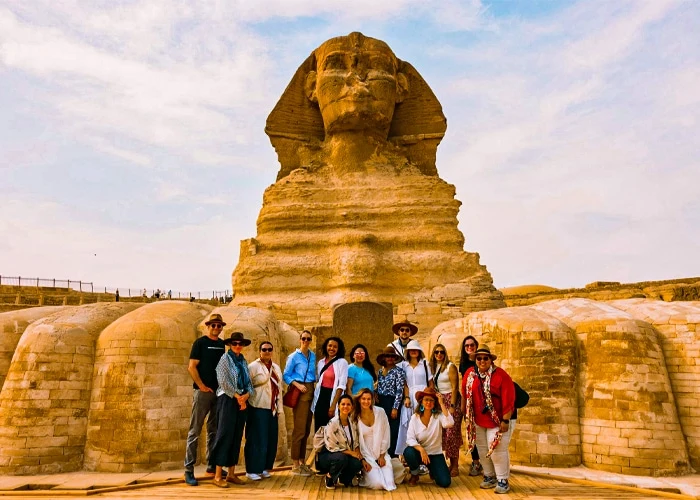
- The Great Sphinx
- Queen Nefertari
- The Old Kingdom
- Ancient Egyptian gods
Ready to see it for yourself? Browse our Egypt tour packages or ask for a tailor-made trip built around the sites you want to see.
Ancient Egyptian Architecture FAQ
What materials did the ancient Egyptians build with?
Mudbrick for houses and palaces, and limestone, sandstone and granite for tombs and temples.
What are the main parts of an Egyptian temple?
The pylon gateway, an open courtyard, a hypostyle hall of columns and the sanctuary of the god.
What is a hypostyle hall?
A roofed hall filled with columns. The largest is at Karnak, with 134 columns.
Why did the Egyptians stop building pyramids?
Pyramids were easy targets for tomb robbers and very costly, so New Kingdom kings cut hidden tombs in the Valley of the Kings instead.
What is the best-preserved temple in Egypt?
The Temple of Horus at Edfu, which still has its roof, walls and sanctuary almost complete.