Summary
The pyramids were built by skilled Egyptian workers, not slaves, using copper tools, wooden sledges, ramps, ropes and the Nile. The Great Pyramid of Khufu, finished around 2560 BC, is made of about 2.3 million stone blocks and was the tallest building on Earth for nearly 4,000 years. Over the last 30 years, archaeologists have found the workers’ town, their tombs, the ramps and even the logbook of a team that carried the stone.
This guide explains what we actually know, and where you can see the evidence for yourself.
From Step Pyramid to True Pyramid
The Egyptians learned to build pyramids by trial and error over about a century:
- Around 2670 BC, the architect Imhotep stacked six stone platforms into the Step Pyramid of Djoser at Saqqara.
- King Sneferu tried to turn a step pyramid into a smooth one at Meidum.
- His Bent Pyramid at Dahshur changes angle halfway up, probably because the walls began to crack.
- His Red Pyramid, also at Dahshur, was the first true smooth-sided pyramid.
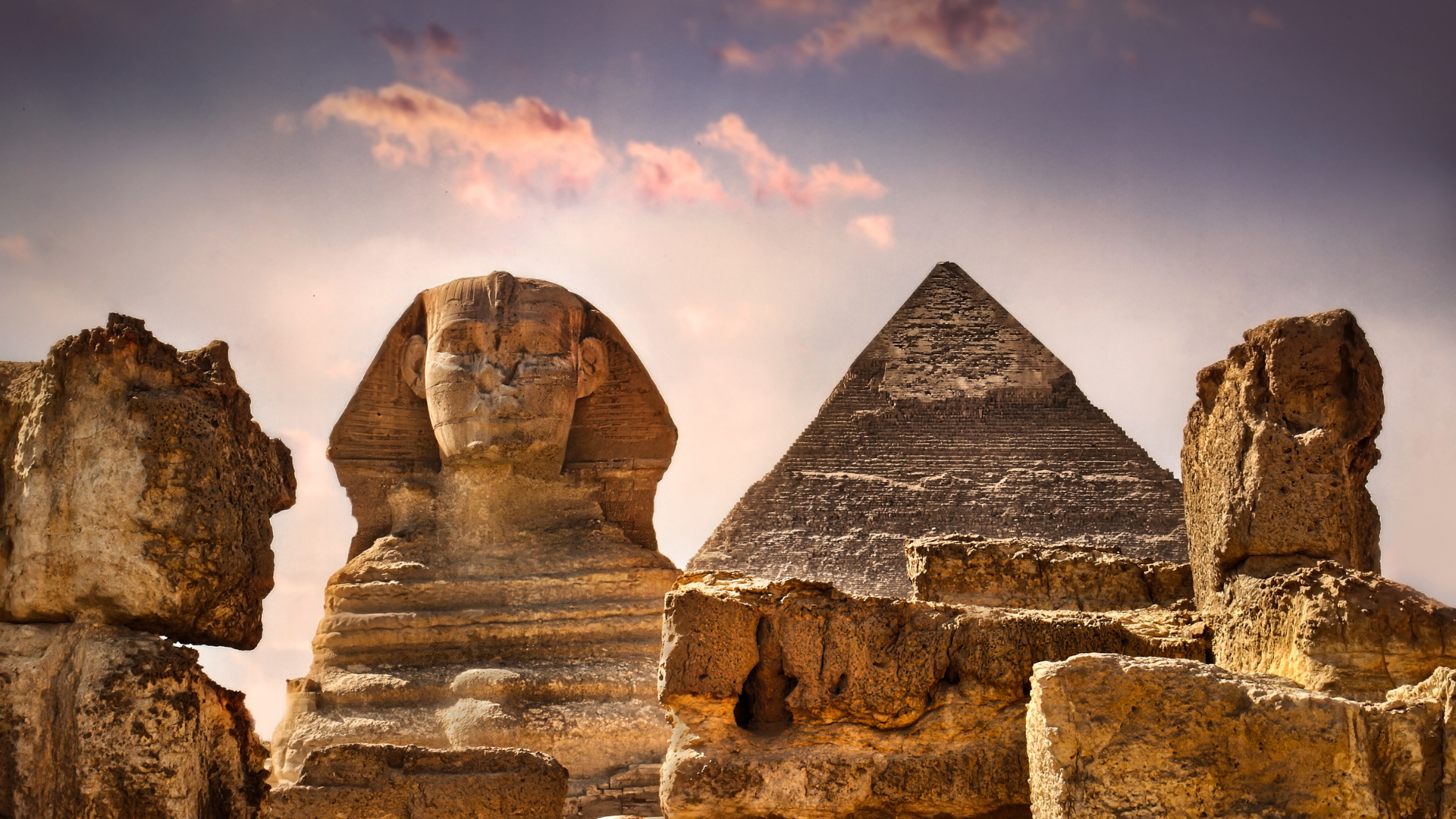
- His son Khufu then built the Great Pyramid at Giza, followed by Khafre and Menkaure.
The Great Pyramid in Numbers
| Great Pyramid of Khufu | |
|---|---|
| Built | About 2580–2560 BC, 4th Dynasty |
| Original height | 146.6 m (about 138.5 m today, without its capstone and casing) |
| Base | About 230 m on each side, almost perfectly square and aligned to true north |
| Blocks | About 2.3 million, averaging around 2.5 tonnes |
| Heaviest stones | Granite beams in the King’s Chamber, some 25–80 tonnes, brought from Aswan |
| Building time | About 20 years (Herodotus’ figure, consistent with Khufu’s reign) |
Where the Stone Came From

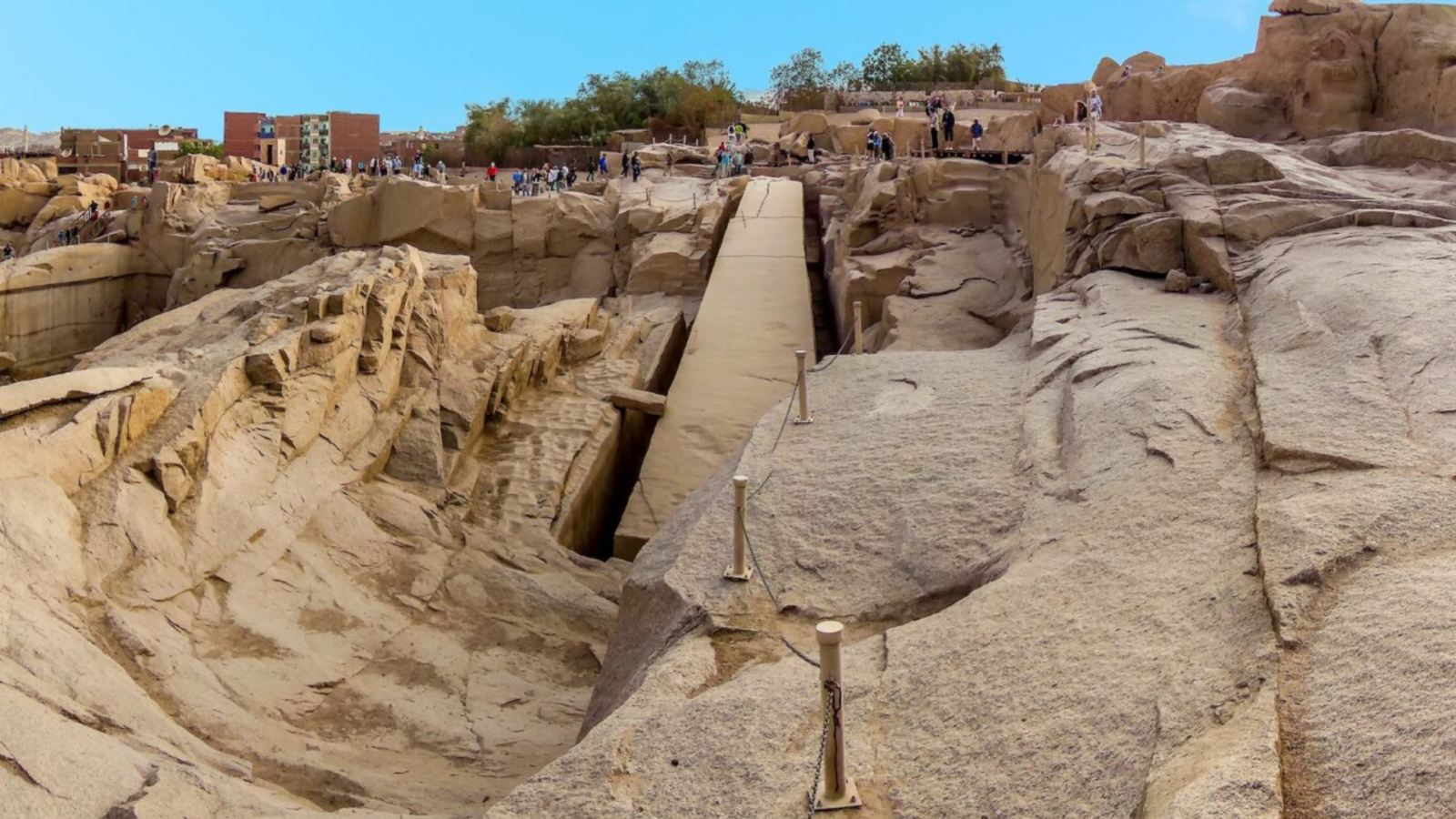
Most of the core blocks were cut on the Giza plateau itself; you can still see the quarry south of the pyramids. The fine white limestone of the outer casing came from Tura, across the Nile, and the granite of the burial chamber from Aswan, more than 800 km upstream. Quarry workers cut channels around each block with copper chisels and hard stone pounders, then split it free with wooden wedges and levers.
Moving the Stones: Boats, Sledges and Ramps
By river: in 2013, archaeologists at Wadi al-Jarf on the Red Sea found the oldest inscribed papyri ever discovered: the logbook of an official named Merer. It records his team of about 40 men shipping limestone from Tura to Giza by boat during the last years of Khufu’s reign, along canals dug from the Nile to a harbour at the foot of the plateau. Research published in 2024 identified a long-buried branch of the Nile, named the Ahramat Branch, running past the pyramid fields, which explains how the stone reached the building sites.
Over land: blocks were dragged on wooden sledges. A wall painting in the tomb of Djehutihotep shows a man pouring water in front of a sledge, and experiments have shown that wetting the sand roughly halves the force needed to pull it.
Up the pyramid: the Egyptians used ramps of mudbrick, rubble and clay. Scholars still debate their shape: a long straight ramp, a ramp spiralling around the outside, or one zigzagging up a face. In 2018 a steep ramp with staircases and post holes for pulleys was found at the Hatnub alabaster quarry, showing how heavy blocks could be hauled up slopes. Levers were probably used for the final placing.
Who Built the Pyramids?
Not slaves. Since the 1990s, excavations south of the Sphinx have uncovered a workers’ town with bakeries, breweries, storerooms and barracks, and a cemetery of the builders, buried with bread and beer for the afterlife close to the king they served. Their skeletons show hard work but also medical care: healed fractures and even amputations.
The core team was a permanent force of skilled stonemasons, surveyors and craftsmen, supported by rotating gangs of farmers who worked for a few months, especially during the Nile flood when the fields were under water. Estimates put the total at around 20,000 to 30,000 people. Teams named themselves, with names such as “Friends of Khufu”, and painted them on the blocks.
8-Day Cairo, Siwa and White & Black Desert Adventure
Planning the trip itself? Start here.
View This TripPrecision and Planning
The base of the Great Pyramid is level to within a few centimetres and aligned to true north with remarkable accuracy, probably by observing stars. The builders used simple tools: plumb lines, set squares, measuring cords and water channels to find a level. What made it possible was organisation: a state that could feed, house and direct thousands of people for decades.
Theories involving lost civilisations or outside help have no support in the evidence. The quarries, tools, ramps, workers’ town and written records all point to Egyptian builders.
See the Evidence for Yourself
- Walk around the Giza pyramids and see the quarry marks and the remains of the casing stones at the base of Khafre’s pyramid.
- Go inside the Great Pyramid, or the Red Pyramid at Dahshur, which is quieter.
- Compare the Step Pyramid, the Bent Pyramid and the Red Pyramid on a day trip to Saqqara and Dahshur.
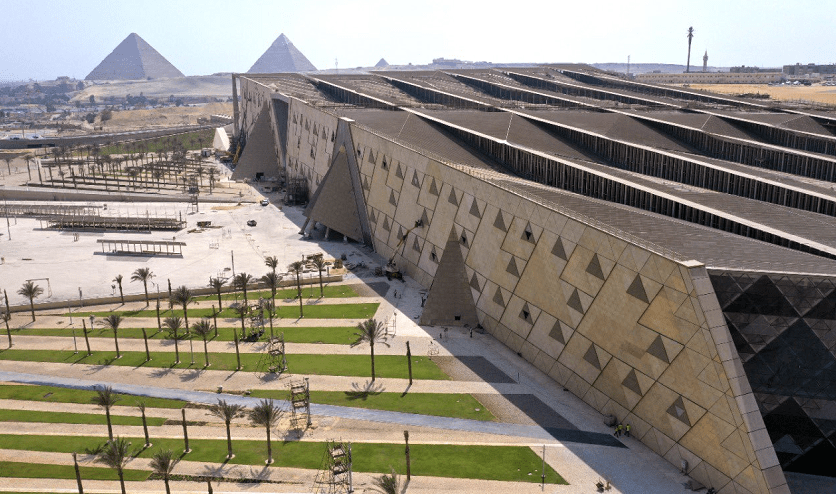
- See Khufu’s reconstructed solar boat at the Grand Egyptian Museum.
Read our Pyramids of Giza visitor guide and see our Pyramids of Giza tours.
Keep Exploring Ancient Egypt
- Ramesses II
- The Egyptian pharaohs
- The Great Sphinx
- Queen Nefertari
- The Old Kingdom
- Ancient Egyptian gods
- Ancient Egyptian architecture
Ready to see it for yourself? Browse our Egypt tour packages or ask for a tailor-made trip built around the sites you want to see.
How Were the Pyramids Built? FAQ
Did slaves build the pyramids?
No. The evidence from the workers' town and cemetery shows paid, fed and medically cared-for Egyptian workers: skilled craftsmen supported by rotating teams of farmers.
How long did it take to build the Great Pyramid?
About 20 years, during the reign of Khufu, around 2580–2560 BC.
How did they lift the heavy stones?
With ramps of mudbrick and rubble, sledges, ropes and levers. Water was poured on the sand to make dragging easier, and the stone arrived by boat along canals from the Nile.
How many blocks are in the Great Pyramid?
About 2.3 million, averaging around 2.5 tonnes each.
Can you go inside the pyramids?
Yes. The Great Pyramid, Khafre's pyramid and the Red Pyramid at Dahshur can be entered with an extra ticket.