





 Day Tour
 Day Tour
 Nile Cruise
 Nile Cruise
Testimonials
Our Clients Reviews
See what our happy travelers say about us
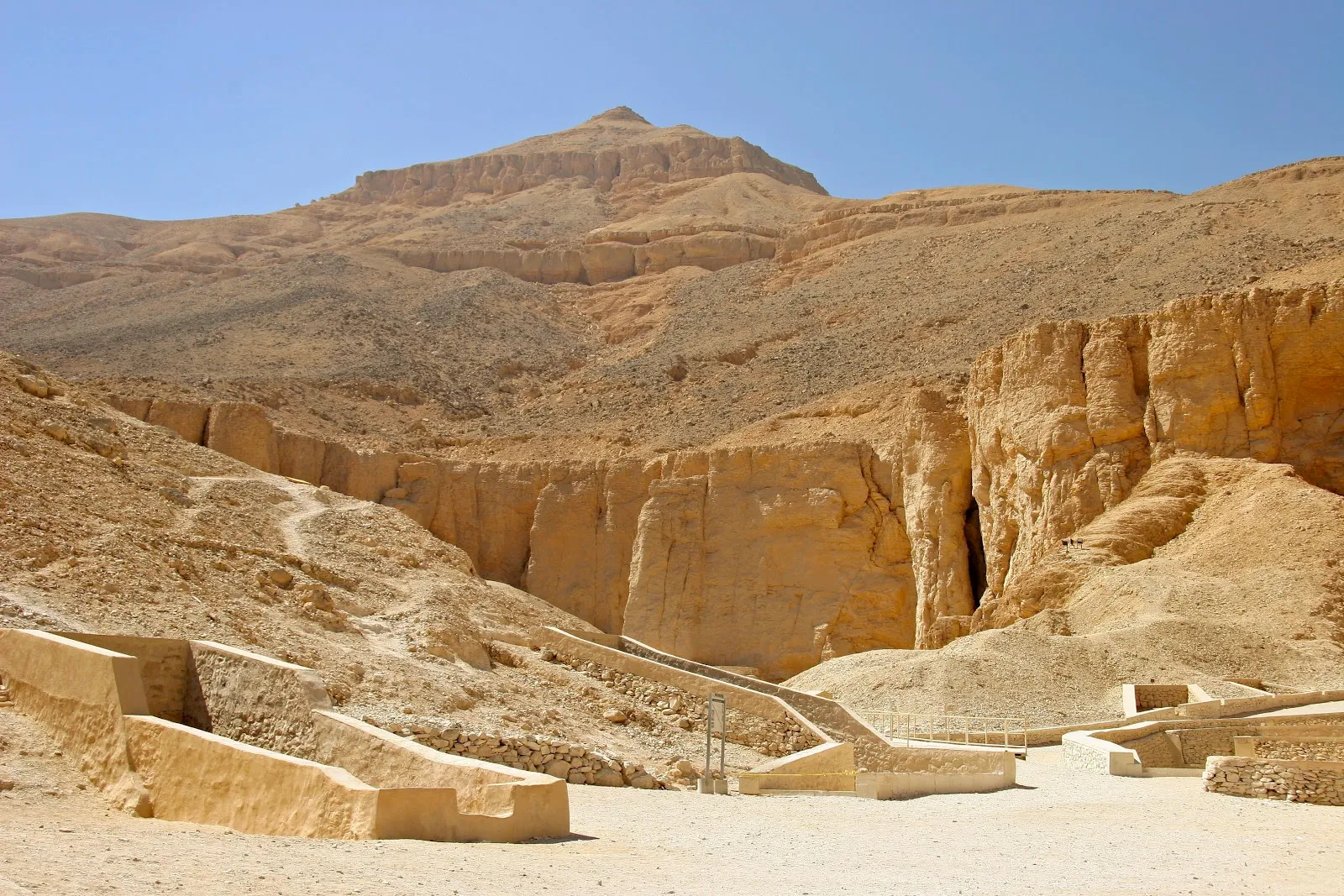
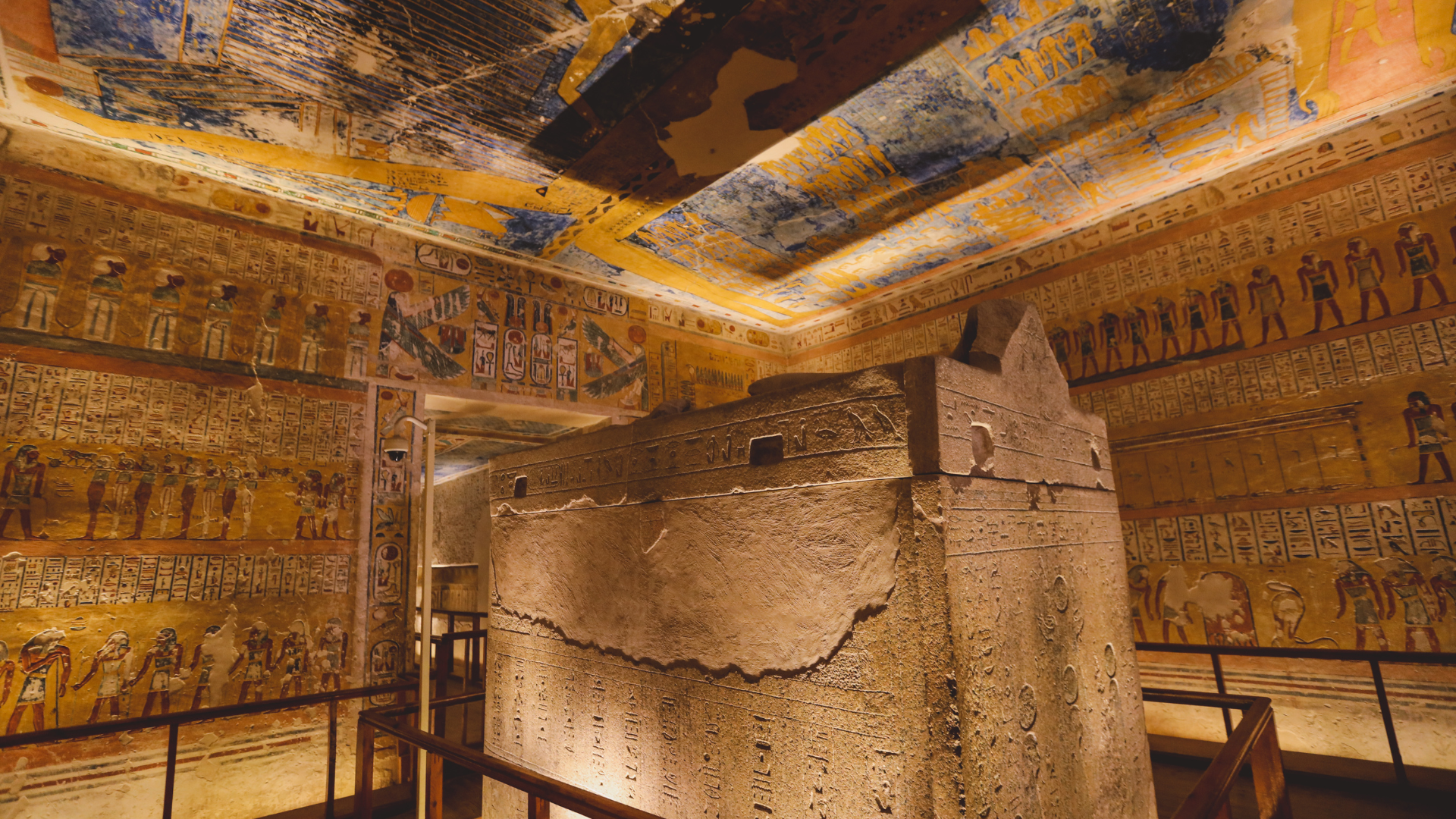
The Valley of the Kings is the royal necropolis of ancient Egypt’s New Kingdom pharaohs, located on the west bank of Luxor in a remote valley in the Theban hills. For approximately 500 years, from the reign of Thutmose I (c. 1504 BCE) to the end of the 20th Dynasty (c. 1070 BCE), the pharaohs of Egypt’s most powerful era were buried here in rock-cut tombs decorated with some of the most complex funerary art ever produced. The valley contains 63 known tombs (designated KV1–KV63), of which around 18 are regularly open to visitors.
Each tomb follows a broadly similar architectural sequence: a descending corridor or ramp leads through a series of antechambers to a burial hall containing the royal sarcophagus. The walls are entirely covered in painted and carved hieroglyphic texts from religious compositions — the Book of the Dead, the Amduat, the Book of Gates, the Book of Caverns, the Litany of Ra — designed to guide the king through the twelve hours of the night and secure his resurrection with the sun at dawn. The artistic quality, iconographic complexity, and sheer scale of this painted program are unmatched in any other funerary tradition in the ancient world.
The most famous tomb in the valley — that of Tutankhamun (KV62) — is paradoxically the smallest royal tomb and is visited primarily for its historical significance: it was the only pharaonic tomb found with its burial assemblage substantially intact, and its contents, now in the Grand Egyptian Museum in Giza, revolutionized understanding of New Kingdom royal material culture.
The decision to move royal burials from pyramid complexes to rock-cut tombs in a remote valley is traditionally attributed to Thutmose I, who recognized that visible pyramid monuments made royal burials easy targets for robbers. The Valley of the Kings’ isolated location, hidden entrance concept, and a dedicated workforce of tomb builders (the residents of nearby Deir el-Medina) were all part of a security strategy that nonetheless ultimately failed — virtually all tombs were robbed in antiquity, most within a few hundred years of sealing.
The valley was known to be a royal necropolis throughout antiquity, and it attracted Greek and Roman tourists who left thousands of graffiti inscriptions. The modern era of systematic excavation began with Giovanni Belzoni in the 1810s and continued through the 19th and early 20th centuries, culminating in Howard Carter’s discovery of Tutankhamun’s intact tomb (KV62) in November 1922 — the most celebrated archaeological discovery of the modern era.
The valley was designated a UNESCO World Heritage Site as part of the Ancient Thebes and its Necropolis listing in 1979. Conservation challenges including humidity from visitor breath, flooding from rare desert rainstorms, and salt crystallization in the limestone continue to threaten the painted decoration of the most-visited tombs.
The longest and most elaborately decorated tomb in the valley — 137 meters deep with fully painted corridors in the finest New Kingdom style; requires a separate premium ticket.
The most densely decorated accessible tomb, with the famous astronomical ceiling showing the sky goddess Nut and texts from virtually every major funerary book; requires separate ticket.
The smallest royal tomb and historically the most significant — still containing the pharaoh's quartzite sarcophagus with his mummy; requires a separate premium ticket.
One of the largest tombs open on the standard ticket, with decorated side chambers showing scenes of daily life including the famous 'blind harpists' painting.
An air-conditioned center at the valley entrance displays a scale model of all 63 tombs and contextual exhibits on the history of excavation and conservation.
These packages visit this site as part of the itinerary.

Start From


Start From


Start From

See what our happy travelers say about us



