Summary
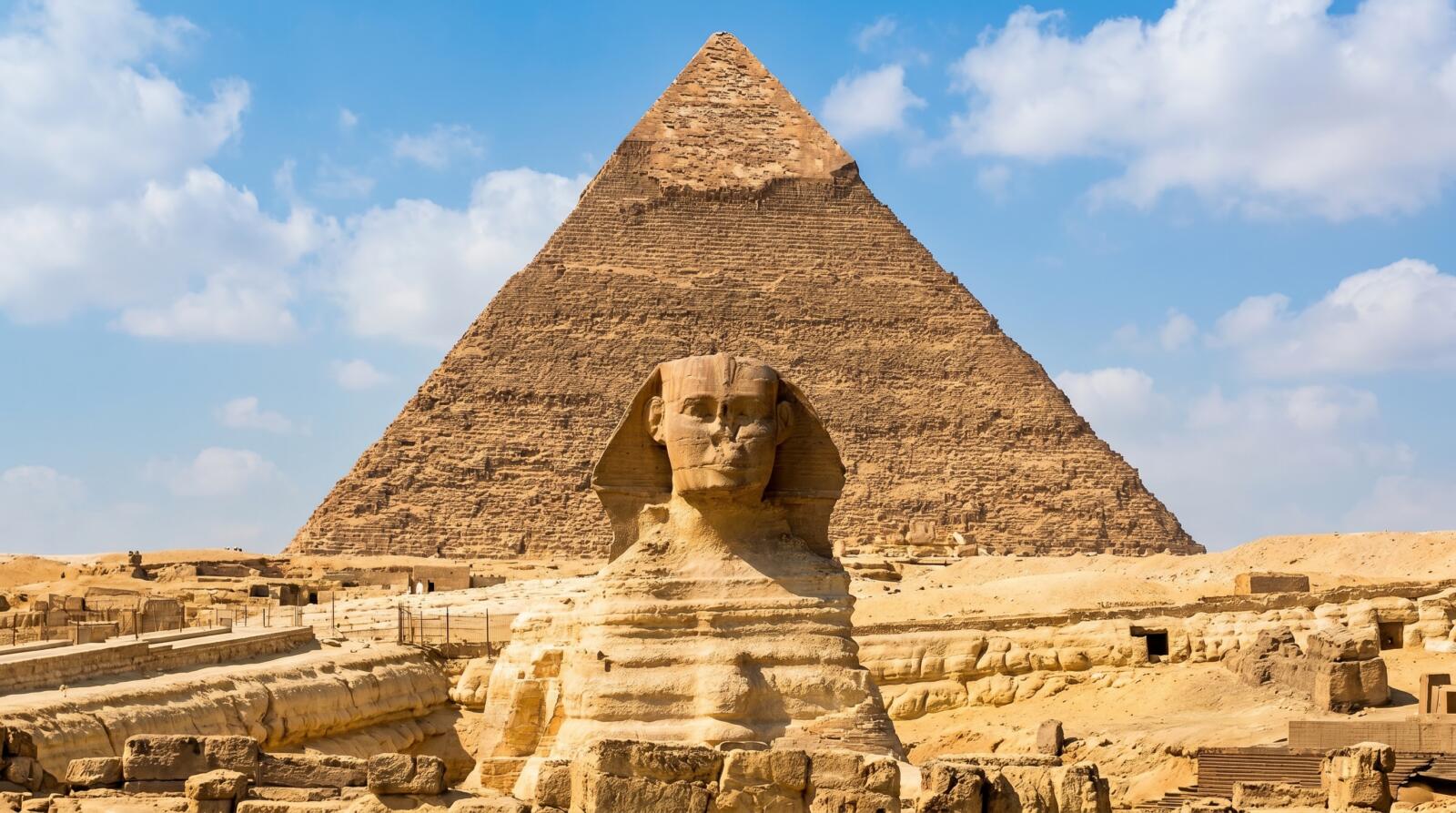
The Great Sphinx of Giza was carved about 4,500 years ago, most likely for King Khafre, the builder of the second pyramid at Giza. It is about 73 metres long and 20 metres high, the largest statue of the ancient world, with the body of a lion and the head of a king wearing the striped nemes headdress. It has been buried by sand, uncovered, restored and argued about ever since.
This guide explains what is known about the Sphinx, the stories that are not true, and how to see it at its best.
Who Built the Sphinx, and When?
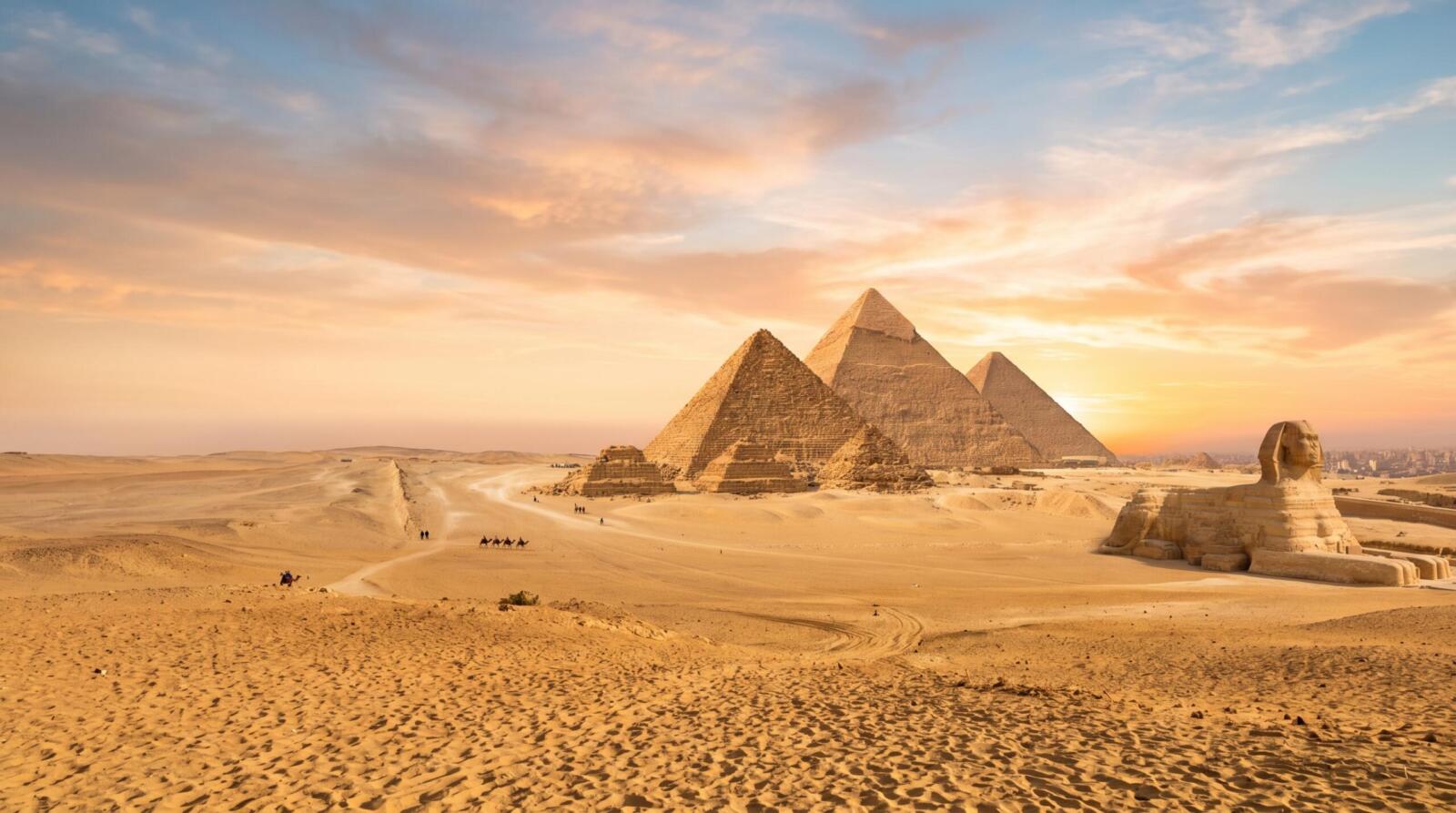
Most Egyptologists date the Sphinx to the reign of Khafre (about 2558–2532 BC), in the 4th Dynasty. The evidence is its position: it lies beside the causeway that leads to Khafre’s pyramid, directly in front of his valley temple, and the stone of the Sphinx and the blocks of the temples in front of it come from the same layers of rock. The face is thought to be a portrait of the king. Some scholars have suggested Khufu or his son Djedefre instead, but Khafre remains the most widely accepted builder.
How It Was Carved
The Sphinx was not built from blocks: it was carved directly out of the bedrock. Workers quarried away the limestone around a natural knoll, leaving the body standing in a hollow, and used the stone they removed to build the temples in front of it. The head is carved from harder, better-quality limestone than the body, which is why it has survived better. The figure was once painted: traces of red on the face and yellow and blue on the headdress have been found.
The Dream Stele of Thutmose IV
Between the paws stands a granite slab set up around 1400 BC by Thutmose IV. It tells how, as a young prince, he fell asleep in the shadow of the Sphinx, which by then was buried up to its neck in sand. The Sphinx spoke to him in a dream and promised him the throne if he cleared the sand away. He did, and became king. The story shows that the Sphinx was already more than a thousand years old, and already a place of pilgrimage, in the New Kingdom.
What Happened to the Nose?
The popular story that Napoleon’s soldiers shot off the nose is a myth: a drawing by the Danish traveller Frederic Norden, made in 1737, decades before Napoleon arrived, already shows the Sphinx without it. The medieval historian al-Maqrizi wrote that in 1378 a man named Muhammad Sa’im al-Dahr damaged the face deliberately. Close inspection shows chisel marks where rods were driven into the nose to break it off. Pieces of the stone beard, which was added later, are now in the British Museum and the Egyptian Museum in Cairo.
Egypt Honeymoon Escape: Cairo & Red Sea
Want to see this for yourself? This trip covers it.
View This TripMyths and Theories
- “The Sphinx is much older than the pyramids”: some writers argue that weathering on the enclosure walls was caused by rain thousands of years earlier. Geologists and archaeologists explain the weathering by the soft, layered limestone, salt and the wet climate of the Old Kingdom period, and date the Sphinx with Khafre’s complex.
- “There are hidden chambers under the Sphinx”: several tunnels and cavities are known, but surveys have found no hidden hall of records.
- Its Arabic name: Egyptians call it Abu al-Hol, “the father of terror”.
How to See the Sphinx
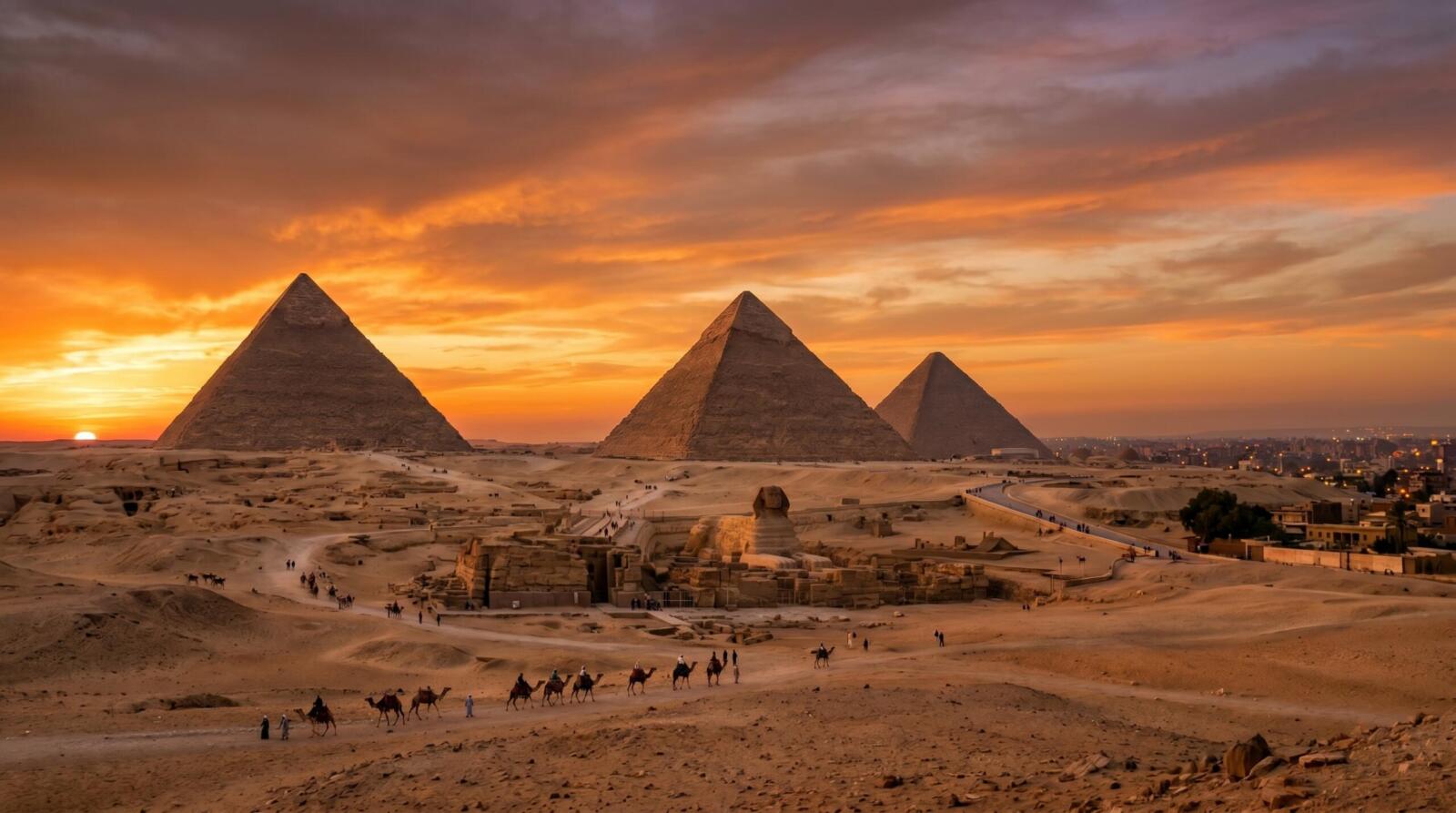
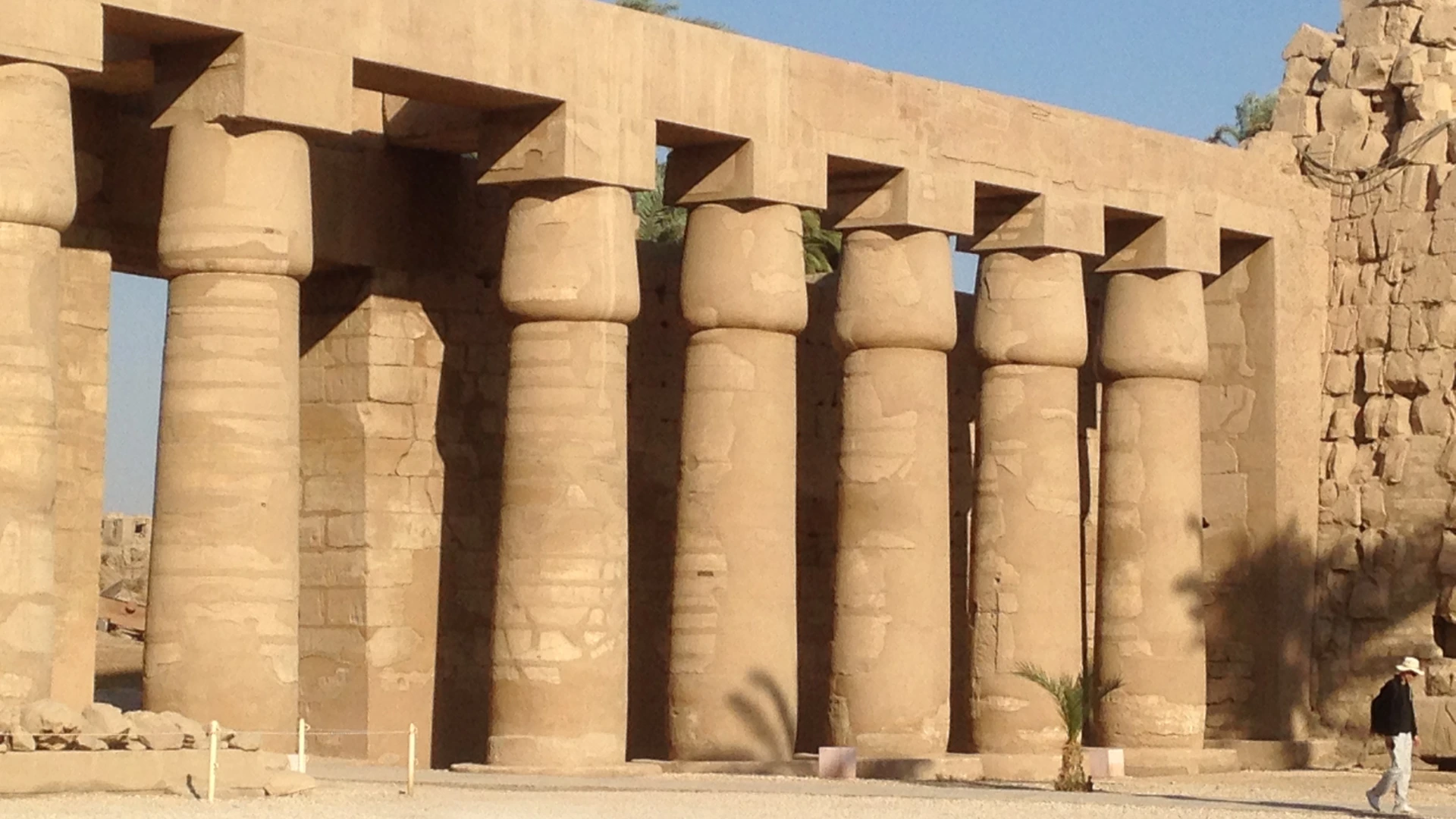
The Sphinx stands at the eastern edge of the Giza pyramid complex. You reach the viewing terrace through Khafre’s valley temple, where you can see the granite pillars and alabaster floor before stepping out in front of the Sphinx. Go early in the morning, when the light is on its face and the crowds are smaller, and stay for the evening sound-and-light show if you can.
The Sphinx is included in all our Pyramids of Giza tours. Read more about the Great Sphinx and how the pyramids were built.
Keep Exploring Ancient Egypt
- Ramesses II
- The Egyptian pharaohs
- How the pyramids were built
- Queen Nefertari
- The Old Kingdom
- Ancient Egyptian gods
- Ancient Egyptian architecture
Ready to see it for yourself? Browse our Egypt tour packages or ask for a tailor-made trip built around the sites you want to see.
Great Sphinx FAQ
How old is the Sphinx?
About 4,500 years old. It is generally dated to the reign of Khafre, around 2558–2532 BC.
Who built the Sphinx?
Most Egyptologists attribute it to King Khafre, whose pyramid and temples stand next to it.
What happened to the Sphinx's nose?
It was deliberately broken off with tools, probably in the medieval period; drawings from 1737 already show it missing, so the Napoleon story is a myth.
How big is the Great Sphinx?
About 73 metres long and 20 metres high, the largest monolithic statue of the ancient world.
Can you touch the Sphinx?
No. Visitors see it from a viewing terrace in front of it and from Khafre's valley temple.