Summary
Ramesses II, also called Ramses the Great, ruled Egypt for 66 years, from about 1279 to 1213 BC. He was the third king of the 19th Dynasty, a soldier who fought the Hittites at Kadesh and then signed the world’s oldest surviving peace treaty, and the greatest builder in Egyptian history. His name is carved on more monuments than any other pharaoh’s, from the temples of Abu Simbel to Karnak and Luxor.
This guide tells his story and shows where you can still stand in front of his work, and his face, in Egypt today.
Who Was Ramesses II?
Ramesses was born around 1303 BC, the son of Seti I and Queen Tuya. His family were not royal by birth: his grandfather, Ramesses I, was a military officer who became king. Seti made his son co-regent while still a teenager, so Ramesses had already led campaigns and overseen building works before he took the throne in his mid-twenties.
His throne name was Usermaatre Setepenre, “the justice of Ra is strong, chosen of Ra”. The Greeks heard “Usermaatre” as Ozymandias, the name Shelley used for his poem about a fallen statue. Later Egyptians remembered him as the Great Ancestor, and nine later kings took his name.
The Battle of Kadesh and the First Peace Treaty
In about 1274 BC, in the fifth year of his reign, Ramesses marched north to take the city of Kadesh, in modern Syria, from the Hittite king Muwatalli II. Hittite scouts tricked him into thinking their army was far away, and his advance division was ambushed. Ramesses rallied his troops and held on until reinforcements arrived. Neither side won outright, but Ramesses presented it as a personal triumph and had the battle carved on the walls of Abu Simbel, the Ramesseum, Karnak, Luxor and Abydos.
About sixteen years later, Egypt and the Hittites signed a peace treaty, with copies kept in both capitals. It is the oldest surviving peace treaty in the world, and a replica hangs at the United Nations in New York. Ramesses later married a Hittite princess to seal the alliance.
Nefertari, His Family and Over 100 Children

Ramesses had several Great Royal Wives, but his first and best-loved was Nefertari, for whom he built the smaller temple at Abu Simbel and one of the most beautiful tombs in Egypt. After her death, Isetnofret and later several of his daughters held the title.
He fathered more than 100 children, around 50 sons and 50 daughters. He outlived many of them; his thirteenth son, Merneptah, finally succeeded him. The huge tomb of his sons in the Valley of the Kings, KV5, has more than 120 corridors and chambers and is still being explored.
The Great Builder: His Monuments
- Abu Simbel: two temples cut into a cliff in Nubia, guarded by four 20-metre seated statues of the king. Twice a year, around 22 February and 22 October, the rising sun reaches the statues in the inner sanctuary.
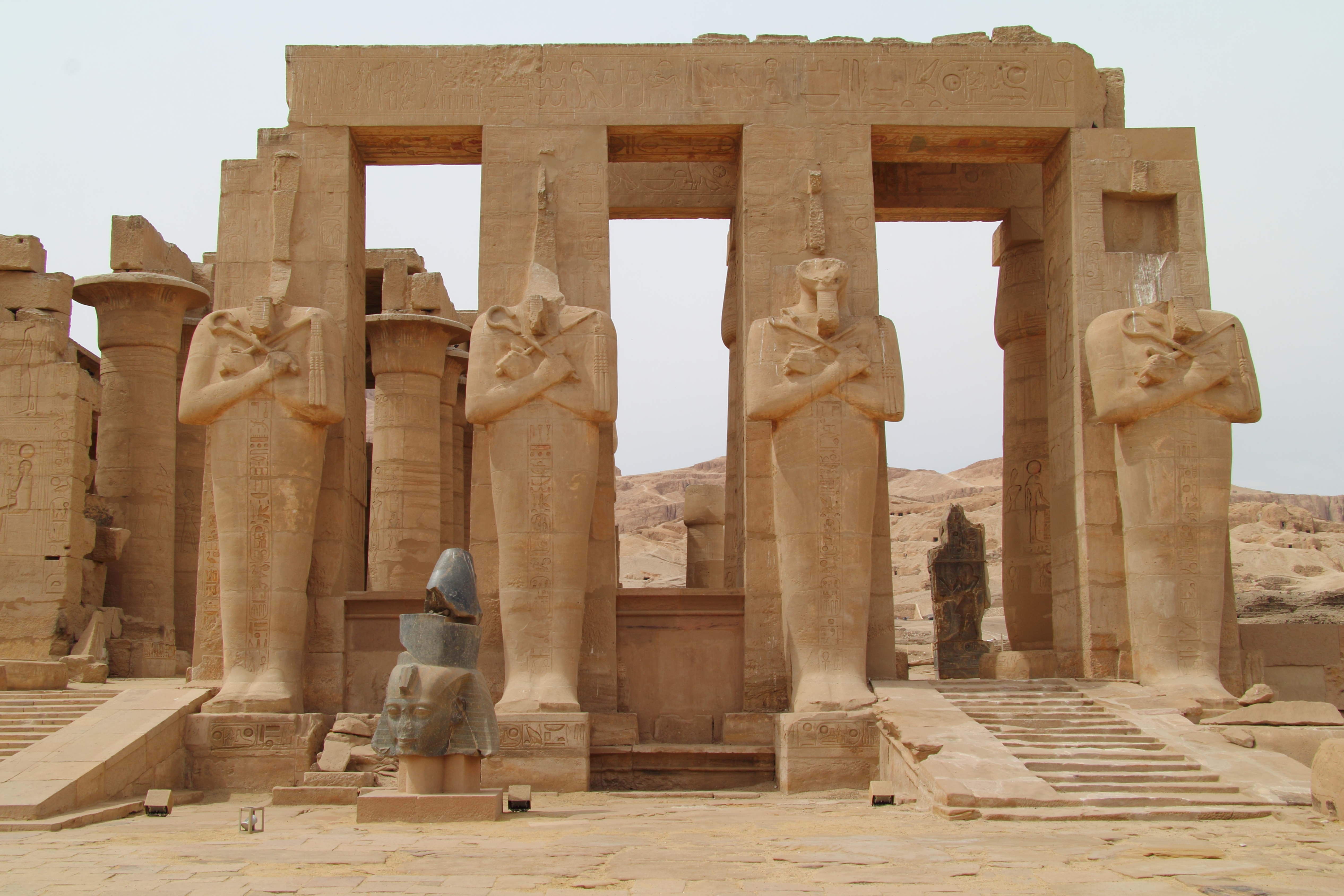
- The Ramesseum: his memorial temple on Luxor’s West Bank, where the toppled colossus that inspired Ozymandias still lies.
- Karnak: he completed and decorated the Great Hypostyle Hall begun by his father, a forest of 134 columns.
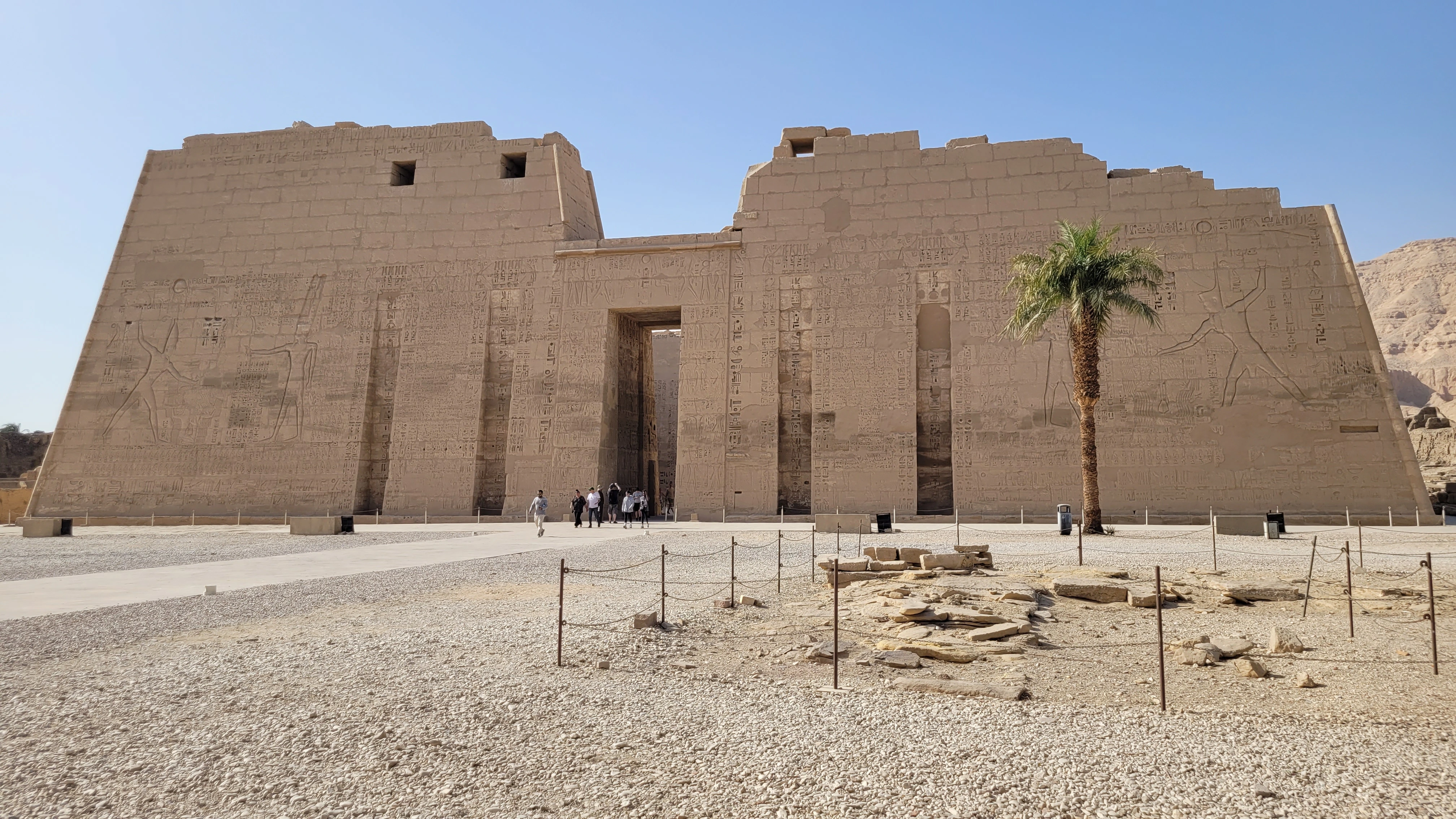
- Luxor Temple: he added the great pylon, the colossal statues at the entrance and two obelisks. One of them now stands in the Place de la Concorde in Paris.
- Abydos: he finished his father’s temple and built his own next to it.
- Pi-Ramesses: a new capital in the eastern Delta, today mostly buried under fields.
He also had his name carved over the inscriptions of earlier kings, which is one reason he seems to be everywhere.
8-Day Cairo, Siwa and White & Black Desert Adventure
Planning the trip itself? Start here.
View This TripDeath, Tomb and Mummy
Ramesses died around 1213 BC, aged about 90, a great age at the time. He was buried in tomb KV7 in the Valley of the Kings, but tomb robbers raided it, and priests later moved his mummy for safety. It was found in 1881 in the royal cache at Deir el-Bahari, with dozens of other kings.
In 1976 the mummy was flown to Paris for conservation, and examinations showed arthritis, dental problems and hardened arteries. Since April 2021, when 22 royal mummies were moved through Cairo in the Pharaohs’ Golden Parade, Ramesses lies in the Royal Mummies Hall of the National Museum of Egyptian Civilization.
Where to See Ramesses II Today
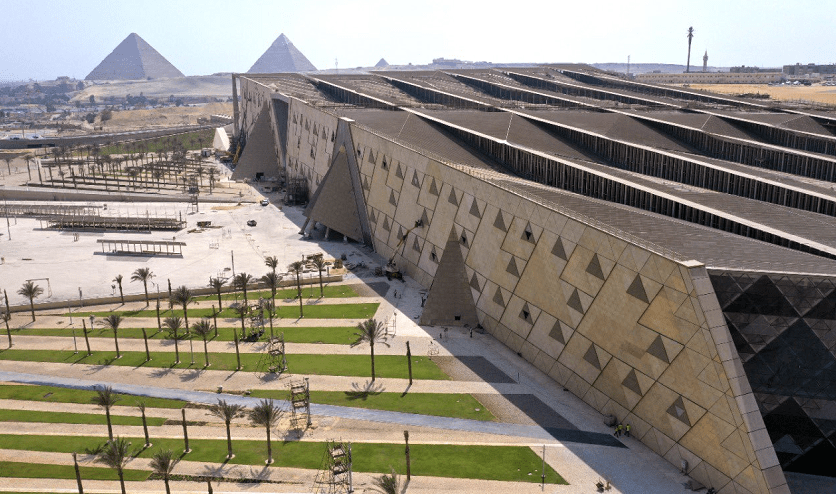
- The 11-metre granite colossus that greets visitors in the atrium of the Grand Egyptian Museum, moved there from Cairo’s Ramses Square.
- The colossal statue lying in the open-air museum at Memphis.
- His mummy at the National Museum of Egyptian Civilization in Cairo.
- Abu Simbel, the Ramesseum, Karnak and Luxor Temple, all on our Nile cruises and Luxor tours.
The easiest way to see Abu Simbel is an Abu Simbel day tour from Aswan.
Keep Exploring Ancient Egypt
- The Egyptian pharaohs
- How the pyramids were built
- The Great Sphinx
- Queen Nefertari
- The Old Kingdom
- Ancient Egyptian gods
- Ancient Egyptian architecture
Ready to see it for yourself? Browse our Egypt tour packages or ask for a tailor-made trip built around the sites you want to see.
Ramesses II FAQ
How long did Ramesses II rule?
About 66 years, from around 1279 to 1213 BC, one of the longest reigns in Egyptian history.
Was Ramesses II the pharaoh of the Exodus?
He is often linked with the Exodus in films and popular books, but there is no Egyptian or archaeological evidence that identifies him with the biblical story.
How many children did Ramesses II have?
More than 100, around 50 sons and 50 daughters, by several wives.
Where is the mummy of Ramesses II?
In the Royal Mummies Hall of the National Museum of Egyptian Civilization in Cairo, since April 2021.
Why is Ramesses II called "the Great"?
Because of his long reign, his military campaigns and, above all, the number and size of his monuments, more than any other pharaoh.