



 Nile Cruise
 Nile Cruise
 Nile Cruise
 Nile Cruise
Testimonials
Our Clients Reviews
See what our happy travelers say about us


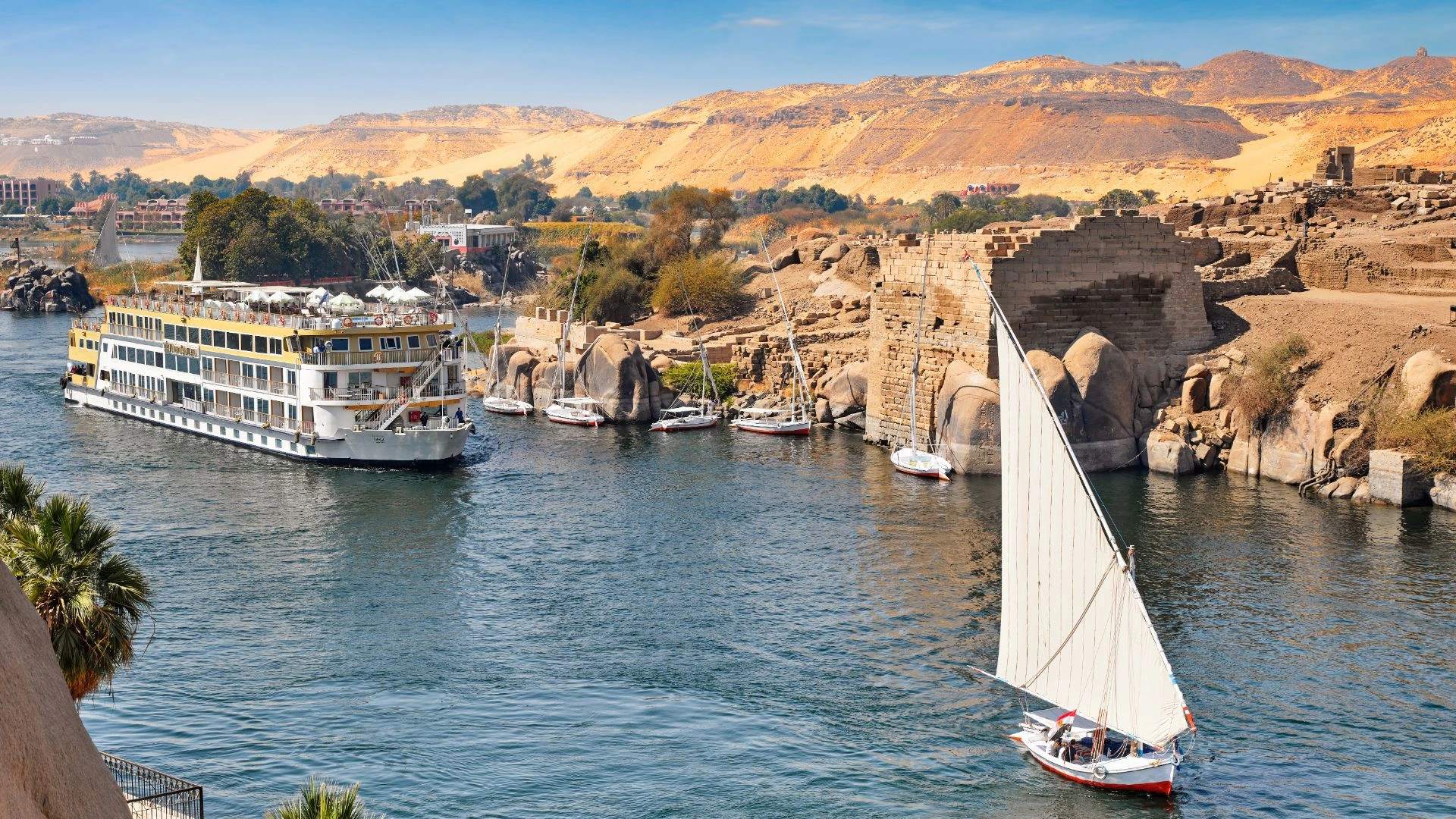
The Temple of Philae — officially the Temple of Isis on Agilkia Island — is one of the last temples built in the classical pharaonic style and the place where ancient Egyptian religion survived longest, with active worship continuing until at least 550 CE. The temple complex sits on Agilkia Island in the reservoir between the Aswan Low Dam and the Aswan High Dam, accessible only by motorboat and surrounded on all sides by still granite waters. The island setting, well-preserved reliefs, and historical resonance make Philae one of the most atmospheric temple complexes in Egypt.
The complex is centered on the Temple of Isis, begun by Ptolemy II Philadelphus in the 3rd century BCE and expanded by successive Ptolemaic rulers and Roman emperors. Philae was considered the site where Osiris was buried, and pilgrims from across the Mediterranean world traveled here to venerate Isis, whose cult spread throughout the Roman Empire.
Following construction of the Aswan Low Dam in 1902, Philae was partially submerged for half the year. The UNESCO salvage campaign of 1972–1980 dismantled all structures from the original island (now permanently submerged) and reassembled them on nearby Agilkia island, reshaping it to match the original topography.
The original island of Philae was considered sacred as one of the burial sites of Osiris and the southernmost point of Egypt proper. The earliest structures date to the 25th Dynasty (c. 690 BCE), but the main temple was built beginning with Ptolemy II (282–246 BCE). Subsequent Ptolemaic rulers added colonnades, pylons, a birth house, and subsidiary temples.
The cult of Isis at Philae became one of the most significant religious traditions in the Mediterranean. After Theodosius I closed pagan temples in 391 CE, Philae was exempted at the request of Nubian tribes. The temple continued to function until around 550 CE, when Emperor Justinian finally ordered its closure. The last hieroglyphic inscription ever written — dated 394 CE — and the last demotic inscription (452 CE) were both made at Philae.
The temple was converted to a church in the 6th century, and many reliefs were defaced with Christian crosses or coated with plaster. Some of these areas have since been cleaned to reveal the original carvings beneath.
The motorboat journey to the island gives a gradually expanding view of the temple colonnade rising from the water — one of the most memorable arrivals at any Egyptian site.
A 145-meter curved colonnade leads from the first pylon's approach to the main entrance, framing the water view on one side and the temple walls on the other.
The main temple's two pylons, hypostyle hall, and sanctuary retain painted and carved reliefs in good condition, including scenes of Isis rituals and the Osiris myth.
A Roman-era open kiosk with towering columns on the island's east bank — often called the 'Pharaoh's Bed' and one of the most photographed structures in Aswan.
An evening show illuminates the temple complex from the water, reflecting colored light off the Nile surface and narrating the Isis and Osiris myth.
These packages visit this site as part of the itinerary.

Start From


Start From


Start From

See what our happy travelers say about us



