
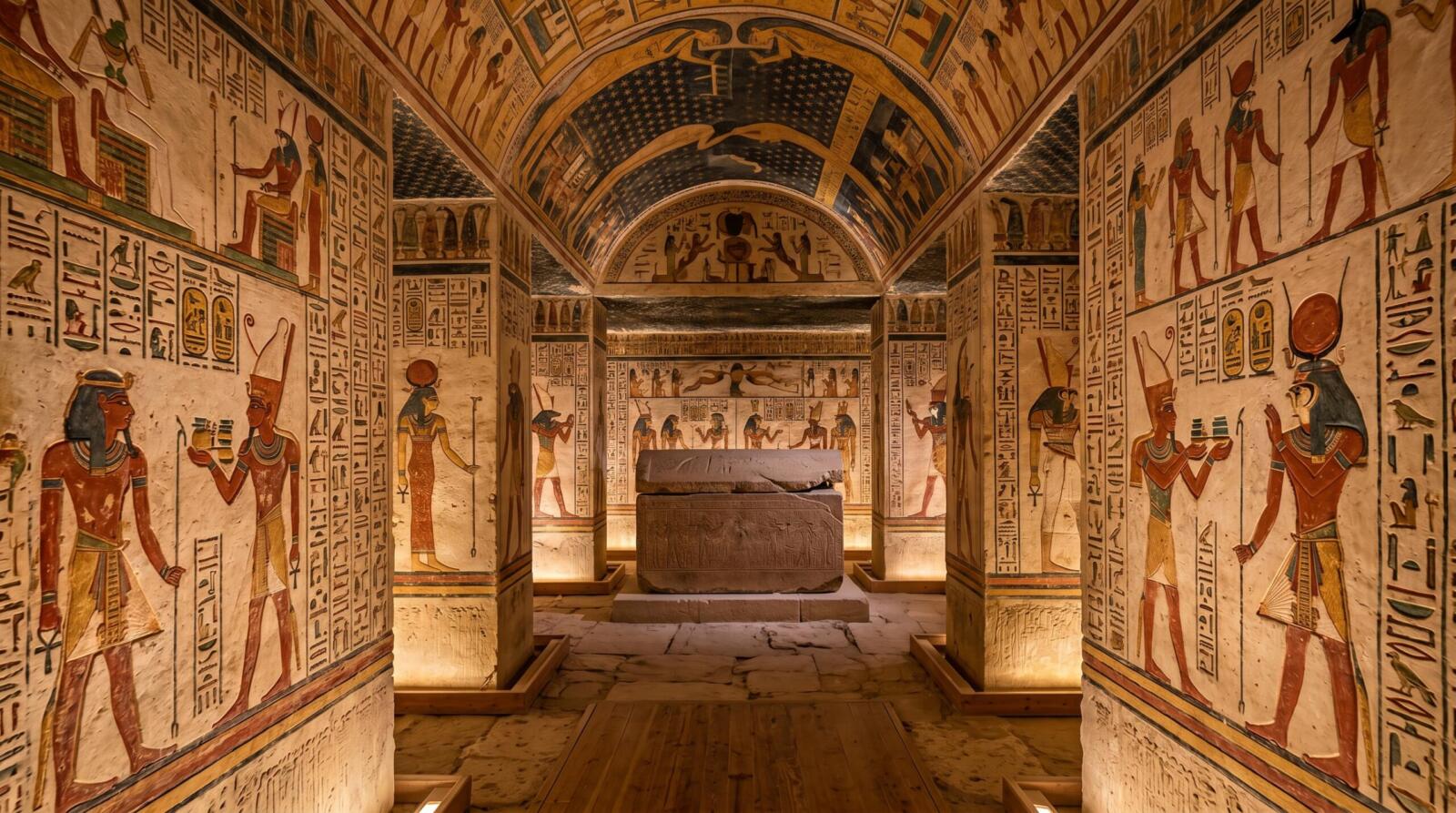
Summary
Women in ancient Egypt had more legal rights than in most ancient societies. They could own and inherit property, sign contracts, go to court and divorce their husbands. Most women ran households and worked alongside their families, but some became priestesses, doctors, landowners and even pharaohs. Their freedom was not equal to men’s, yet Greek visitors were surprised by how independent Egyptian women were.
Legal Rights
- Property: women could buy, own, sell and inherit land, houses and goods, and kept what they brought into a marriage.
- Contracts and courts: they could make contracts, lend money, act as witnesses and bring cases to court in their own name.
- Marriage and divorce: marriage was a private agreement, not a religious ceremony; either partner could end it, and a divorced wife was entitled to a share of the property. Later marriage contracts spell out these rights in detail.
Work and Daily Life
The title of a married woman was nebet per, “mistress of the house”: she managed the household, the children, the food stores and often the servants. Women also worked as weavers (linen was largely made by women), bakers and brewers, musicians and dancers, professional mourners, midwives and nurses. Peseshet, in the Old Kingdom, was “overseer of women physicians”, and many elite women served as priestesses of Hathor, Neith or Amun. Read more about everyday life in farmers in ancient Egypt and clothing, makeup and jewellery.
Family and Childbirth
Egyptians married young and valued large families. Childbirth was dangerous, so women turned to protective gods: the hippopotamus goddess Taweret, the dwarf god Bes and the mother goddess Isis. Tomb paintings show husbands and wives side by side, arms around each other, a sign of the affection and partnership the Egyptians admired. See Hathor, goddess of love, music and joy.
8-Day Cairo, Siwa and White & Black Desert Adventure
Planning the trip itself? Start here.
View This TripQueens and Female Pharaohs
- Sobekneferu (about 1800 BC): the first woman known for certain to rule Egypt as king.
- Hatshepsut (about 1479–1458 BC): ruled for some two decades as pharaoh, wearing the royal beard, and built her great temple at Deir el-Bahari.
- Queen Tiye: the influential wife of Amenhotep III, who corresponded with foreign rulers.
- Nefertiti: queen of Akhenaten, shown with almost kingly power, and possibly a ruler herself.
- Nefertari: beloved wife of Ramesses II, with her own temple at Abu Simbel and the most beautiful tomb in the Valley of the Queens.
- Cleopatra VII: the last ruler of independent Egypt, who died in 30 BC.
Where to See Women of Ancient Egypt
- The small temple of Nefertari and Hathor at Abu Simbel.
- Hatshepsut’s temple at Deir el-Bahari, Luxor.
- The tomb of Nefertari in the Valley of the Queens.
- Statues of queens and the painted couple Rahotep and Nofret in the Egyptian Museum.
Women in Ancient Egypt: FAQ
Did women have rights in ancient Egypt?
Yes: they could own property, inherit, make contracts, go to court and divorce.
Could women be pharaohs?
Rarely, but yes: Sobekneferu and Hatshepsut ruled as kings, and Cleopatra VII ruled in her own right.
What jobs did women do in ancient Egypt?
Managing the household, weaving, baking and brewing, music and dance, midwifery, medicine and serving as priestesses.
Who was the most powerful woman in ancient Egypt?
Hatshepsut, who ruled as pharaoh for about 20 years, is usually considered the most powerful.
Did Egyptian women wear makeup?
Yes, women and men both wore kohl eye paint, and women also used red ochre and perfumed oils.



























