Summary
Ancient Egyptians dressed for the heat in light white linen, painted their eyes with black and green kohl, and wore as much jewellery as they could afford, men and women alike. Clothing changed slowly over three thousand years, but a few things never did: linen made from flax, a love of gold and coloured stones, and eye makeup that protected as well as beautified.
Clothing: Linen for Everyone
Almost all Egyptian clothes were made of linen, woven from the flax that grew along the Nile. Wool was thought unclean for temples and tombs, and cotton only arrived much later.
- Men wore a wrapped kilt, the shendyt, tied at the waist. In the New Kingdom the wealthy added long, see-through pleated robes over it.
- Women wore a close-fitting sheath dress with shoulder straps, and later loose pleated gowns of very fine linen.
- Workers wore simple loincloths or short kilts; children often wore nothing at all until puberty.
- Footwear: sandals of woven papyrus, palm fibre or leather, though many people went barefoot.
Fine linen was so valuable that it was paid as wages and stored in tombs; the finest was almost as thin as silk. See how ordinary people lived in farmers in ancient Egypt and the Egyptian social pyramid.
Hair and Wigs
Many Egyptians, especially the elite and priests, shaved their heads to stay cool and free of lice, then wore wigs of human hair, set with beeswax and resin, on formal occasions. Children wore a “side-lock of youth”, a single plait on one side of a shaved head. Priests had to be completely shaved, and senior priests wore a leopard skin over their linen.
Makeup and Kohl
Both men and women lined their eyes:
- Green eye paint made from malachite, a copper ore, was popular in early times.
- Black kohl made from galena, a lead ore, became standard later.
Eye paint reduced the glare of the sun and was believed to protect against eye disease; a 2010 study even suggested that the lead compounds in kohl could help fight infection. Pigments were ground on stone palettes, and the famous Narmer Palette is a giant ceremonial version of one. Red ochre coloured lips and cheeks, henna tinted hair and nails, and perfumed oils softened the skin in the dry climate. Banquet scenes show guests with cones on their heads; archaeologists long thought these were only symbolic until two real head cones, made of wax, were found in burials at Amarna in 2019.
8-Day Cairo, Siwa and White & Black Desert Adventure
Planning the trip itself? Start here.
View This TripJewellery: Gold and Amulets
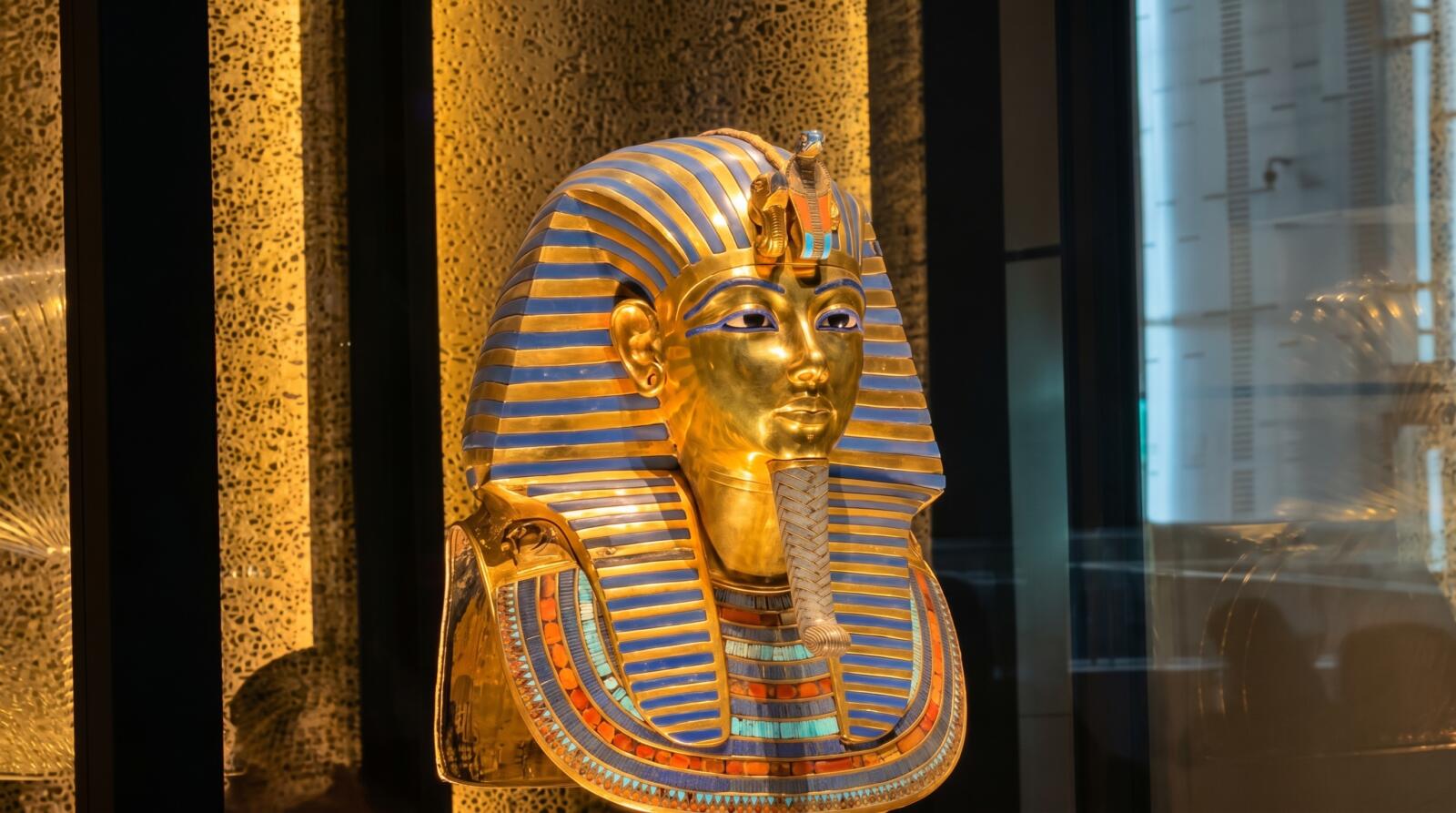
Jewellery was worn for beauty, status and protection. Favourite pieces were broad bead collars (wesekh), bracelets, armlets, rings and earrings, and almost everything carried an amulet: the ankh, the Eye of Horus or the scarab.
- Gold, from the mines of the Eastern Desert and Nubia, was “the flesh of the gods”.
- Lapis lazuli came all the way from Afghanistan, turquoise from Sinai, and red carnelian from the desert.
- Faience, a glazed quartz paste in bright blue and green, made amulets affordable for everyone.
The greatest collection is the jewellery of Tutankhamun at the Grand Egyptian Museum, with his gold mask, pectorals and rings, and the gold and silver treasure of the kings of Tanis at the Egyptian Museum in Tahrir Square. See also ancient Egyptian masks.
Bringing a Piece Home
The craft lives on. Jewellers in Khan el-Khalili, Luxor and Aswan make gold and silver cartouches with your name spelled in hieroglyphs, scarab rings and Eye of Horus pendants, and linen and cotton galabeyas are still everyday wear in the countryside. For your own trip, see what to wear in Egypt.
Ancient Egyptian Clothing and Makeup: FAQ
What did ancient Egyptians wear?
Mostly white linen: kilts for men, sheath dresses or pleated gowns for women, and simple loincloths for workers.
Did men wear makeup in ancient Egypt?
Yes. Men and women both wore kohl around their eyes, for beauty and to protect against sun glare and eye infections.
Why did Egyptians shave their heads?
To keep cool and clean in the heat; many then wore wigs for formal occasions.
What was Egyptian jewellery made of?
Gold, silver, lapis lazuli, turquoise, carnelian and glazed faience.
Did ancient Egyptians wear shoes?
Sandals of papyrus, palm fibre or leather, though many ordinary people went barefoot.