


 Day Tour
 Day Tour
 Day Tour
 Package
 Package
 Package
 Attraction
 Attraction
 Attraction
 Attraction
 Attraction
 Attraction
Testimonials
Our Clients Reviews
See what our happy travelers say about us

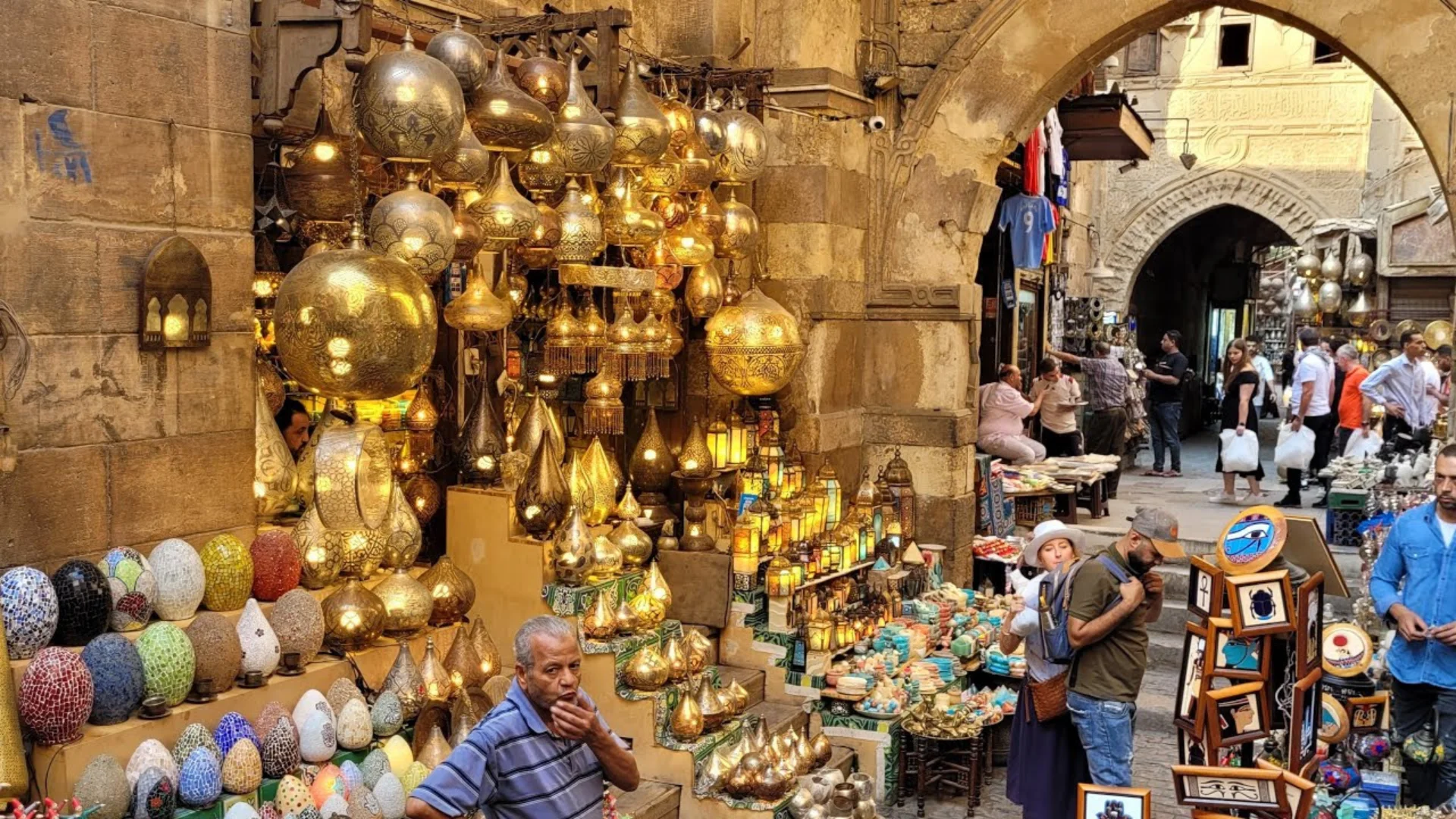
It is Cairo’s most famous historic bazaar, a labyrinthine commercial district in the heart of Islamic Cairo that has operated continuously since the 14th century and remains one of the most animated and authentic medieval market environments in the world. The bazaar was established in 1382 CE by the Mamluk emir Jarkas el-Khalili on the site of a Fatimid royal cemetery, and its covered alleys, carved stone facades, and traditional workshop-stores selling gold and silver jewelry, spices, perfumes, glasswork, brassware, papyrus, textiles, and souvenirs have changed surprisingly little in their essential character over six centuries.
The bazaar’s commercial energy is inseparable from its social function — Khan el-Khalili is where Cairenes have drunk coffee, transacted business, and gathered for conversation for over 600 years. The El-Fishawi cafe, established in 1773 and open continuously (including through the night) ever since, is the bazaar’s most celebrated institution — a mirrored hall where Nobel laureate Naguib Mahfouz sat for decades writing and watching the bazaar’s human theatre. The surrounding lanes offer everything from tourist souvenirs to genuine antiques, specialist craft workshops where artisans work in brass and gold, spice stalls whose aromas define the bazaar experience, and the narrow residential lanes behind the main commercial streets where everyday Cairo life continues alongside the tourist activity.
Khan el-Khalili’s proximity to the al-Hussain Mosque and al-Azhar Mosque means that the bazaar shares its neighborhood with two of Egypt’s most important Islamic religious institutions, giving the district a density of historical significance — commercial, religious, and cultural — unmatched in any other Egyptian urban environment.
Khan el-Khalili was established by the Mamluk emir Jarkas el-Khalili in 1382 CE on the site of the Fatimid Caliphs’ royal burial ground. The original ‘khan’ (caravanserai — a hostel and commercial complex for merchant travelers) gave the district its name. The current bazaar district developed around this nucleus over the subsequent centuries, with guilds of specialized craftsmen clustering in specific lanes — goldsmiths in one alley, coppersmiths in another, spice merchants in a third — a specialization pattern still partially visible in the bazaar’s layout today.
The bazaar was the commercial center of Cairo’s medieval Islamic economy and the destination of the overland trade caravans that brought goods from across the Islamic world — spices from the Levant and India, textiles from Persia and Turkey, gold from West Africa, and ivory from Sudan. The merchant families of Khan el-Khalili were among the wealthiest in medieval Egypt.
Naguib Mahfouz (1911–2006), Egypt’s Nobel laureate, set his Cairo Trilogy (1956–1957) in the neighborhoods adjacent to Khan el-Khalili and spent decades at the El-Fishawi cafe. His literary engagement with the bazaar and its surrounding streets is considered the definitive fictional account of Cairo’s medieval commercial district.
A 1773 cafe open 24 hours for over 250 years — mirrored walls, narghile smoke, Arabic coffee, and the continuous theatre of bazaar life flowing past the open tables.
The goldsmiths' section of the bazaar where jewelers work in small shops selling traditional Egyptian gold designs — one of the most concentrated areas of precious metalwork accessible to visitors in Cairo.
The spice and perfume lanes where the aromas of cardamom, cumin, karkade (hibiscus), and bakhoor (incense) define the sensory experience of the bazaar — the most atmospheric commercial section.
The carved stone facades and arched gateways of surviving Mamluk-era commercial buildings visible throughout the bazaar — the architectural evidence of the medieval commercial empire whose trade built Khan el-Khalili.
The bazaar at dusk and into the night — the lantern-lit lanes, the call to prayer from the adjacent Hussein Mosque, the cafes full, and the commerce continuing well past midnight.
These packages visit this site as part of the itinerary.


Start From

Start From


Start From

See what our happy travelers say about us



