
Summary
Khepri was the ancient Egyptian god of the rising sun, creation and rebirth, shown as a scarab beetle or as a man with a scarab for a head. Egyptians watched the dung beetle roll its ball of dung across the ground and imagined a giant scarab rolling the sun into the sky each morning. Khepri’s sign, the scarab, became one of the most popular amulets of ancient Egypt and is still the classic Egyptian souvenir today.
Who Was Khepri?
Khepri was the sun at dawn. The Egyptians saw the sun god in different forms through the day: Khepri in the morning, Ra at full strength at noon, and the old god Atum in the evening as the sun sank in the west.
His name comes from the verb kheper, “to come into being” or “to change form”, and the hieroglyph for that word is a scarab beetle. Khepri was therefore also a god of creation and of every new beginning. See him among the other gods in ancient Egyptian gods.
Why a Dung Beetle?
The scarab is a dung beetle. It rolls a ball of dung, sometimes much larger than itself, and lays its eggs inside; later the young beetles crawl out of the ball as if they had made themselves from nothing. To the Egyptians this was a perfect picture of two ideas:
- the sun pushed across the sky each day, as the beetle pushes its ball;
- life coming out of what seems dead, the promise of rebirth after death.
Scarab Amulets and Heart Scarabs
Scarabs carved from stone or made of glazed faience were among the commonest amulets in Egypt, worn for protection and good luck. Their flat undersides were often carved with a king’s name or a short wish, and many were used as seals.
For the dead, a larger heart scarab was placed over the heart of the mummy, inscribed with a spell from the Book of the Dead asking the heart not to speak against its owner when it was weighed before the gods. Read about the weighing of the heart in Maat and more in ancient Egyptian symbols and Egyptian mummies.
8-Day Cairo, Siwa and White & Black Desert Adventure
Planning the trip itself? Start here.
View This TripThe Giant Scarab of Karnak

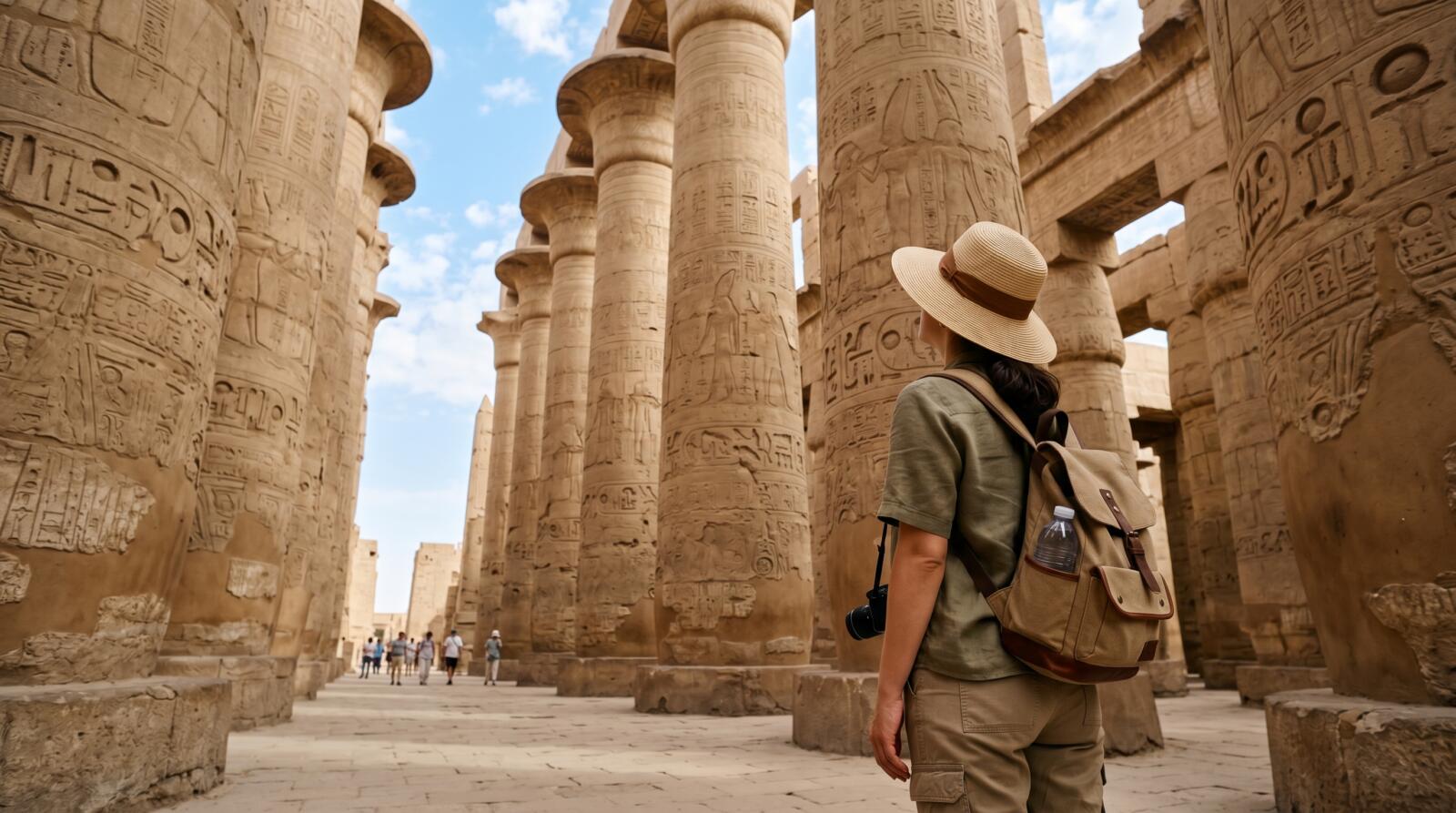
At Karnak Temple in Luxor, a large granite scarab on a tall pedestal stands beside the Sacred Lake. It was dedicated by Amenhotep III to the rising sun. A modern custom says that walking around it seven times brings luck, and you will often see visitors circling it. Scarabs also decorate the jewellery of Tutankhamun, whose throne name, Nebkheperure, includes the scarab sign.
Khepri: FAQ
What is Khepri the god of?
The rising sun, creation and rebirth.
Why is Khepri a scarab beetle?
Because the dung beetle rolls its ball as the sun is rolled across the sky, and its young seem to come to life on their own, a sign of rebirth.
Is Khepri the same as Ra?
He is one form of the sun god: Khepri is the sun at dawn, Ra the sun at midday and Atum the setting sun.
What does a scarab mean in Egypt?
Renewal, protection and good luck; scarabs were worn as amulets and placed with the dead.
Where is the big scarab in Luxor?
Beside the Sacred Lake at Karnak Temple, dedicated by Amenhotep III.


























