Summary
Farmers were the great majority of ancient Egyptians, and their work fed the whole civilisation. Their year followed the Nile: the river flooded each summer, left a layer of rich black silt, and farmers sowed wheat, barley and flax as the water went down, then harvested in spring. They used simple tools such as hoes, wooden ploughs and flint-bladed sickles, paid a share of the harvest in tax, and often worked on the king’s building projects during the flood. This guide explains how they farmed, what they grew, how they lived, and where you can still see their world in Egypt.
The Gift of the Nile
The Greek historian Herodotus called Egypt “the gift of the Nile”, and for farmers it was literally true. Almost no rain falls in Egypt. Every summer, monsoon rains in the Ethiopian highlands swelled the river, which flooded the valley for weeks and left behind a layer of fertile black mud. The Egyptians called their country Kemet, “the black land”, after this soil, and the desert Deshret, “the red land”.
The size of the flood decided the year. Too low, and fields went dry and people went hungry; too high, and villages and dykes were swept away. Officials measured the river on Nilometers, such as the one at Kom Ombo and on Elephantine Island in Aswan, to predict the harvest and set the taxes.
The Three Seasons of the Farming Year
| Season | Months (roughly) | What farmers did |
|---|---|---|
| Akhet, the flood | July to October | Fields under water. Farmers mended tools, cared for animals, and many were called up for state work such as building pyramids and temples. |
| Peret, the growing season | November to February | As the water fell, they ploughed and sowed in the wet silt, and kept the crops watered from canals and basins. |
| Shemu, the harvest | March to June | Harvesting, threshing and winnowing the grain, then storing it, before the next flood. |
What Did Ancient Egyptian Farmers Grow?
- Grain: emmer wheat and barley, the most important crops, made into bread and beer, the daily food of every Egyptian.
- Flax: spun and woven into linen for clothing, sails and mummy wrappings.
- Vegetables and pulses: onions, garlic, leeks, lettuce, cucumbers, lentils, chickpeas and fava beans, still the basis of Egyptian food today.
- Fruit: dates, figs, pomegranates and grapes, which were also made into wine for the wealthy.
- Papyrus: harvested from the marshes for paper, boats, baskets and sandals.
Farmers also kept cattle, sheep, goats, pigs, ducks and geese, and fished in the river and canals. Cattle were a sign of wealth and were counted for tax.
Tools and Irrigation
Farming tools were simple and changed little over thousands of years:
- The hoe, of wood, used to break up the soil.
- The plough, a wooden frame pulled by a pair of oxen.
- The sickle, a curved wooden blade set with sharp flint teeth, used to cut the grain.
- Winnowing scoops, used to toss the threshed grain in the air so the wind blew away the chaff; animals trampled the sheaves to thresh them.
To water the fields after the flood, farmers used a system of basins and canals, trapping the floodwater behind earth banks. In the New Kingdom, around 1350 BC, the shaduf appeared: a long pole with a bucket at one end and a counterweight at the other, which let one man lift water from the river to his field. Later, in Ptolemaic times, the ox-driven waterwheel (saqia) arrived. You can still see both in the Egyptian countryside.
8-Day Cairo, Siwa and White & Black Desert Adventure
Planning the trip itself? Start here.
View This TripTaxes, Land and the State
Most farmers did not own the land they worked. It belonged to the king, the temples or wealthy officials, and farmers worked it as tenants. After the flood, scribes measured each field with knotted ropes, and at harvest they assessed the crop and took a share, estimated at between a tenth and a fifth of the crop, for the state granaries. These stores fed officials, priests, soldiers and craftsmen, and were a reserve against bad years.
Farmers could also be called up for corvée labour, unpaid work for the state, usually during the flood season when the fields were under water. Tomb paintings sometimes show farmers being beaten for failing to pay; life was hard, but they were free people who could own property and go to court. See where they fitted in society in the ancient Egyptian social pyramid.
A Farmer's Daily Life
Farming families lived in small houses of mudbrick, with a few rooms, a courtyard for cooking and animals, and a flat roof where they slept on hot nights and dried food. They rose at dawn and worked through the day, with the whole family helping: men ploughed and harvested, women ground grain, baked bread, brewed beer and wove linen, and children scared birds from the fields and herded animals.
Their diet was bread, beer, onions, beans and vegetables, with fish and, on feast days, meat. Festivals, such as the harvest festival of the god Min and the great river processions, brought days of rest, music and food. Like everyone in Egypt, farmers hoped for an afterlife: the paradise they imagined, the Field of Reeds, was simply a perfect farm, with tall crops and endless harvests.
Where to See Ancient Egyptian Farming Today
- Tombs of the nobles at Saqqara: the mastabas of Ti and Mereruka show ploughing, sowing, harvesting and herds of cattle in carved relief. Visit them with Saqqara and the Step Pyramid.
- Tombs on Luxor’s west bank: the painted tombs of Menna and Nakht are famous for their harvest scenes, and the tomb of Sennedjem at Deir el-Medina shows the owner and his wife farming in the Field of Reeds.
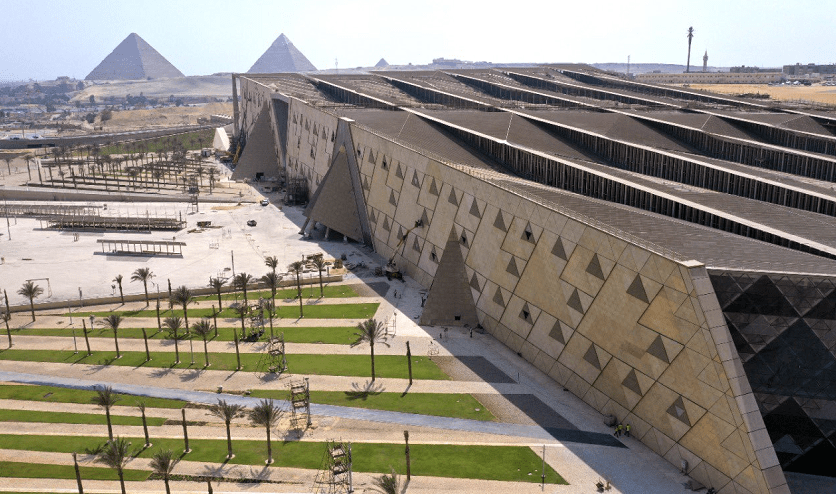
- Museums: wooden tomb models of granaries, ploughing and bakeries at the Egyptian Museum and tools at the Grand Egyptian Museum.
- The countryside itself: from a Nile cruise or a felucca, you still see green fields at the water’s edge, sugar cane, palm groves, donkeys and water pumps, with the desert beginning abruptly where the irrigation ends.
Ancient Egyptian Farmers: FAQ
What did farmers do in ancient Egypt?
They ploughed, sowed and harvested the land along the Nile, mainly wheat, barley and flax, kept animals, and paid part of their harvest in tax. During the flood they often worked on state building projects.
What were the three seasons of the Egyptian farming year?
Akhet, the flood (about July to October); Peret, the growing season (November to February); and Shemu, the harvest (March to June).
What tools did ancient Egyptian farmers use?
Wooden hoes and ploughs pulled by oxen, sickles with flint blades, winnowing scoops, and from about 1350 BC the shaduf for lifting water.
Were ancient Egyptian farmers slaves?
No. Most worked land owned by the king, temples or nobles and paid rent and taxes, but they were free people who could own property, marry and go to court.
Why was the Nile flood so important?
It watered the fields and left fertile silt in a country with almost no rain. The height of the flood decided whether Egypt had a good harvest or a famine.