
Summary
The Eye of Horus, called the wedjat (“the sound one”) by the Egyptians, is an ancient symbol of protection, healing and wholeness. It shows a human eye and eyebrow with the markings of a falcon’s cheek beneath, because Horus was the falcon god. According to the myth, Horus lost his eye fighting his uncle Seth and had it magically restored. For three thousand years Egyptians wore it as an amulet, painted it on coffins and placed it with the dead, and it remains one of the best-known symbols of Egypt today.
What Does the Eye of Horus Mean?
The wedjat stood for something damaged and made whole again. That is why it was trusted for:
- protection against harm, illness and evil, for the living and the dead;
- healing, since the eye itself had been healed;
- rebirth and wholeness after death;
- offering: in temple and tomb texts, any gift to the gods or the dead could be called “the Eye of Horus”.
Meet the god behind it in Horus, the falcon god.
The Myth Behind the Eye
After the god Seth murdered his brother Osiris, Osiris’s son Horus fought Seth for the throne of Egypt. In one of their battles Seth tore out Horus’s eye and broke it into pieces. The wise god Thoth gathered the pieces and restored the eye; in another version the goddess Hathor healed it with gazelle’s milk.
Horus then gave his restored eye to his dead father, and through it Osiris was brought back to life as king of the afterlife. The story explained the moon, too: the left eye of Horus was linked with the moon, which is “damaged” and “restored” every month as it wanes and waxes.
The Parts of the Eye and the Fractions Theory
The wedjat is drawn as a human eye with its eyebrow, plus two lines below it: a straight or teardrop-shaped line and a long curl. These come from the dark markings under the eye of a falcon.
You will often read that each of its six parts stood for a fraction, from 1/2 to 1/64, used to measure grain, and that together they add up to 63/64. The idea became popular in the early 20th century, but many Egyptologists today doubt that the fraction signs ever came from the eye. Treat it as a modern story rather than an ancient fact.
Eye of Horus or Eye of Ra?
The two are easily confused, and the Egyptians themselves sometimes blurred them:
- Eye of Horus: usually the left eye, linked with the moon, healing and protection.
- Eye of Ra: usually the right eye, the fierce, burning power of the sun, imagined as a goddess such as Sekhmet who punished the sun god’s enemies.
It is also different from the blue “evil eye” charm sold across the Mediterranean and the Middle East, which belongs to a much later tradition.
8-Day Cairo, Siwa and White & Black Desert Adventure
Planning the trip itself? Start here.
View This TripAmulets, Mummies and Tutankhamun
Wedjat amulets were made by the thousand in glazed faience, carnelian, lapis lazuli and gold. They were worn in life and tucked into the linen wrappings of mummies; plaques with the eye were sometimes laid over the cut the embalmers made in the body. On many Middle Kingdom coffins a pair of eyes was painted on the side, so the dead person, lying on their side, could look out at the rising sun. Read more in Egyptian mummies and sarcophagi.
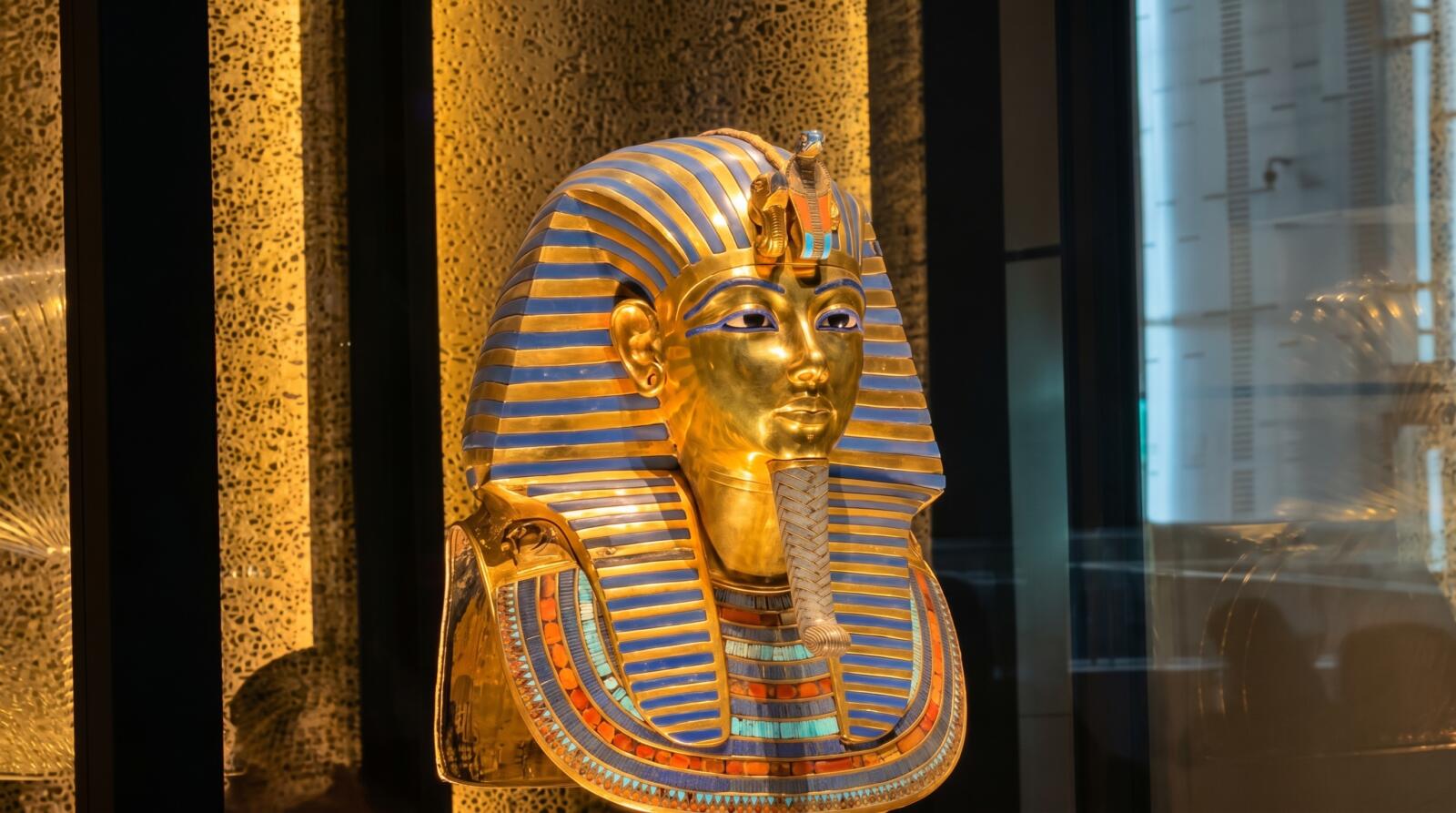
The eye appears again and again in the jewellery of Tutankhamun, including pectorals built around a wedjat, now among his treasures at the Grand Egyptian Museum.
Where to See the Eye of Horus in Egypt
- Edfu: the Temple of Horus at Edfu, the best-preserved temple in Egypt, has the story of Horus and Seth carved on its walls.
- Kom Ombo: the double temple of Kom Ombo is shared by Horus the Elder and Sobek.
- Museums: the Egyptian Museum in Tahrir Square and the Grand Egyptian Museum display hundreds of wedjat amulets.
- Royal tombs: painted eyes and wedjat signs fill the tombs of the Valley of the Kings.
Edfu and Kom Ombo are both stops on a classic Nile cruise between Luxor and Aswan. Silver and gold Eye of Horus pendants are a favourite souvenir in Khan el-Khalili; see other signs in ancient Egyptian symbols and the ankh.
Eye of Horus: FAQ
What does the Eye of Horus mean?
Protection, healing and wholeness: it is the eye Horus lost in his fight with Seth and had restored.
Is the Eye of Horus the left or right eye?
Usually the left eye, linked with the moon; the right eye is more often called the Eye of Ra, linked with the sun.
What is the Egyptian name for the Eye of Horus?
Wedjat (also written udjat), meaning “the sound one” or “the whole one”.
Is the Eye of Horus good luck?
For the ancient Egyptians it was a protective amulet, and many people still wear it as a charm for protection and good fortune.
Is the Eye of Horus the same as the evil eye?
No. The blue evil-eye charm is a separate, later tradition, though both are meant to protect the wearer.
Where can I see the Eye of Horus in Egypt?
At the Temple of Horus at Edfu, at Kom Ombo, in the royal tombs of Luxor and among the amulets of the Egyptian Museum and the Grand Egyptian Museum.




























