
Summary
Ancient Egyptian society was shaped like a pyramid: the pharaoh at the top, a small elite of officials, priests and scribes below him, and a vast base of farmers who fed everyone. In between came soldiers, craftsmen and merchants; at the very bottom were servants and slaves, most of them prisoners of war. The system was strict but not closed: a farmer’s son who learned to write could rise to high office. This guide explains each level, what life was like there, and where you can still see their world in Egypt today.
The Social Pyramid at a Glance
| Level | Who | Role |
|---|---|---|
| 1 | The pharaoh | King and god on earth; kept cosmic order (maat) |
| 2 | The vizier | Chief minister, judge and head of government |
| 3 | Nobles, high priests and governors | Ran the provinces, temples and treasury |
| 4 | Scribes | Kept records, counted taxes, wrote letters and laws |
| 5 | Soldiers | Defended the borders and led campaigns |
| 6 | Craftsmen and merchants | Built tombs, made goods, traded along the Nile |
| 7 | Farmers | The great majority; grew the grain that fed the country |
| 8 | Servants and slaves | Worked in households, temples and mines |
Egyptologists use the pyramid as a simple picture. Real society was more complicated: a royal craftsman could be richer than a minor priest, and many people held several roles at once.
The Pharaoh: King and God
At the top stood the pharaoh, believed to be the living Horus and the son of the sun god Ra. His most important duty was to uphold maat, the order of the universe: keeping the gods content with offerings, defending Egypt from chaos and enemies, and making sure the Nile flood fed the land. In theory he owned all of Egypt and led every temple ritual; in practice he governed through a large administration. Meet the most famous rulers in our guide to Egyptian pharaohs and Ramesses II.
The Vizier: The Pharaoh's Right Hand
The vizier (in Egyptian, tjaty) was the most powerful person after the king: prime minister, chief judge and head of the treasury, the granaries and the royal building works. From the New Kingdom there were usually two viziers, one for Upper Egypt in Thebes and one for Lower Egypt in Memphis.
- Imhotep, vizier of King Djoser around 2670 BC, designed the Step Pyramid and was later worshipped as a god of medicine.
- Rekhmire, vizier of Thutmose III, had the duties of his office painted in his tomb on Luxor’s west bank: hearing petitions every morning, checking the taxes, inspecting the workshops and reporting to the king.
A vizier could even become king: Ramesses I, vizier under Horemheb, founded the dynasty of Ramesses II.
Nobles, Governors and Priests
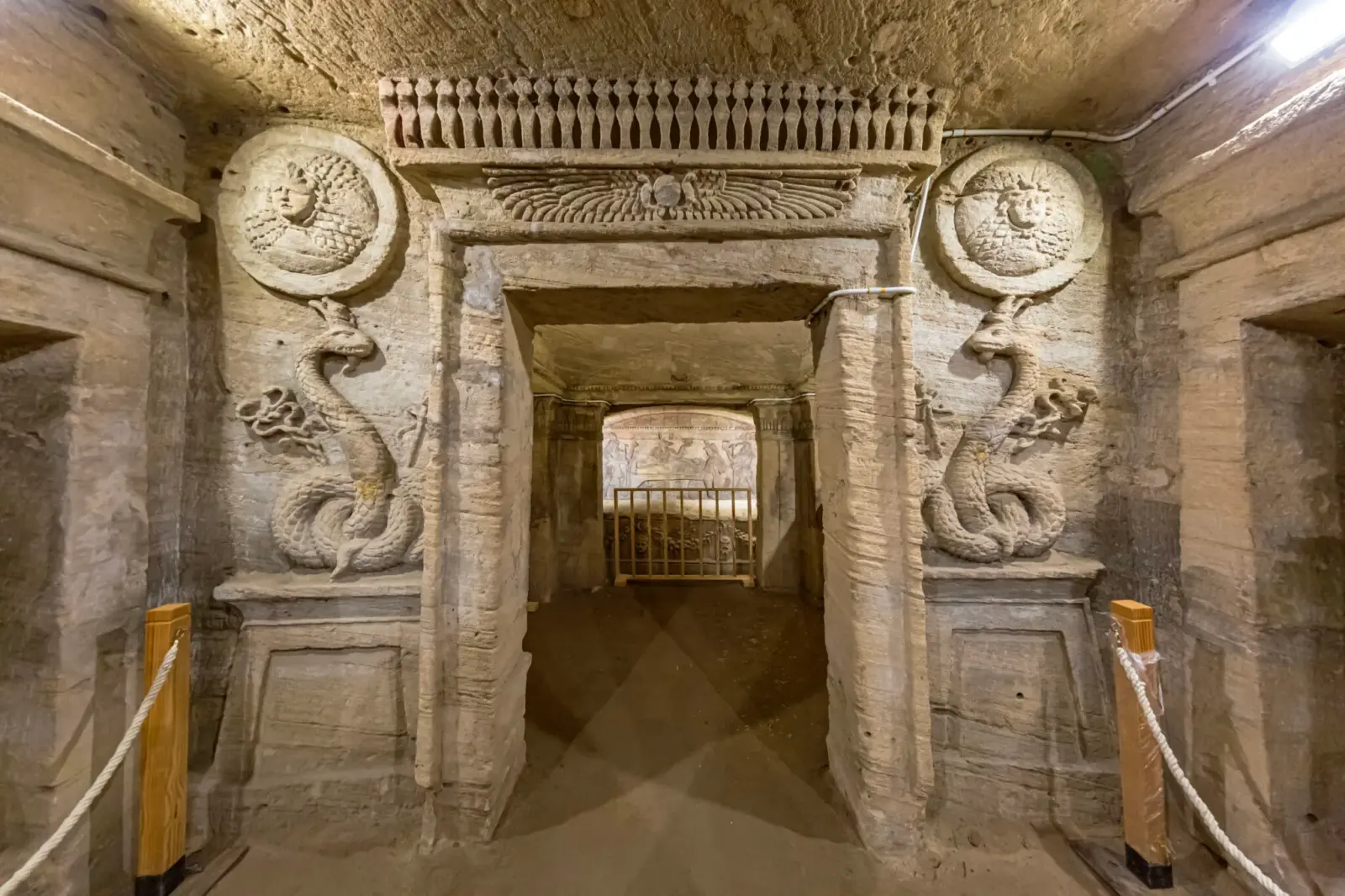
Below the vizier came a small, wealthy elite. Egypt was divided into 42 provinces, called nomes, each run by a governor, or nomarch, who collected taxes, kept order and organised local projects. In weaker periods these governors became almost independent princes.
Priests served in the temples, where they cared for the statue of the god as if it were alive: waking, washing, dressing and feeding it each day. Most were part-time, serving one month in four and living ordinary lives the rest of the year. At the top, the high priests of great temples such as Amun at Karnak controlled huge estates and could rival the king in power.
The elite built the finely carved tombs you can visit today, such as the mastabas of Ti and Mereruka at Saqqara, full of scenes of the estates they ran.
Scribes: The Power of Writing
Perhaps only one or two Egyptians in a hundred could read and write, and those who could held the keys to the state. Scribes recorded harvests and taxes, wrote letters and contracts, kept temple accounts and copied religious texts. Boys, and a few girls, began training young, copying texts on pottery shards and wooden boards for years.
An ancient school text known as the Satire of the Trades tells a boy to study hard because every other job is miserable, while the scribe “is his own boss”. It was not empty advice: writing was the main way to rise in society. The famous seated scribe statues, with a papyrus open on the lap, show how proud officials were to be shown as scribes.
Soldiers
For much of the Old Kingdom, Egypt raised troops only when needed. From the Middle Kingdom, and especially in the New Kingdom empire, it kept a professional army of infantry, archers and, from about 1600 BC, chariot troops. Soldiers could win land, gold and promotion for bravery, and foreign mercenaries such as the Nubian archers served alongside Egyptians. The great battle reliefs of Ramesses II at Kadesh, at Abu Simbel and Luxor Temple, show the army on campaign.
Craftsmen and Merchants
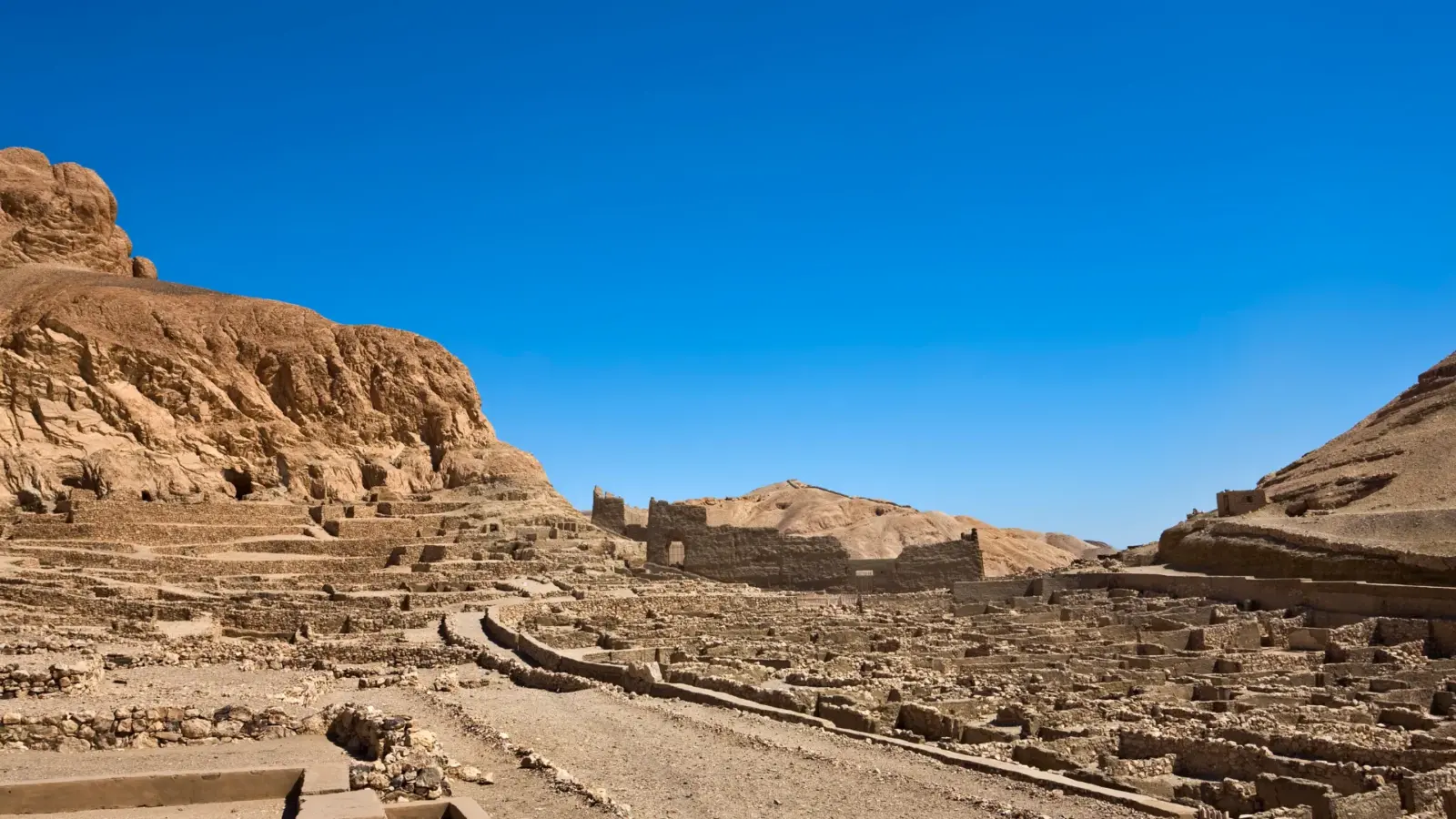
Stonemasons, sculptors, painters, carpenters, potters, weavers, jewellers and metalworkers produced everything from temple statues to everyday pots. The best known are the royal tomb builders of Deir el-Medina, a walled village on Luxor’s west bank whose families cut and painted the tombs in the Valley of the Kings for nearly 500 years.
Thousands of notes, letters and work records found there show their lives in detail: shifts of ten days, sick leave, family quarrels, court cases and, in the 29th year of Ramesses III, the first recorded strike in history, when the workers downed tools because their grain rations were late. Their own small tombs, beautifully painted, can be visited today at Deir el-Medina.
Merchants and traders moved grain, linen, papyrus and pottery along the Nile. Egypt had no coins until late in its history; goods were valued in weights of copper or silver and paid for in kind.
8-Day Cairo, Siwa and White & Black Desert Adventure
Planning the trip itself? Start here.
View This TripFarmers: The Base of the Pyramid
Most Egyptians, perhaps eight or nine in ten, were farmers. Their year followed the Nile and had three seasons:
- Akhet, the flood (about July to October), when the fields were under water. Many farmers were then called up for state building work, such as the pyramids.
- Peret, the growing season, when they ploughed and sowed wheat, barley, flax and vegetables in the fresh black silt.
- Shemu, the harvest, when scribes measured the crop and took a share as tax.
Farmers worked land owned by the king, the temples or nobles, and paid rent and tax in grain. Life was hard, but they were not slaves: they could own property, marry and go to court. Tomb paintings of ploughing, harvesting and threshing, and the old irrigation methods still seen in the countryside, bring their world to life.
Servants and Slaves
At the bottom were servants and slaves. Slavery in Egypt grew mainly in the New Kingdom, when campaigns abroad brought prisoners of war who were given to temples, nobles and soldiers. Some people also sold themselves into service to pay debts. Slaves could sometimes own property, marry free people and be freed.
Contrary to the popular image, the pyramids were not built by slaves. The workers’ town and cemetery at Giza show paid, fed and medically cared-for Egyptian labourers. Read the evidence in how were the pyramids built?
Women in Egyptian Society
Women took their social level from their family and husband, but Egyptian women had rights that were rare in the ancient world. They could own, buy and sell property, make wills, sign contracts, bring cases to court and divorce. Most ran households and worked alongside their families; some were priestesses, musicians, weavers or doctors. A few ruled Egypt as pharaoh, most famously Hatshepsut. Queens such as Nefertari had great influence at court.
Could People Move Up?
Yes, more than in many ancient societies. The main ladder was education: a farmer’s son who became a scribe could enter the administration and, with talent and patronage, rise high. Soldiers could be rewarded with land and titles, and in times of change new families rose to power. Several pharaohs, including Horemheb and Ramesses I, began as army officers. Still, most people lived and died in the class they were born into, and sons usually followed their fathers’ trades.
Where to See Everyday Life in Egypt Today
- Tombs of the nobles at Saqqara and on Luxor’s west bank: painted and carved scenes of farming, fishing, crafts, banquets and markets.
- Deir el-Medina: the village and tombs of the royal craftsmen.
- The Egyptian Museum in Cairo: the wooden models of daily life from the tomb of Meketre, showing granaries, workshops and boats.
- The Grand Egyptian Museum: tools, furniture, clothing and jewellery from every period.
Explore it with an Egyptologist on our Luxor west bank tour or a Nile cruise. Read more in ancient Egyptian symbols and Egyptian mummies.
Ancient Egyptian Social Pyramid: FAQ
What was the social pyramid of ancient Egypt?
A way of describing Egyptian society as layers: the pharaoh at the top, then the vizier, nobles and priests, scribes, soldiers, craftsmen and merchants, farmers, and finally servants and slaves.
What did a vizier do in ancient Egypt?
The vizier was the chief minister: he ran the government, judged important cases, oversaw taxes, granaries and building works, and reported to the pharaoh every day.
Who was at the bottom of the Egyptian social pyramid?
Servants and slaves, most of them prisoners of war. The farmers, who formed the large majority, were just above them.
Could you change social class in ancient Egypt?
Sometimes. Learning to read and write was the main route up, and soldiers could be rewarded with land and rank, but most people stayed in the class they were born into.
Did slaves build the pyramids?
No. The evidence shows paid Egyptian workers, skilled craftsmen supported by rotating teams of farmers.



























