




 Day Tour
 Nile Cruise
Testimonials
Our Clients Reviews
See what our happy travelers say about us
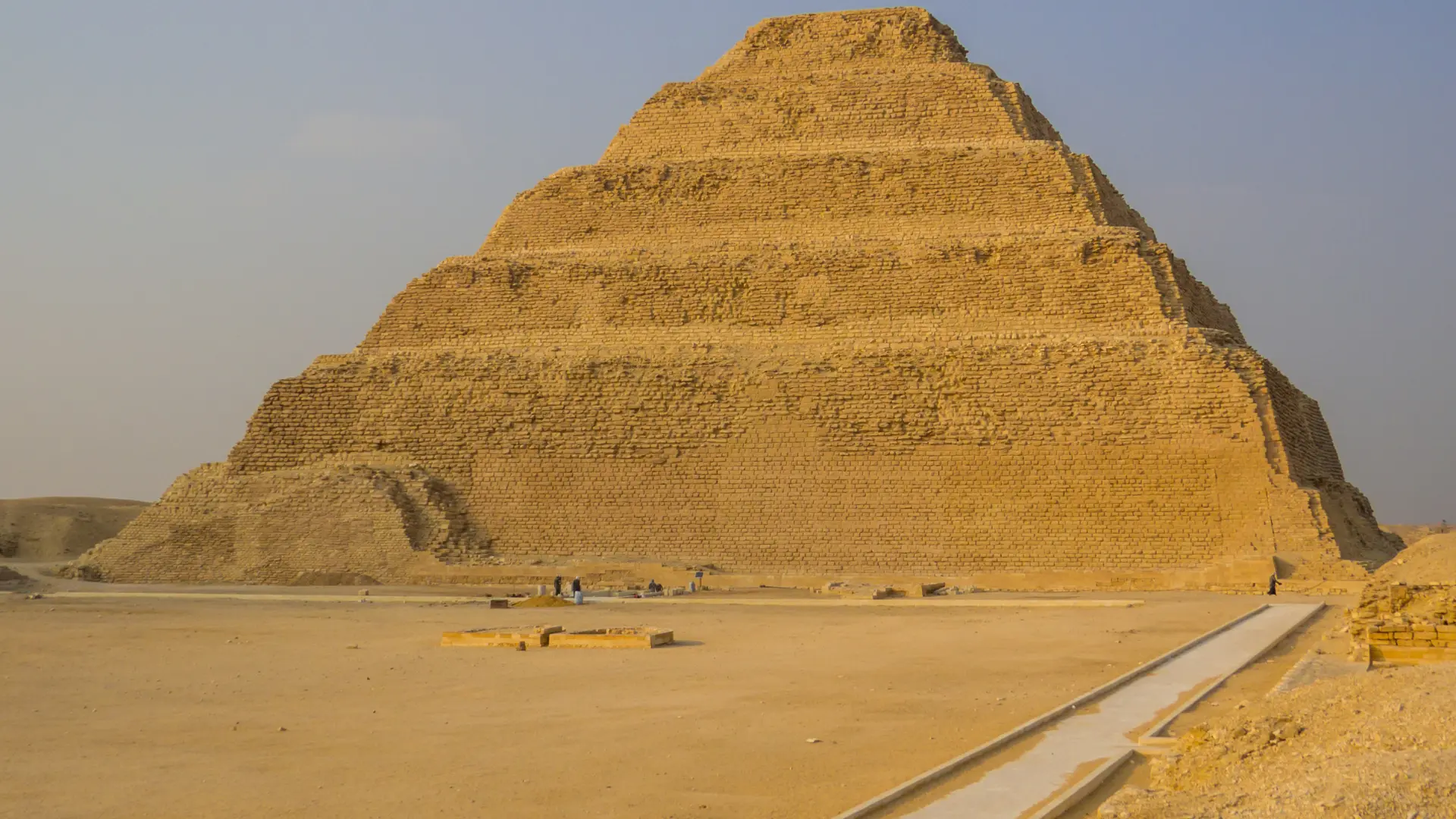
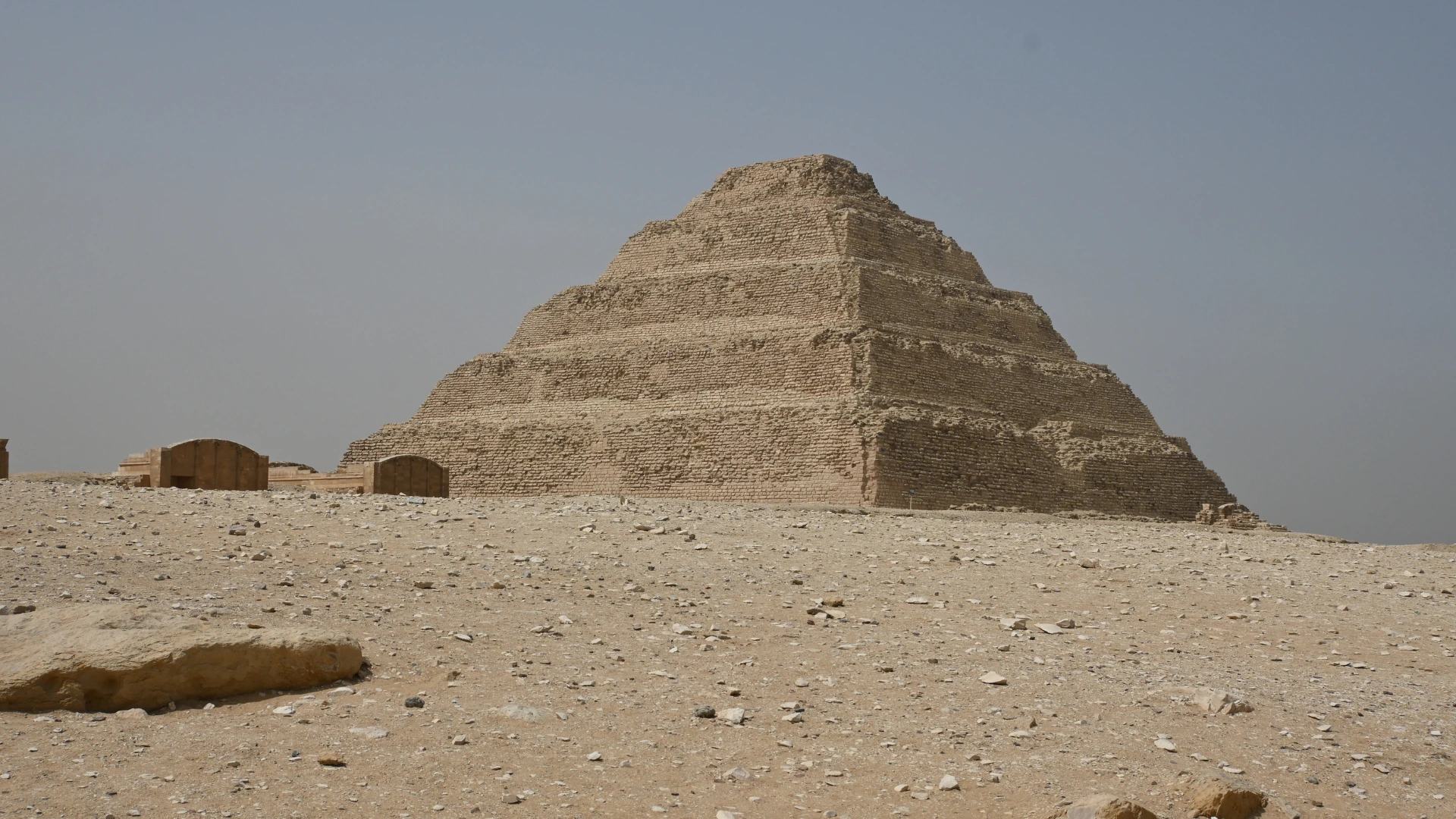
Saqqara is Egypt’s largest ancient necropolis, stretching over 7 km along the desert escarpment above the ancient capital Memphis. It served as the primary burial ground for the Memphis royal court and its officials from the 1st Dynasty through the Ptolemaic period — a span of nearly 3,500 years. The site contains pyramids from multiple dynasties, hundreds of mastaba tombs, the underground galleries of the Serapeum, and some of the richest painted tomb chapels in Egypt.
The centerpiece of Saqqara is the Step Pyramid of Djoser, built around 2630 BCE as the world’s first large-scale stone monument. Surrounding it is an enormous funerary complex enclosed by a 10-meter boundary wall with 14 false doorways — a symbolic architecture that replicated the royal palace in stone for eternity. Nearby, the pyramid of Unas contains the earliest version of the Pyramid Texts, a collection of spells and rituals carved directly onto the chamber walls.
Saqqara also contains several New Kingdom tombs belonging to senior officials of the Ramesside period, many of which were only rediscovered in the 1970s and 1980s. The site is actively excavated, and new discoveries — painted sarcophagi, mummies, and intact burial shafts — are announced regularly, making Saqqara one of the most productive archaeological zones in the world today.
Saqqara has been in continuous use as a burial site since at least the 1st Dynasty (c. 3100 BCE), when the earliest mastaba tombs were constructed for high officials and members of the royal family. The site reached its first architectural peak under Pharaoh Djoser of the 3rd Dynasty, whose architect Imhotep designed the Step Pyramid complex around 2630 BCE — the first time large-scale dressed limestone was used in construction anywhere on earth.
During the 5th and 6th Dynasties, Saqqara became the preferred royal burial ground again after Abu Sir’s use in the 5th Dynasty, with the pyramids of Unas, Teti, Pepi I, Merenre, and Pepi II all built here. These later pyramids introduced the Pyramid Texts — the world’s oldest known religious corpus — onto the interior walls of their burial chambers.
In the 19th century BCE, the site was used for the Serapeum, the underground burial vaults of the Apis bulls, sacred animals associated with the god Ptah and later Osiris. Auguste Mariette rediscovered the Serapeum in 1851, finding granite sarcophagi weighing up to 70 tonnes still sealed inside the subterranean galleries.
The world's oldest large-scale stone structure, built in six steps to a height of 62 meters, with its surrounding ceremonial court now open after decades of restoration.
Exterior appears unimpressive, but the interior walls bear the Pyramid Texts — the oldest surviving religious writing in the world — carved in blue-green faience.
Underground vaulted galleries housing the massive granite sarcophagi of the Apis bulls, descending over 200 meters into the desert bedrock.
A 5th Dynasty official's tomb with extraordinarily detailed painted reliefs showing everyday Old Kingdom life — agriculture, butchery, shipbuilding, and musicians.
On-site museum dedicated to the architect of the Step Pyramid, displaying recent excavation finds including painted coffins and artifacts from the 2020 discovery.
These packages visit this site as part of the itinerary.


Start From


Start From

See what our happy travelers say about us



