
Summary
The ancient Egyptians mummified their dead because they believed the body had to survive for the soul to live for ever. Over some 3,000 years they perfected a process that took about 70 days: the organs were removed, the body was dried with natron salt, then wrapped in linen with protective amulets, and laid in nested coffins inside a stone sarcophagus. This guide explains how mummification worked, what a sarcophagus is, the stories of the royal mummies, and where you can see mummies in Egypt today.
Why the Egyptians Made Mummies
For the Egyptians, a person was made of several parts: the body, the ka (life force), the ba (personality, shown as a bird with a human head), the name and the shadow. After death, the ka and the ba needed the body as a home to return to. If the body decayed, the soul could be lost. Mummification was the way to make the body last for ever.
It began by accident. In the Predynastic period, before 3100 BC, the dead were buried in shallow pits in the hot, dry sand, which dried the bodies naturally. When burials moved into tombs and coffins, away from the sand, the bodies decayed, and the Egyptians began to look for ways to preserve them by hand.
How a Mummy Was Made, Step by Step
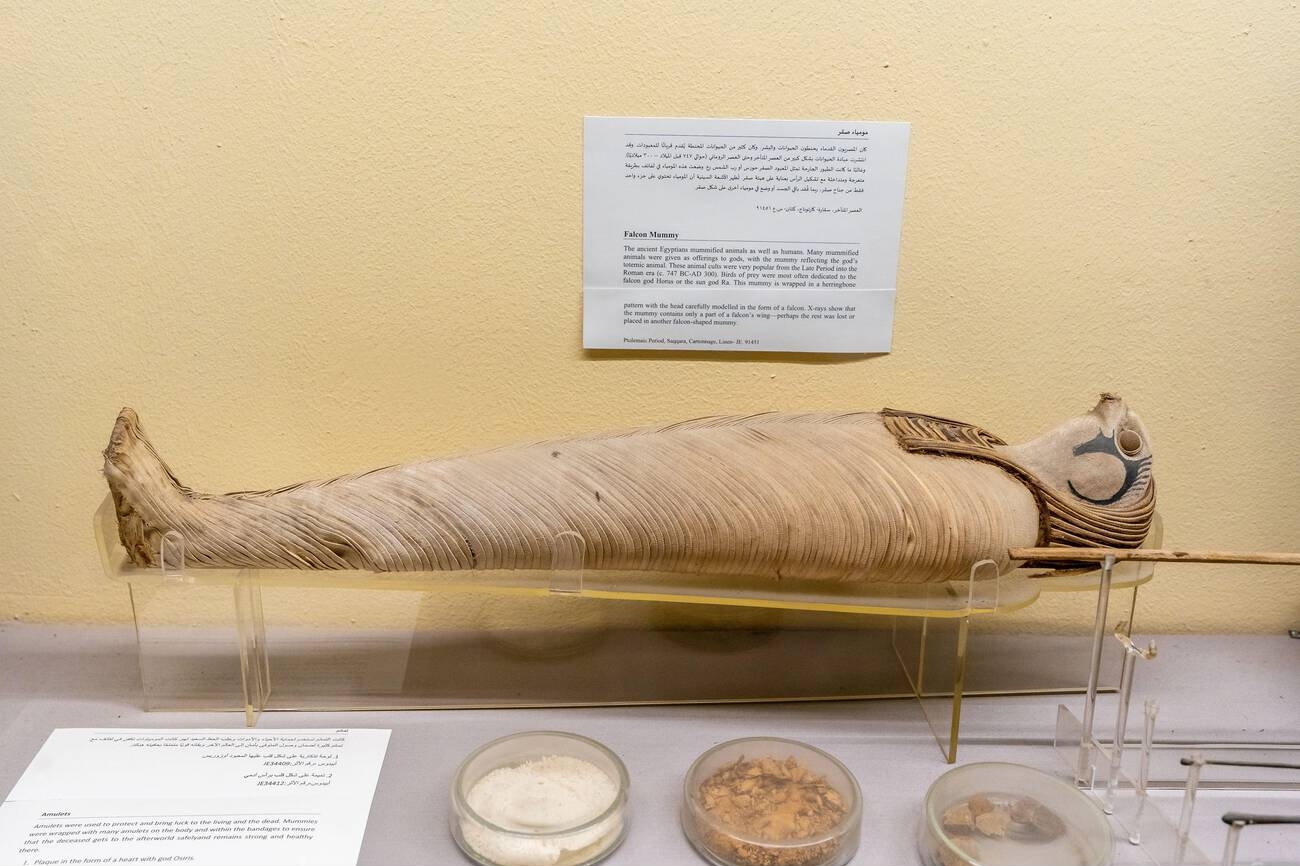
The best account comes from the Greek historian Herodotus, who visited Egypt in the 5th century BC, together with what archaeologists have learned from the mummies themselves. The finest treatment, for kings and the rich, took about 70 days:
- Washing and purifying the body in a tent known as the “place of purification”, near the river.
- Removing the brain, usually through the nose with a long hook. The Egyptians thought the brain was unimportant; the heart was the seat of thought.
- Removing the organs through a cut in the left side. The liver, lungs, stomach and intestines were dried and stored separately. The heart was left in place, because it would be weighed in the judgement of the dead.
- Drying the body by covering it with natron, a natural salt from the Wadi Natrun, for about 40 days.
- Filling and shaping: the dried body was packed with linen, sawdust or resin to restore its shape, and rubbed with oils and resins.
- Wrapping in hundreds of metres of linen, with amulets such as the scarab, the djed and the Eye of Horus placed between the layers, and prayers spoken by a priest wearing a jackal mask of Anubis.
- The mask and coffin: a portrait mask was placed over the head, and the mummy was laid in its coffins.
At the tomb, a priest performed the Opening of the Mouth ceremony, touching the mummy’s mouth with special tools so that the dead could eat, breathe and speak again in the afterlife.
Canopic Jars and the Four Sons of Horus
The dried organs were kept in four canopic jars, each protected by one of the four sons of Horus, whose heads often formed the lids:
| Son of Horus | Head | Organ |
|---|---|---|
| Imsety | Human | Liver |
| Hapy | Baboon | Lungs |
| Duamutef | Jackal | Stomach |
| Qebehsenuef | Falcon | Intestines |
Tutankhamun’s organs were placed in miniature gold coffins inside an alabaster chest, now in the Grand Egyptian Museum.
What Is a Sarcophagus? The Meaning of the Word
A sarcophagus is the large outer container, usually of stone, that held a mummy and its coffins. The word is Greek: sarx, “flesh”, and phagein, “to eat”, so it means “flesh-eater”. The Greeks believed a certain kind of limestone could consume a body placed inside it.
The Egyptians themselves called the sarcophagus neb ankh, “possessor of life”. It was the last protective shell in a set that worked like Russian dolls:
- The mummy, wrapped and masked.
- One or more coffins, usually of wood, often in the shape of the body (anthropoid coffins), painted with gods and spells.
- The sarcophagus, of granite, limestone, quartzite or alabaster, decorated with goddesses such as Isis and Nephthys spreading their wings to protect the dead.
Tutankhamun had a quartzite sarcophagus holding three coffins, one inside the other. The innermost is solid gold and weighs about 110 kg.
The Royal Mummies and Their Secret Hiding Places
Royal tombs were robbed even in ancient times. Around 1000 BC, priests gathered the mummies of the great kings, rewrapped them, and hid them in two secret places:
- The Deir el-Bahari cache (TT320), a shaft in the cliffs near the Temple of Hatshepsut, found by local villagers and revealed to archaeologists in 1881. It held more than 50 royal mummies, including Ramesses II and Seti I.
- The tomb of Amenhotep II (KV35) in the Valley of the Kings, opened in 1898, with another group of kings.
In April 2021, 22 royal mummies, 18 kings and 4 queens, were carried through Cairo in the televised Pharaohs’ Golden Parade to their new home in the National Museum of Egyptian Civilization. Tutankhamun is the exception: his mummy still lies in his tomb, KV62, in the Valley of the Kings.
8-Day Cairo, Siwa and White & Black Desert Adventure
Planning the trip itself? Start here.
View This TripAnimal Mummies
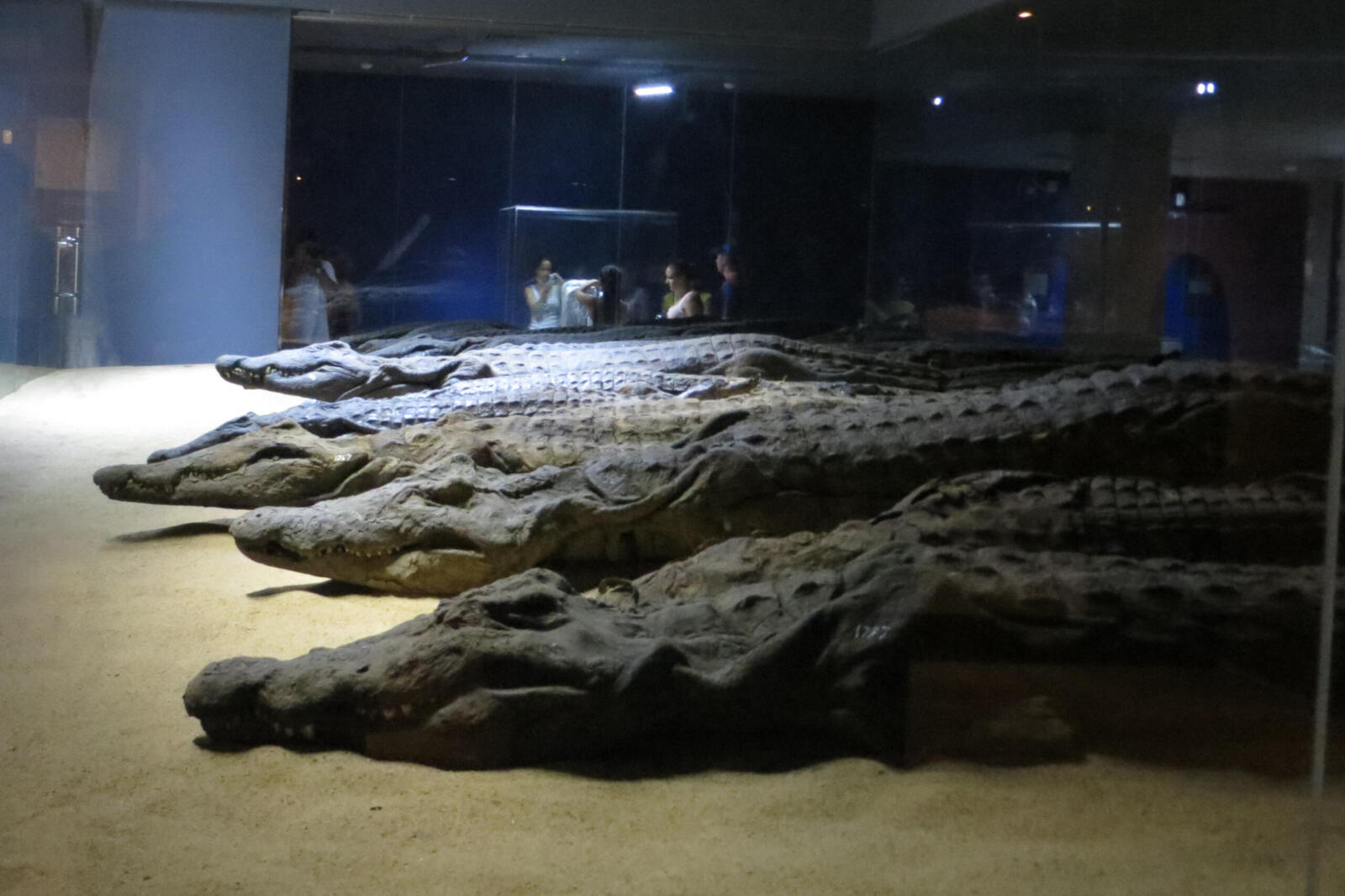
The Egyptians mummified millions of animals, either as beloved pets or, far more often, as offerings to the gods they were linked with:
- Cats for the goddess Bastet, buried in huge cemeteries at Bubastis and Saqqara.
- Ibises and baboons for Thoth, god of wisdom; the catacombs of Tuna el-Gebel near Minya hold millions of ibis mummies.
- Crocodiles for Sobek, on show in the Crocodile Museum beside Kom Ombo Temple.
- The Apis bulls of Memphis, buried in giant granite boxes in the Serapeum at Saqqara.
The Judgement of the Dead
Mummification prepared the body; the Book of the Dead, a collection of spells written on papyrus and placed with the mummy, prepared the soul. Its most famous scene is the weighing of the heart. The dead person stood before Osiris while Anubis weighed their heart against the feather of Maat, the goddess of truth. A heart heavy with wrongdoing was eaten by Ammit, a monster with the head of a crocodile; a light heart passed into the Field of Reeds, an ideal Egypt where life continued for ever. Read more about the gods of the afterlife in our guide to ancient Egyptian gods and about the symbols placed on mummies in ancient Egyptian symbols.
Where to See Mummies in Egypt
| Place | What you see |
|---|---|
| National Museum of Egyptian Civilization, Cairo | The Royal Mummies Hall: Ramesses II, Seti I, Hatshepsut and other kings and queens. |
| Grand Egyptian Museum, Giza | Tutankhamun’s gold mask, coffins and canopic shrine. |
| Valley of the Kings, Luxor | The mummy of Tutankhamun, still in his tomb (KV62). |
| Mummification Museum, Luxor | The tools, materials and steps of mummification, with animal mummies. |
| Crocodile Museum, Kom Ombo | Mummified crocodiles of the god Sobek. |
| Serapeum, Saqqara | The giant granite sarcophagi of the Apis bulls. |
See the royal mummies with an Egyptologist on our NMEC and Old Cairo tour, or Tutankhamun’s treasures on the Giza Pyramids and Grand Egyptian Museum tour.
Egyptian Mummies and Sarcophagi: FAQ
What does sarcophagus mean?
The word comes from Greek and means “flesh-eater”, from sarx (flesh) and phagein (to eat). It is the stone outer container that held a mummy and its coffins.
What is the difference between a coffin and a sarcophagus?
The coffin, usually of wood and shaped like the body, held the mummy. The sarcophagus was the larger outer box, usually of stone, that held the coffins.
How long did it take to make a mummy?
About 70 days for the finest treatment, including some 40 days drying the body in natron salt.
Why did the Egyptians leave the heart in the body?
They believed the heart held a person’s thoughts and deeds, and it had to be weighed against the feather of Maat in the judgement of the dead.
Where can I see real Egyptian mummies?
In the Royal Mummies Hall of the National Museum of Egyptian Civilization in Cairo, in Tutankhamun’s tomb in the Valley of the Kings, and in the Mummification Museum in Luxor.


























