
Summary
The Book of the Dead is the modern name for a collection of magic spells that ancient Egyptians had buried with them to help them pass through the underworld and live forever. The Egyptians called it the “Spells for Coming Forth by Day”. It was not a single fixed book but a personal selection of spells, written on a papyrus roll and placed in the tomb, used from about 1550 BC until the Roman period. Its best-known scene is the weighing of the heart against the feather of truth.
Where It Came From
The Book of the Dead grew out of older funerary texts:
- Pyramid Texts (Old Kingdom, from about 2350 BC): carved inside the burial chambers of kings, first in the pyramid of Unas at Saqqara.
- Coffin Texts (Middle Kingdom): similar spells painted inside the wooden coffins of officials and their families, opening eternal life to more people.
- Book of the Dead (New Kingdom onwards): the spells moved onto papyrus rolls, illustrated with coloured vignettes, available to anyone who could afford a copy.
About 190 different spells, which Egyptologists call chapters, are known, but no single papyrus contains them all.
How a Book of the Dead Was Made
Workshops of scribes and painters prepared rolls in advance, sometimes leaving blank spaces where the buyer’s name would be added. Wealthy clients ordered their own, choosing the spells. The texts were written in cursive hieroglyphs or hieratic, in black ink with red for headings, and some rolls ran to more than 20 metres. Read how the writing works in Egyptian hieroglyphs.
Famous Spells
- Spell 6, the shabti spell: brings to life the small figures placed in the tomb, so they will do any work demanded of the dead person in the afterlife.
- Spell 17: a long hymn explaining the creation of the world and the nature of the sun god Ra.
- Spell 30B: carved on the heart scarab, it begs the heart not to testify against its owner.
- Spell 125: the judgement of the dead, with the weighing of the heart and the “negative confession”.
- Spells to become a bird, a lotus or a god: letting the spirit leave the tomb and move freely by day.
The Weighing of the Heart
In Spell 125 the dead person enters the Hall of the Two Truths before Osiris and 42 judges. They declare the wrongs they never committed, such as “I have not stolen” and “I have not killed”. Then their heart is placed on a scale against the feather of Maat, goddess of truth. Anubis checks the balance and Thoth writes down the result. A heart heavy with wrongdoing is eaten by the monster Ammit; a heart in balance lets its owner live forever in the Field of Reeds, an ideal Egypt of endless harvests.
8-Day Cairo, Siwa and White & Black Desert Adventure
Planning the trip itself? Start here.
View This TripThe Papyrus of Ani
The most famous copy belonged to Ani, a royal scribe from Thebes, around 1250 BC. Its colourful vignettes, including the finest weighing-of-the-heart scene to survive, are reproduced in almost every book on ancient Egypt. Ani’s papyrus, more than 20 metres long, is now in the British Museum in London.
Where to See the Book of the Dead in Egypt
- Cairo: the Egyptian Museum displays illustrated Book of the Dead papyri, alongside coffins, shabtis and heart scarabs.
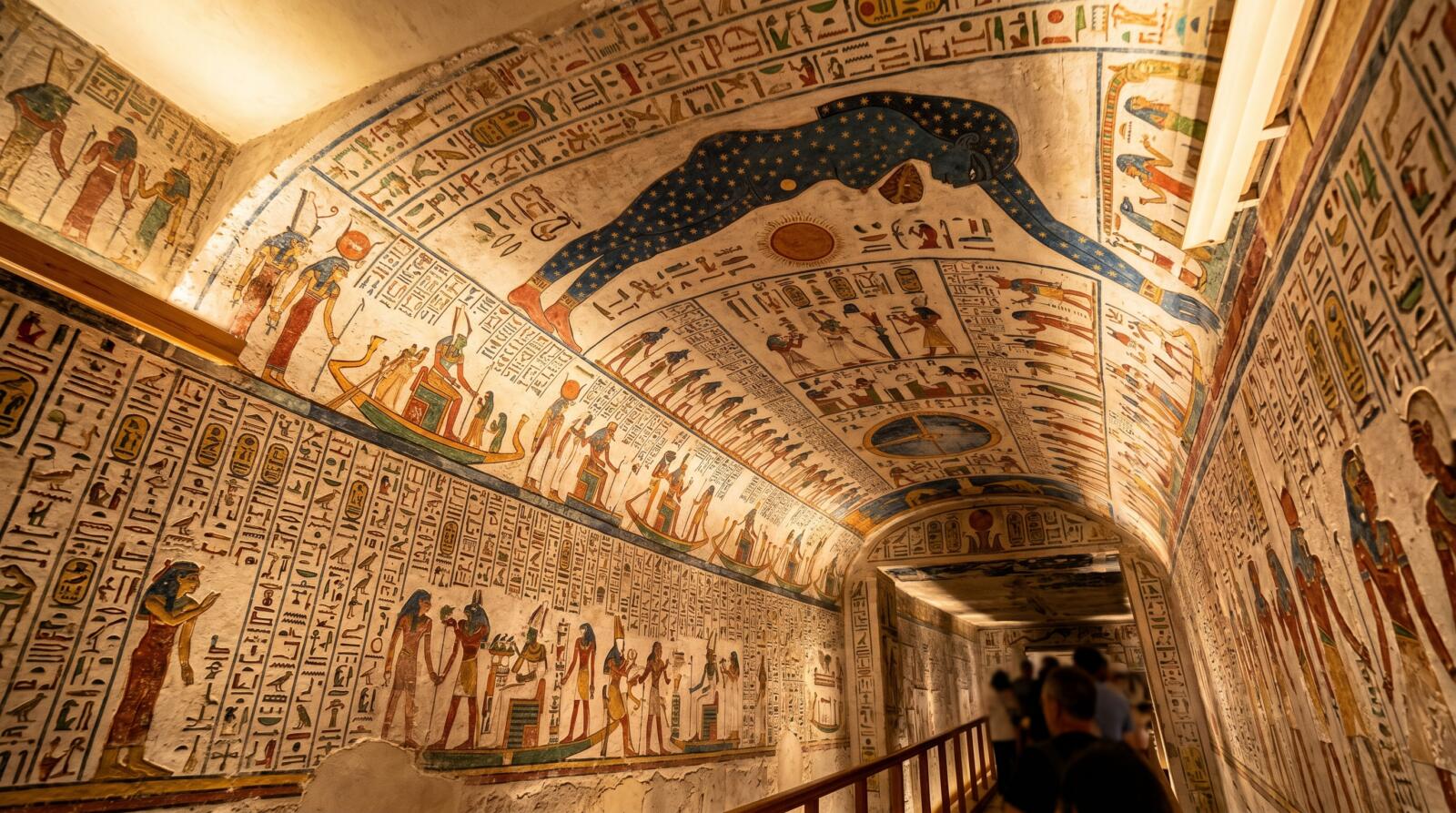
- Luxor: the royal tombs of the Valley of the Kings are covered with related books of the afterlife, such as the Amduat and the Book of Gates, and the tomb of Nefertari in the Valley of the Queens shows scenes from the Book of the Dead.
- Papyrus shops: painted copies of the weighing-of-the-heart scene are a classic souvenir; real papyrus is made from the stems of the papyrus plant and feels rough and fibrous.
For the rest of the burial story, see Egyptian mummies and canopic jars.
Book of the Dead: FAQ
What is the Egyptian Book of the Dead?
A collection of spells written on papyrus and buried with the dead to guide and protect them in the afterlife.
What did the Egyptians call it?
The “Spells for Coming Forth by Day”.
Is the Book of the Dead a bible?
No. It was not a holy book of rules for the living but a personal set of magic spells for the dead.
What is the most famous spell?
Spell 125, with the weighing of the heart against the feather of Maat.
Where is the Papyrus of Ani?
In the British Museum in London.
Can you read the Book of the Dead today?
Yes. Egyptologists have translated it, and modern English translations of the spells are widely available.
Ancient Egypt: Read Next
- The social pyramid: who was who in ancient Egypt
- The vizier: right hand of the pharaoh
- The Nile River: facts and history
- Thebes, the ancient capital
- Farmers in ancient Egypt: life along the Nile
- Ancient Egyptian masks and Tutankhamun
- Egyptian pharaohs: the rulers of ancient Egypt
- Egyptian temples: a guide to 18 temples




























