
Summary
Canopic jars were the four containers in which the ancient Egyptians stored the internal organs of a mummy: the liver, the lungs, the stomach and the intestines. Each jar was protected by one of the four sons of Horus, whose heads often formed the lids. Removing and drying the organs helped preserve the body, while keeping them close to it meant the dead person would be complete in the afterlife. The heart was left inside the body, and the brain was thrown away.
What Were Canopic Jars For?
During mummification the embalmers made a cut in the left side of the body and removed the organs most likely to decay. Each organ was dried in natron salt, treated with resin, wrapped in linen and placed in its own jar. The jars were then sealed and buried in the tomb near the coffin, often inside a wooden or stone chest. See the whole process in Egyptian mummies and sarcophagi.
The Four Sons of Horus
From the New Kingdom, each jar lid usually took the head of one of the four sons of Horus, and each son was in turn guarded by a goddess:
| Son of Horus | Head | Organ | Direction | Protecting goddess |
|---|---|---|---|---|
| Imsety | Human | Liver | South | Isis |
| Hapy | Baboon | Lungs | North | Nephthys |
| Duamutef | Jackal | Stomach | East | Neith |
| Qebehsenuef | Falcon | Intestines | West | Selket |
Hapy, the baboon-headed son, is a different god from Hapi, the god of the Nile flood, though the names sound alike in English.
Why Are They Called Canopic Jars?
The name has nothing to do with the Egyptians themselves. Early Egyptologists borrowed it from Canopus, an ancient town near Abu Qir east of Alexandria, where a form of Osiris was worshipped as a jar with a human head. Greek writers linked the town with Kanopos, the helmsman of Menelaus in the Trojan War legends. The jars looked similar, so the name stuck, even though they are far older than the cult of Canopus.
How Canopic Jars Changed
- Old Kingdom: the oldest known canopic chest belonged to Queen Hetepheres, mother of Khufu, builder of the Great Pyramid, around 2600 BC; her organs were kept in a stone chest divided into four compartments. Early jars had plain, flat lids.
- Middle Kingdom: lids were carved as human heads.
- New Kingdom: the heads of the four sons of Horus became the standard design.
- Later periods: embalmers often wrapped the organs and put them back inside the body with small figures of the four sons, but solid “dummy” canopic jars were still placed in the tomb out of tradition.
Jars were made of limestone, calcite (Egyptian alabaster), pottery or painted wood, and often carried short spells naming the dead person and their protector.
8-Day Cairo, Siwa and White & Black Desert Adventure
Planning the trip itself? Start here.
View This TripTutankhamun's Canopic Shrine
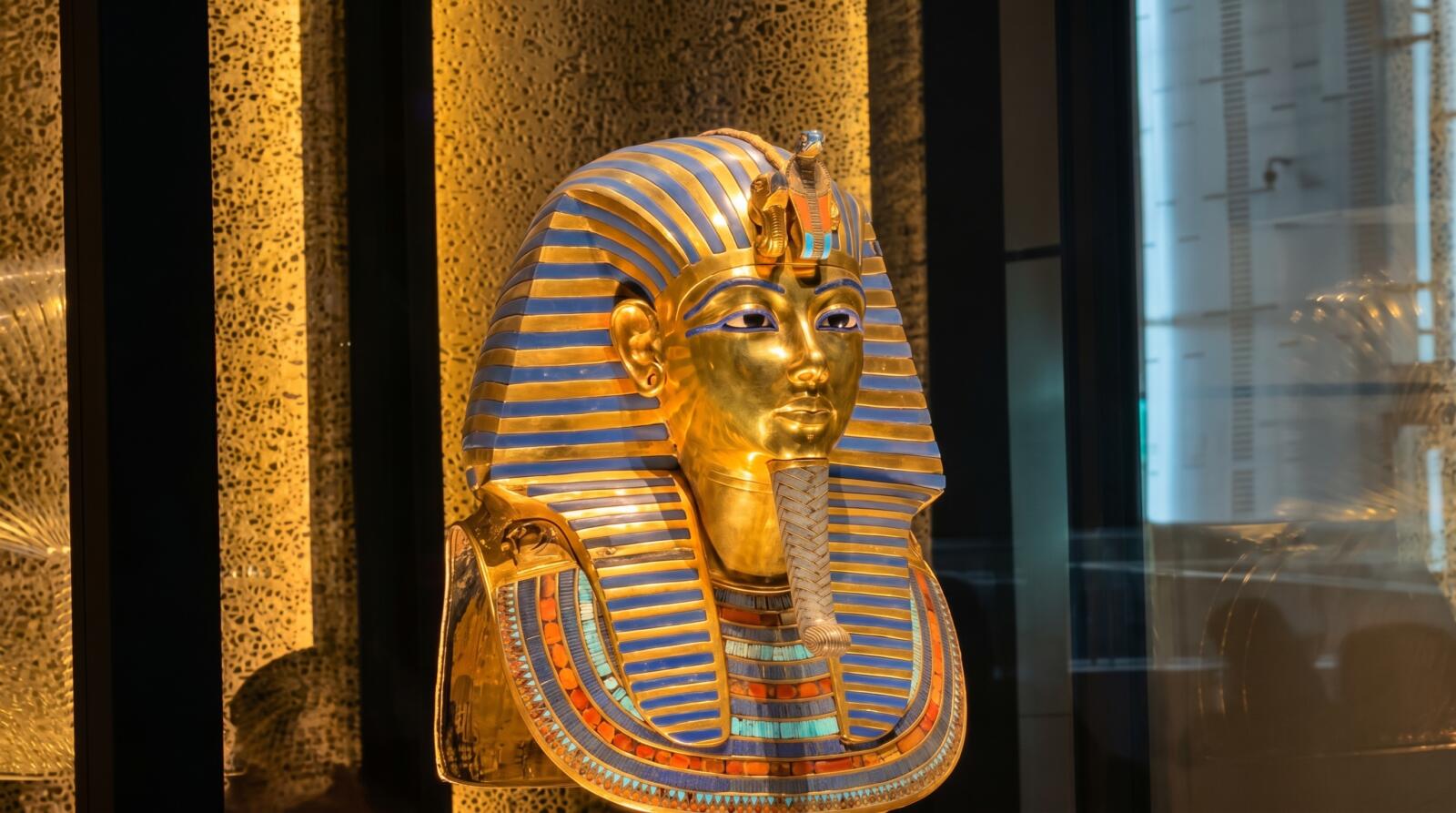
The most splendid canopic set ever found came from the tomb of Tutankhamun in 1922. His organs lay in four miniature solid-gold coffins, each a copy of his own coffin, placed in a calcite chest whose four stoppers are carved as the king’s head. The chest stood inside a gilded wooden shrine guarded by four goddesses with outstretched arms: Isis, Nephthys, Neith and Selket. The whole ensemble is now displayed at the Grand Egyptian Museum.
Where to See Canopic Jars in Egypt
- Grand Egyptian Museum, Giza: Tutankhamun’s canopic shrine, chest and coffinettes.
- Egyptian Museum, Tahrir Square: canopic jars and chests from many periods.
- Mummification Museum, Luxor: the tools and materials of the embalmers, with canopic jars.
- National Museum of Egyptian Civilization, Cairo: the royal mummies and burial equipment.
For the gods and symbols on the jars, see ancient Egyptian gods and Egyptian hieroglyphs.
Canopic Jars: FAQ
What are canopic jars?
Four jars in which the ancient Egyptians kept the liver, lungs, stomach and intestines removed from a body during mummification.
What organs went in canopic jars?
The liver (Imsety), lungs (Hapy), stomach (Duamutef) and intestines (Qebehsenuef).
Why was the heart not put in a canopic jar?
The heart was believed to hold a person’s mind and deeds and was needed for the weighing of the heart in the afterlife, so it was left in the body.
What happened to the brain?
It was usually removed through the nose and discarded, because the Egyptians did not think it important.
Who are the four sons of Horus?
Imsety, Hapy, Duamutef and Qebehsenuef, the gods who protected the organs, with human, baboon, jackal and falcon heads.
Why are they called canopic jars?
After Canopus near Alexandria, where a jar-shaped form of Osiris was worshipped; the name was given by early Egyptologists.



























