
Testimonials
Our Clients Reviews
See what our happy travelers say about us
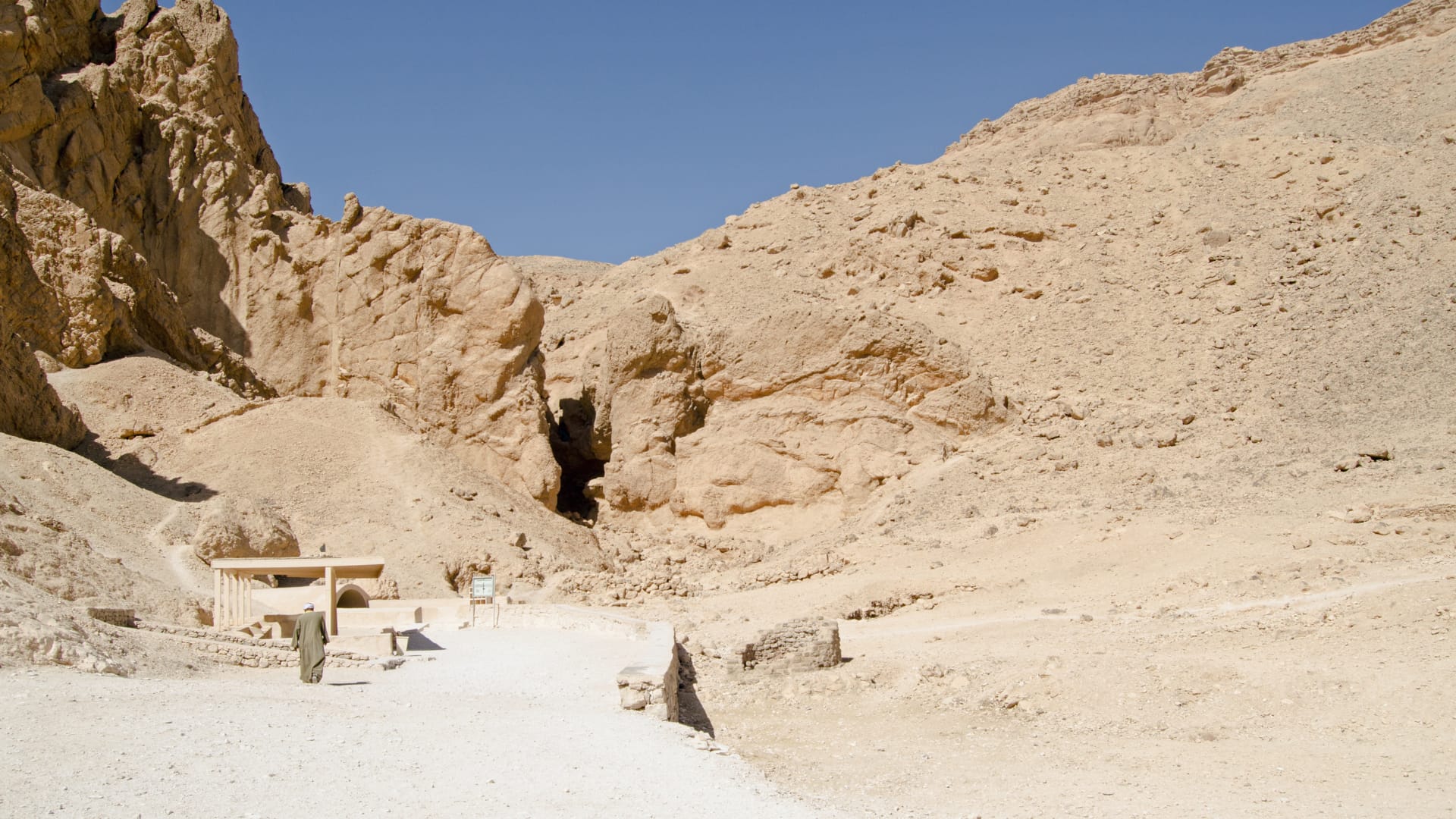
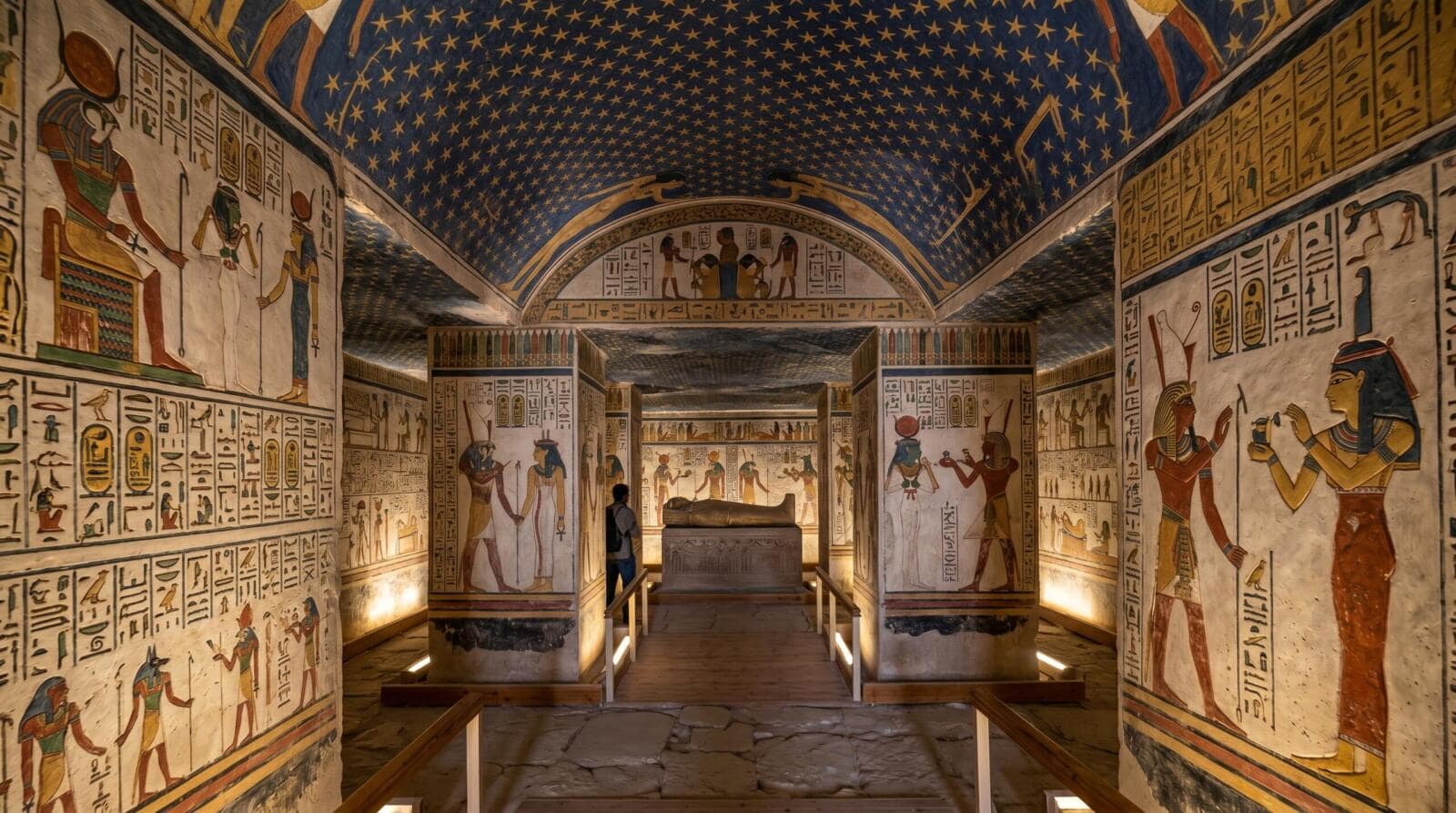
The Valley of the Queens is the main royal burial ground for queens, princes, and senior family members of the Egyptian New Kingdom, located on the west bank of Luxor approximately 2 km southwest of the Valley of the Kings. Known in ancient Egyptian as Ta-Set-Neferu (‘the place of beauty’), the valley contains over 90 tombs cut into the limestone cliffs, of which approximately 12 are decorated and open to visitors. The most celebrated tomb in the valley — that of Queen Nefertari, Great Royal Wife of Ramesses II — is considered to contain the finest painted decoration of any ancient Egyptian tomb.
Nefertari’s tomb (QV66) was painted around 1255 BCE with an extraordinary program of religious scenes from the Book of the Dead — her journey through the underworld guided by the gods, her transformation into a divine being, and her final arrival in the Field of Reeds. The colors are exceptionally vibrant: deep blues and greens, crisp white, warm red, and gold against a cream limestone background that has been carefully stabilized by a major Italian conservation project. The figures of Nefertari herself, tall and elegant in her white linen dress and vulture headdress, are among the most finely painted royal portraits in the entire Egyptian artistic tradition.
Beyond Nefertari’s tomb, the valley contains painted tombs of Ramesside princes, including the tombs of Amenherkhepshef and Khaemwaset, sons of Ramesses III, with vivid paintings of the young princes shown being introduced to the gods by their father.
The Valley of the Queens was used as a royal burial ground from the late 17th Dynasty through the end of the 20th Dynasty (c. 1550–1070 BCE). The earliest tombs belong to queens and officials of the late Second Intermediate Period, while the most elaborately decorated tombs date to the 19th and 20th Dynasties. The valley was chosen for its proximity to the Valley of the Kings and its natural isolation from the agricultural plain.
Nefertari was the chief wife of Ramesses II and one of the most prominent queens of the New Kingdom. Her tomb was constructed early in Ramesses II’s reign and represents a significant investment of artistic labor — the quality of the painting suggests some of the finest artists employed at royal court level. The tomb was robbed in antiquity and Nefertari’s mummy has never been found, though fragments of her equipment including a gold sandal and alabaster vessels were discovered during excavations.
Nefertari’s tomb was closed to the public for many years due to the damage caused by visitor humidity. A major conservation project by the Getty Conservation Institute and the Egyptian Antiquities Organization, conducted between 1986 and 1992, stabilized the salt-damaged paintings and developed new conservation methodologies that have since been applied to other Egyptian monuments. The tomb reopened in 1995 but visitor numbers are strictly controlled to protect the fragile painted surfaces.
The finest painted tomb in Egypt — Nefertari's journey through the underworld depicted in extraordinary colors, with her tall, elegant figure in white linen among the most accomplished royal portraits in Egyptian art.
A prince's tomb with vivid paintings showing Ramesses III introducing his son to the gods — the young prince's face and figure painted in a style of unusual sensitivity and youth.
Another royal prince's tomb with well-preserved painted registers depicting the Book of the Dead journey, including vivid blue and yellow color combinations characteristic of 20th Dynasty Theban painting.
The valley is smaller and quieter than the Valley of the Kings, with fewer visitors; the approach through the limestone wadi gives a sense of the natural amphitheater that made this a chosen sacred space.

See what our happy travelers say about us
