
Testimonials
Our Clients Reviews
See what our happy travelers say about us
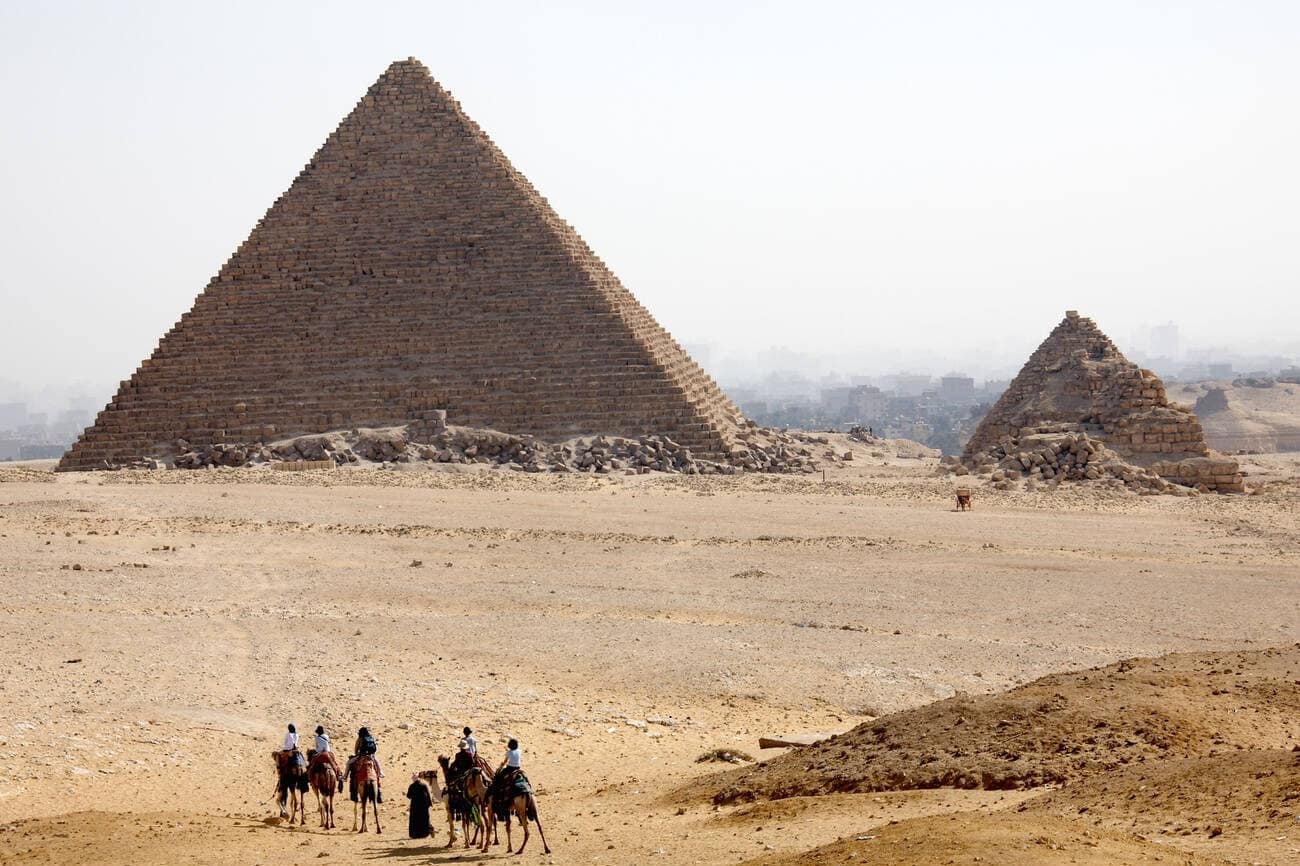
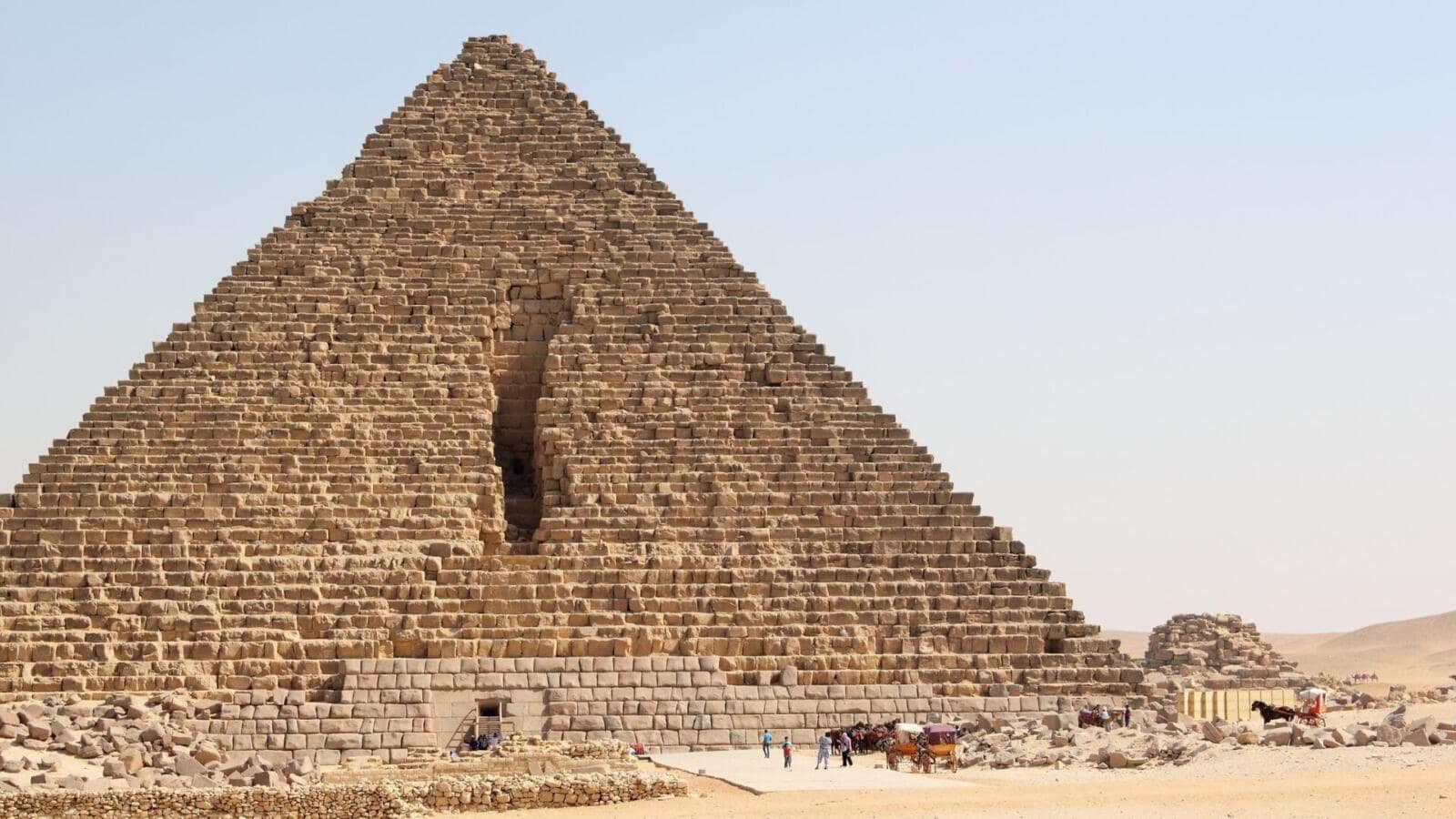
The Pyramid of Menkaure is the smallest and southernmost of the three main Giza pyramids, built during the reign of Pharaoh Menkaure (c. 2532–2503 BCE), the grandson of Khufu. It stands 65 meters tall with a base of 102 meters per side — significantly smaller than its two predecessors, though still a substantial monument by any absolute measure. The lower third of the pyramid’s exterior was originally cased in red Aswan granite rather than the white Tura limestone used for Khufu and Khafre, giving Menkaure’s pyramid a distinctive two-toned appearance in ancient times.
The complex includes three small subsidiary pyramids for Menkaure’s queens to the south, and a mortuary temple and valley temple to the east and northeast. Unlike the other two pyramid complexes at Giza, Menkaure’s valley temple appears to have been completed in mudbrick by his successors after his death, suggesting the reign ended before full completion. The site is considerably less crowded than the northern end of the plateau where Khufu’s pyramid stands.
The pyramid’s interior is accessible through an original entrance cut into the north face. The descending passage leads to a paneled chamber and then to the burial chamber, where an intact decorated basalt sarcophagus was found by Colonel Howard Vyse in 1837. The sarcophagus was lost at sea when the ship transporting it to England sank off the coast of Spain.
Menkaure was the fifth or sixth pharaoh of the 4th Dynasty and is thought to have had a shorter reign than his predecessors. Ancient Egyptian tradition recorded in Herodotus portrayed him as a just and lenient king — in contrast to the allegedly tyrannical Khufu and Khafre — though no contemporary evidence supports this characterization.
Howard Vyse and John Perring forced entry into Menkaure’s pyramid in 1837 and discovered the burial chamber and a carved basalt sarcophagus. Inside the sarcophagus were fragments of a wooden coffin with an inscription in Menkaure’s name and human bones. The bones were later dated to the early Christian era, indicating a secondary burial reusing the tomb, while the sarcophagus itself was genuine Old Kingdom work. The sarcophagus was shipped to England but sank with the merchant vessel Beatrice off Cartagena in 1838.
Boston’s Museum of Fine Arts acquired the famous Menkaure triads — carved greywacke statues showing the king flanked by the goddess Hathor and a nome deity — from excavations by George Reisner in the early 20th century. Several triads and a remarkable paired statue of Menkaure and his queen remain among the finest examples of Old Kingdom royal sculpture in existence.
Rough red granite casing blocks remain visible at the base of the north and east faces, showing the original cladding material used on the lower third of the structure.
A descending passage leads to a decorated antechamber and then to the burial chamber; inner decorative paneling carved into the chamber walls is among the earliest decorative work inside a Giza pyramid.
Three small subsidiary pyramids south of the main structure, one retaining its original stepped core, were built for Menkaure's queens and provide a good example of the full royal pyramid complex layout.
The mudbrick sections of the mortuary temple, completed by Shepseskaf after Menkaure's death, are still distinguishable from the limestone Old Kingdom core construction.

See what our happy travelers say about us
