Summary
Religion shaped almost every part of life in ancient Egypt, from the way kings ruled to the way ordinary people buried their dead. For three thousand years Egyptians worshipped hundreds of gods, built vast temples to house them and prepared carefully for a life after death. This guide explains how that faith worked and where you can still see it in Egypt today.
Maat: Order Against Chaos

At the heart of Egyptian religion was maat: truth, balance and the right order of the world. Every sunrise, every flood of the Nile and every fair judgement kept chaos away for another day. The goddess Maat, shown with an ostrich feather on her head, stood for this idea, and both kings and ordinary people were expected to live by it.
Many Gods, Many Forms
Egyptians worshipped hundreds of gods. Some ruled the whole country, like the sun god Ra or Amun-Ra of Thebes; others belonged to one town or one craft. Gods could appear as humans, animals or both: Horus as a falcon, Anubis as a jackal, Hathor as a cow. They could also merge, so Amun and Ra became Amun-Ra. Read more in our guide to the ancient Egyptian gods and the Ennead of Heliopolis.
The Pharaoh Between Gods and People
The king was seen as the living Horus and the son of Ra, the link between the gods and Egypt. In theory he was the only one who served the gods in every temple; in practice, priests acted in his name. Temple walls show the king making offerings to the gods, and the gods giving him life and victory in return. One king, Akhenaten, tried to replace the old gods with the sun disc, the Aten, but his reform did not outlive him.
Temples and Priests
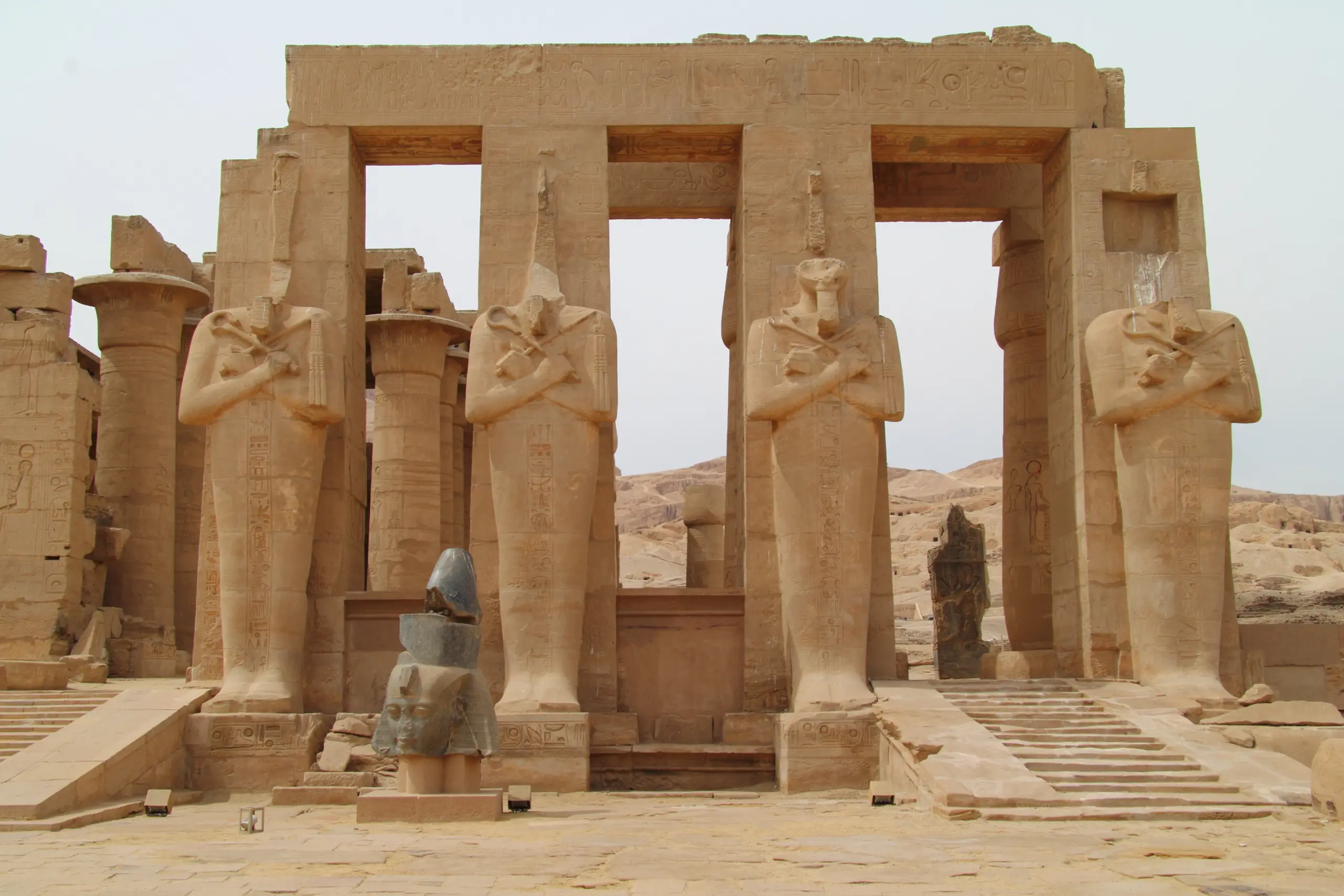
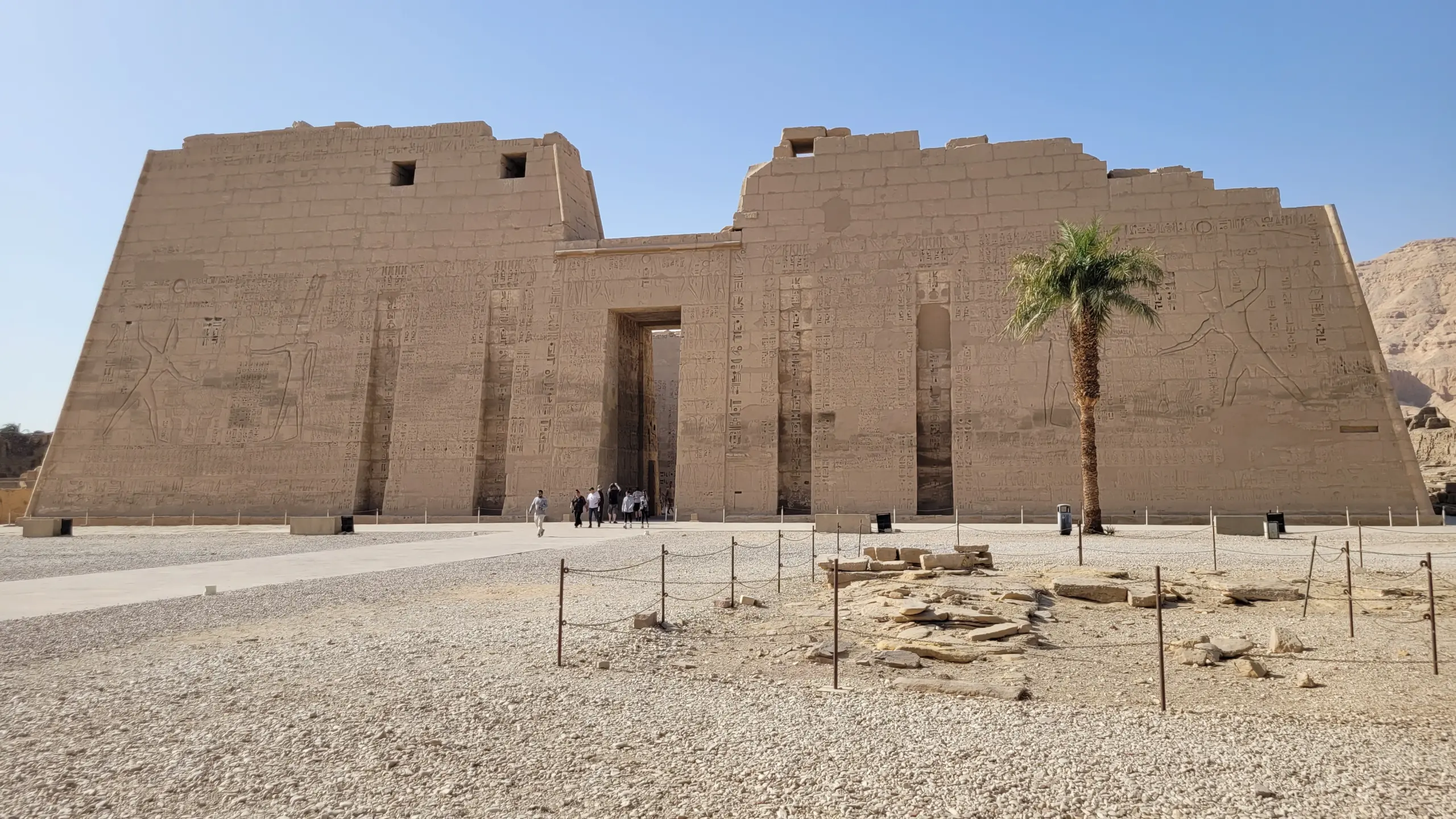
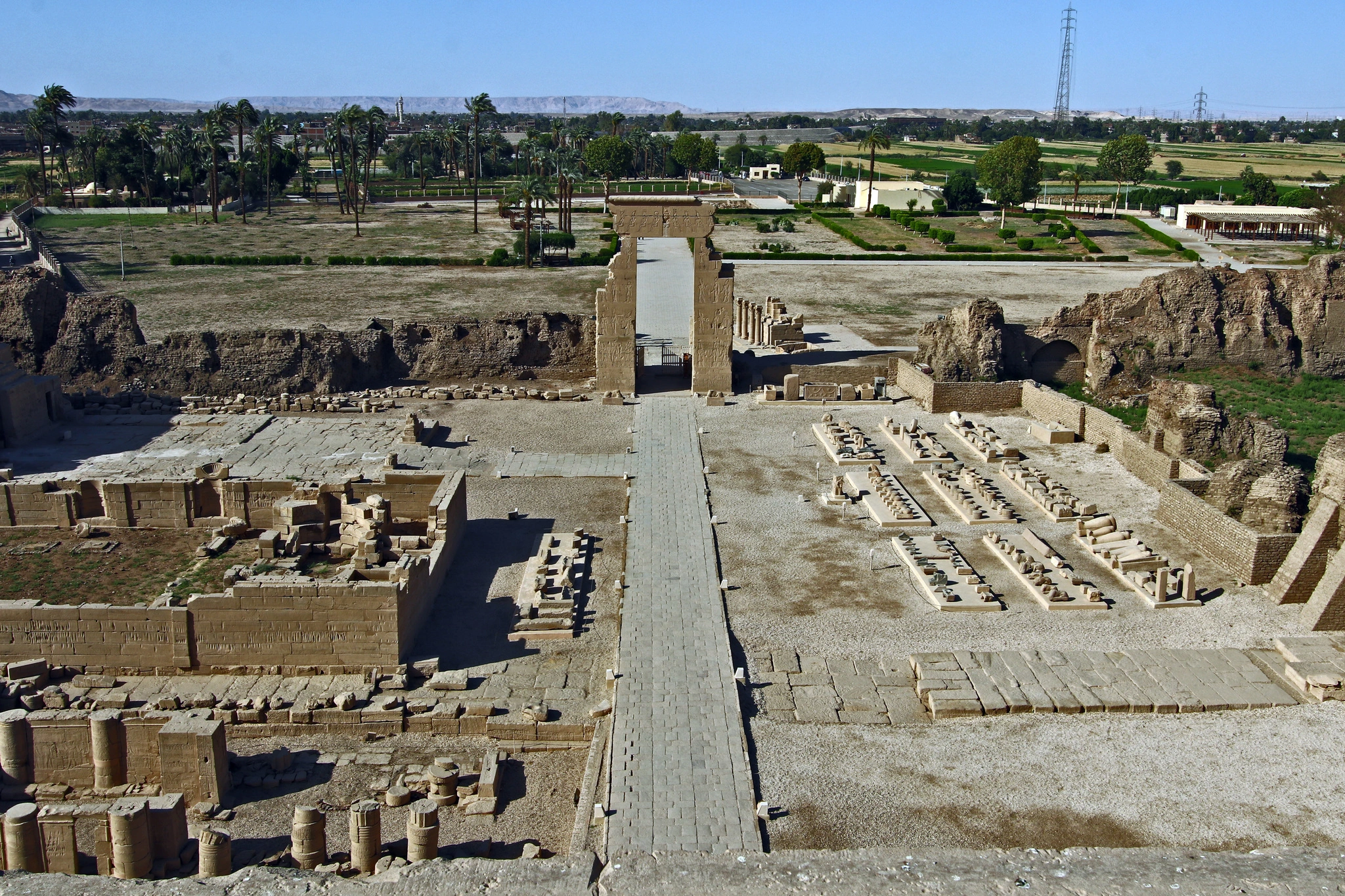
A temple was the home of a god, not a place where crowds gathered to pray. Behind the great gateways and columned halls, the god’s statue lived in a dark inner sanctuary, where priests washed, dressed and fed it every day. Ordinary people stayed in the outer courts and saw the god only during festivals, when the statue was carried out in procession. You can walk through these spaces today at Karnak, Luxor Temple and Edfu.
Death and the Afterlife
Egyptians believed that death was a journey, not an end. The body was preserved by mummification so the soul could return to it, and the tomb was filled with food, furniture and spells. In the Hall of Judgement the heart of the dead was weighed against the feather of maat before Osiris; a heart heavy with wrongdoing was eaten by the monster Ammit, while the just went on to the Field of Reeds. The painted tombs in the Valley of the Kings show this journey in detail.
Faith at Home
Beyond the temples, people prayed at home and in small shrines. They wore amulets for protection, left letters to dead relatives and turned to household gods such as Bes and Taweret, who guarded mothers and children. Many of the symbols on these amulets, like the ankh and the eye of Horus, are explained in our guide to ancient Egyptian symbols.
Where to See Ancient Egyptian Religion Today
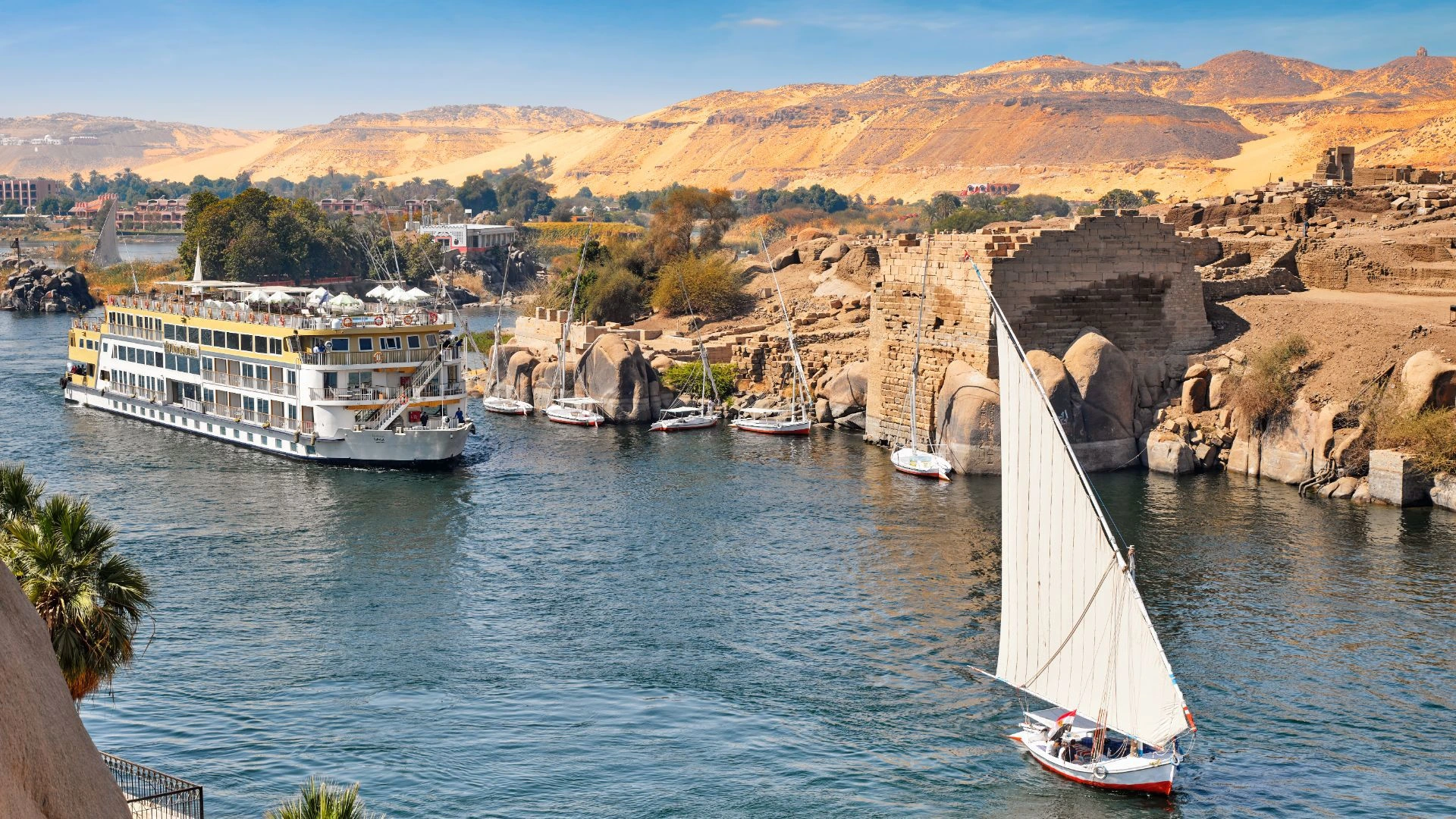
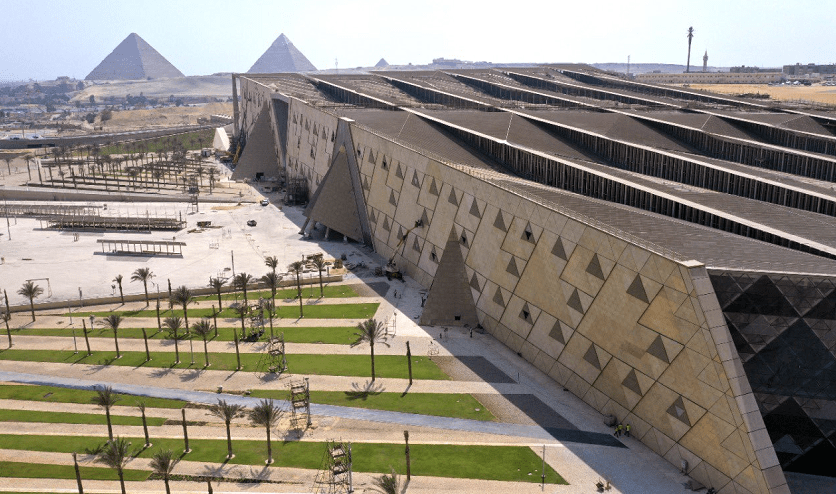
The temples of Luxor, Karnak, Edfu, Kom Ombo and Philae, the tombs of the Valley of the Kings and the collections of the Grand Egyptian Museum all bring this world to life. A Nile cruise between Luxor and Aswan visits many of them in a few days, with your own guide to read the walls for you. See our Egypt tour packages.
Religion in Ancient Egypt: FAQ
What was the religion of ancient Egypt?
A polytheistic faith with hundreds of gods, built around maat (cosmic order), the divine role of the king, temple worship and a strong belief in life after death.
Who was the most important ancient Egyptian god?
It changed over time. Ra, the sun god, was central for much of Egyptian history, and from the New Kingdom Amun-Ra of Thebes was the king of the gods. Osiris ruled the afterlife.
Did ordinary Egyptians go inside temples?
Usually not into the inner parts. They prayed in the outer courts, at small shrines and at home, and saw the gods during festival processions.
Why did Egyptians mummify their dead?
They believed the soul needed the body after death, so they preserved it to give the dead person a home in the afterlife.