
Summary
An obelisk is a tall, four-sided stone pillar that narrows towards the top and ends in a small pyramid, carved from a single block of granite. The Egyptians called it tekhen and set obelisks in pairs before the gateways of temples as symbols of the sun god. The word comes from the Greek obeliskos, “little skewer”. Many of the finest now stand far from Egypt, in Rome, Paris, London and New York.
A Ray of the Sun in Stone
The obelisk was linked with the sun god Ra and the benben, the mound on which creation began in the story of the Ennead. Its pyramid-shaped tip, the pyramidion, was often covered in gold or electrum so it would catch the first and last light of the day. The sides carry the names and titles of the king who raised it, in deep-cut hieroglyphs.
How Obelisks Were Made
Most obelisks were cut from red granite at Aswan. Workers pounded the rock with balls of hard dolerite to free the shaft on all sides, then levered it out, dragged it on sledges to the Nile and floated it downstream on huge barges at the time of the flood. Raising it upright may have used a ramp of earth and a sand-filled pit beneath the base. An inscription on one of Hatshepsut‘s obelisks claims the whole work took seven months.
You can see how it was done at the Unfinished Obelisk in Aswan: about 42 metres long, it would have weighed some 1,000 tonnes, but it cracked in the quarry and was abandoned where it lies.
Obelisks Still Standing in Egypt
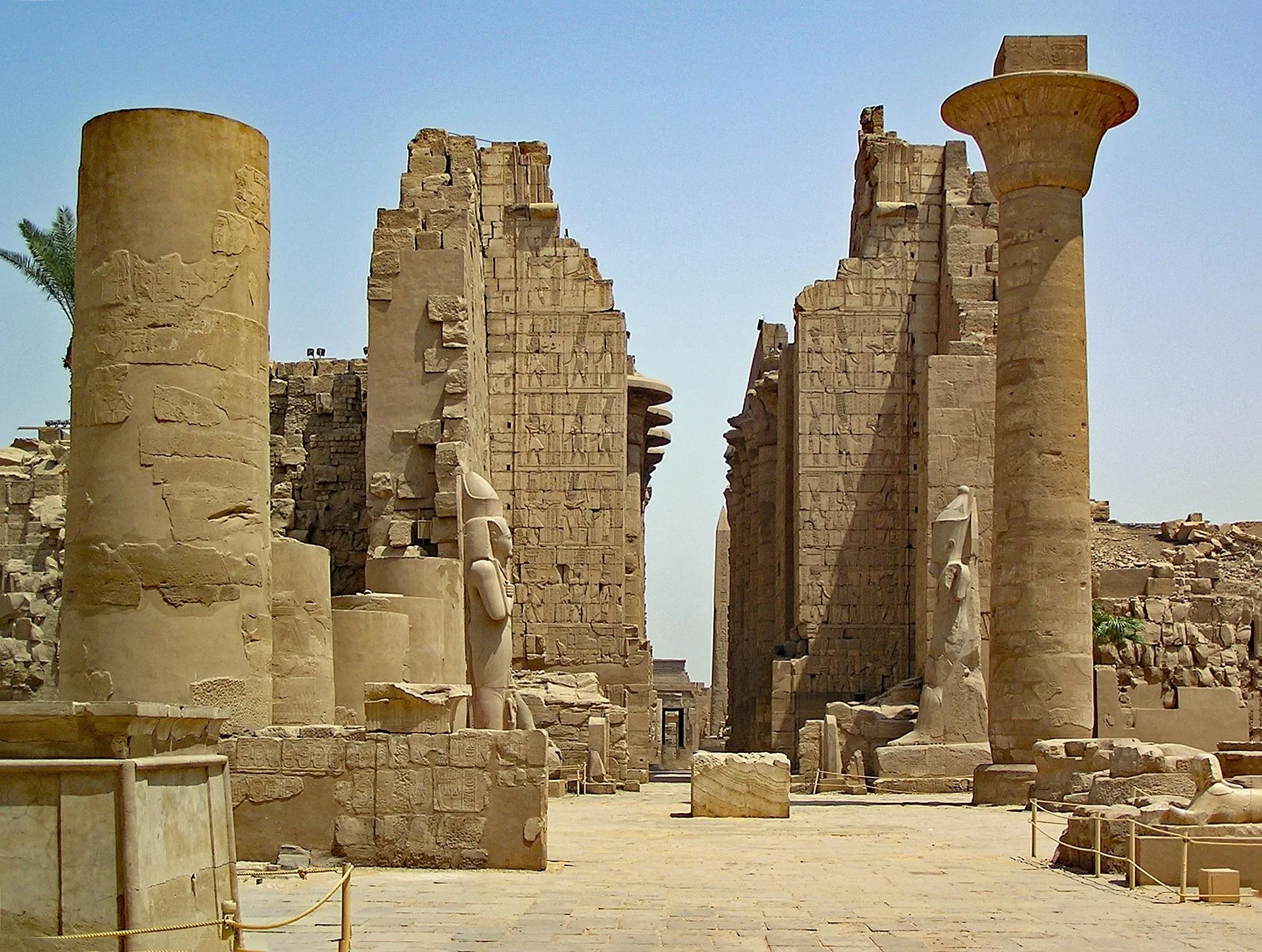
- Karnak: the obelisk of Hatshepsut, about 30 metres tall, is the tallest still standing in Egypt, with a fallen companion and an obelisk of Thutmose I nearby. See Karnak Temple.
- Luxor Temple: one of a pair raised by Ramesses II still guards the entrance of Luxor Temple.
- Heliopolis, Cairo: the obelisk of Senusret I, about 4,000 years old, the oldest standing in its original place.
- Tahrir Square and the Grand Egyptian Museum: obelisks of Ramesses II re-erected in modern Cairo, at Tahrir Square and at the entrance of the Grand Egyptian Museum.
8-Day Cairo, Siwa and White & Black Desert Adventure
Planning the trip itself? Start here.
View This TripEgyptian Obelisks Around the World
Conquerors and collectors moved obelisks abroad for two thousand years. Rome alone has eight ancient Egyptian obelisks, taken by emperors, including the Lateran obelisk, at about 32 metres the tallest ancient obelisk standing anywhere. The twin of the Luxor Temple obelisk has stood in the Place de la Concorde in Paris since 1836. Two obelisks of Thutmose III, nicknamed Cleopatra’s Needles though they are far older than Cleopatra, went to London in 1878 and to New York’s Central Park in 1881.
Egyptian Obelisks: FAQ
What is an obelisk?
A tall, four-sided pillar carved from a single stone, narrowing to a pyramid-shaped tip, raised as a symbol of the sun.
What were obelisks used for?
They stood in pairs at temple entrances, honouring the sun god and recording the king who raised them.
What is the tallest obelisk in Egypt?
Hatshepsut’s obelisk at Karnak, about 30 metres tall.
What is the Unfinished Obelisk?
A giant obelisk at Aswan that cracked while being carved and was left in the quarry; it would have been about 42 metres long.
Why are there Egyptian obelisks in other countries?
Romans, and later European governments, removed or received them as gifts and trophies; today they stand in Rome, Paris, London, New York and elsewhere.



























