
Summary
The ancient Egyptians were among the first people to use a 365-day calendar. Their year had twelve months of 30 days, grouped into three seasons that followed the life of the Nile, plus five extra days at the end. It was simple, practical and so influential that our own calendar, and even the 24 hours of the day, owe something to it.
Three Seasons of the Nile
| Season | Meaning | Months |
|---|---|---|
| Akhet | Inundation: the Nile floods the fields | 4 months |
| Peret | Growing: the water recedes and crops are sown | 4 months |
| Shemu | Harvest: the crops are gathered | 4 months |
Each month had three “weeks” of ten days. Read how the flood shaped Egyptian life in the Nile River and farmers in ancient Egypt.
Five Days for the Gods
Sirius and the New Year
The ideal New Year was marked by the first appearance of the bright star Sirius, the goddess Sopdet, on the eastern horizon just before dawn after weeks hidden by the sun. This happened in midsummer, close to the start of the Nile flood, so the star became the herald of the new year.
But the civil calendar had no leap year, so it slipped by a quarter of a day every year, about one day every four years, and drifted through all the seasons, returning to its starting point only after about 1,460 years. The Egyptians kept using it anyway, alongside a lunar calendar for many religious festivals.
8-Day Cairo, Siwa and White & Black Desert Adventure
Planning the trip itself? Start here.
View This TripThe Gift to Our Calendar
- The 365-day year: Julius Caesar’s reform of the Roman calendar in 46 BC, which added a leap day every four years, was worked out with the help of the astronomer Sosigenes of Alexandria.
- The 24-hour day: the Egyptians divided the night into 12 hours, using groups of stars called decans, and the day into 12 hours as well.
- The Coptic calendar: a version of the old Egyptian calendar with a leap year is still used by the Coptic Church and by farmers in Egypt; its new year, Nayrouz, falls in September.
Where to See the Calendar in Egypt
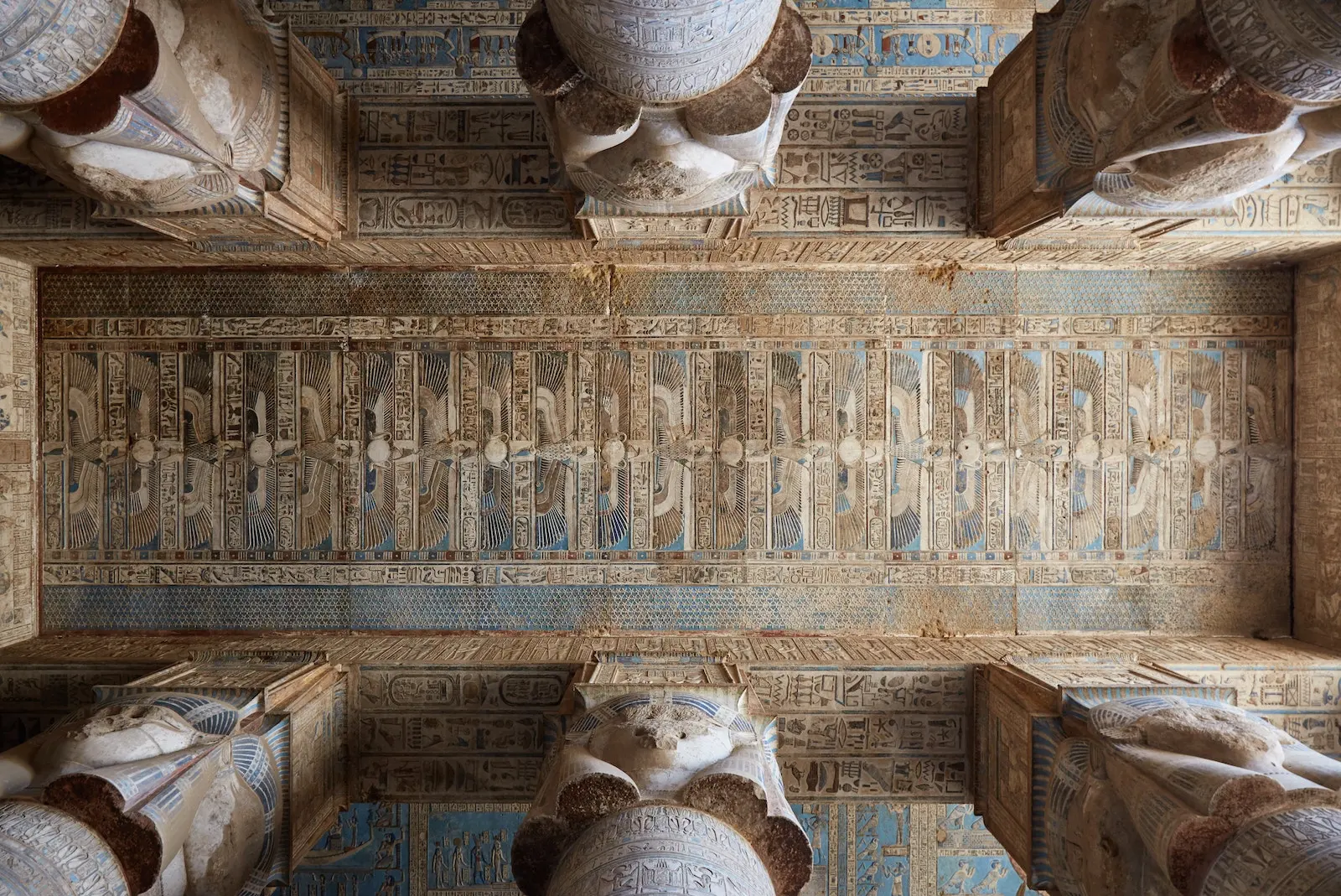
At Dendera, the ceilings of the temple of Hathor are covered with the sky goddess Nut, the decans and the signs of the zodiac; the original circular zodiac is in the Louvre, and a cast is in its place. The temple of Kom Ombo has a carved calendar of festivals, and the ceilings of royal tombs in the Valley of the Kings show star maps. See also Egyptian hieroglyphs.
Ancient Egyptian Calendar: FAQ
How many days were in the Egyptian year?
365: twelve months of 30 days plus five extra days.
What were the three seasons of ancient Egypt?
Akhet (inundation), Peret (growing) and Shemu (harvest).
When was the Egyptian New Year?
Ideally at the first dawn rising of the star Sirius in midsummer, near the start of the Nile flood.
Did the Egyptian calendar have leap years?
Not originally; the civil calendar drifted about one day every four years. A leap day came with the Alexandrian calendar under Roman rule.
Is the Egyptian calendar still used?
Yes, as the Coptic calendar, used by the Coptic Church and for farming.



























