
Summary
For the ancient Egyptians, death was not the end but a dangerous journey to a new, eternal life. If the body was preserved, the right spells were known and the heart passed judgement, the dead would live forever in the Field of Reeds, a perfect Egypt of endless harvests. Pyramids, tombs, mummies and the Book of the Dead all served that one goal.
The Parts of a Person
The Egyptians believed a person was made of several parts, all of which had to survive:
- The body (khat), which is why it was mummified.
- The ka, the life force, which lived on in the tomb and was fed by offerings of food and drink.
- The ba, the personality, shown as a bird with a human head, which could fly out of the tomb by day and return at night.
- The akh, the transfigured spirit the dead became after judgement.
- The name (ren) and the shadow (shut): to erase someone’s name was to destroy them.
Preparing for Eternity
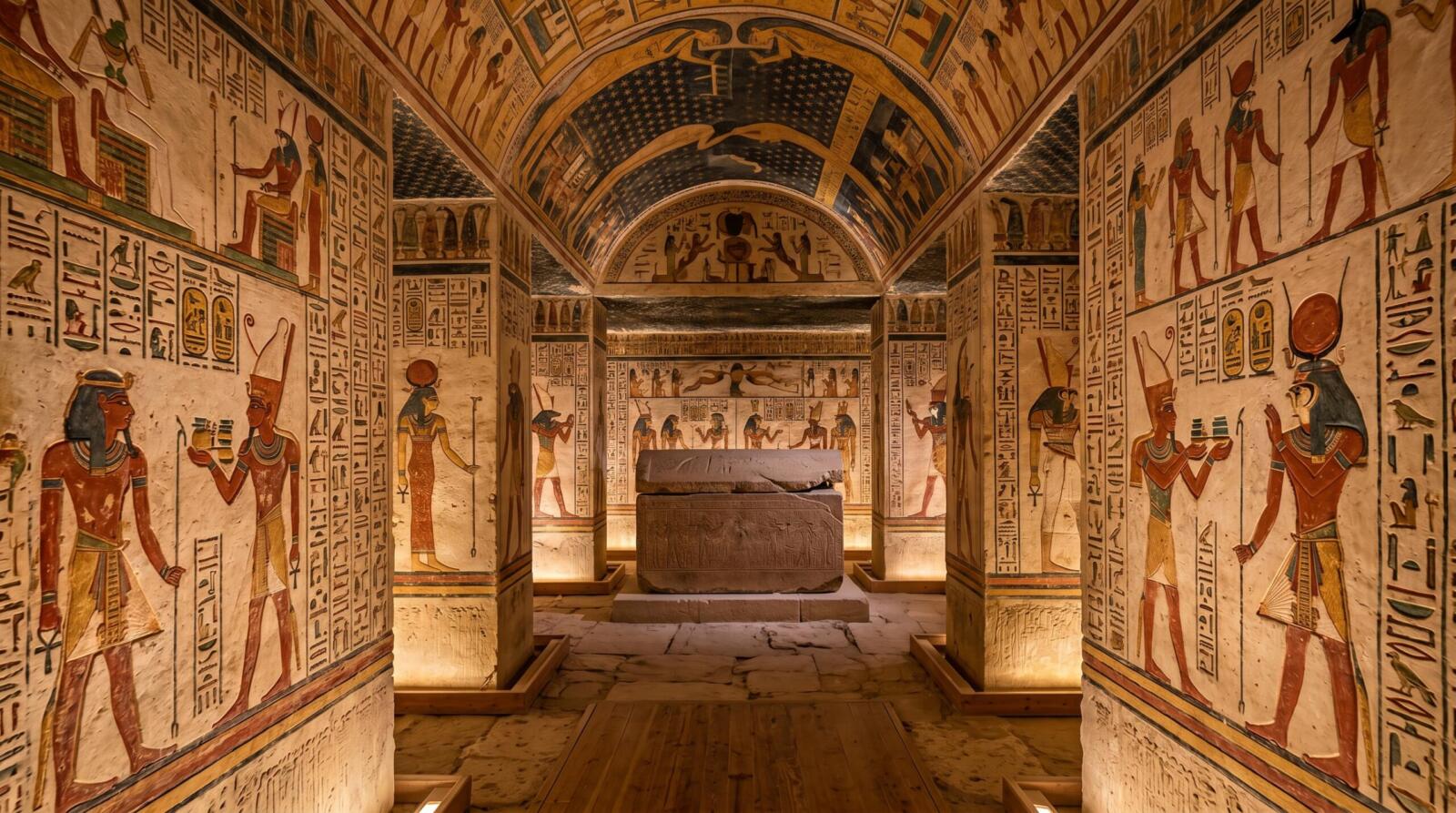
The tomb was a “house of eternity”. It held the mummy, the organs in canopic jars, furniture, food, clothes and small figures called shabtis that would do any work demanded of the dead. Walls were painted with scenes of daily life and offerings, which magic would make real, and with a false door through which the ka could come and go.
The Journey and the Judgement
The dead travelled through the Duat, the underworld, past gates guarded by demons, using spells to pass each one. At last they reached the Hall of the Two Truths, where their heart was weighed against the feather of Maat, with Anubis at the scales and Thoth writing down the result. A heart heavy with wrongdoing was eaten by the monster Ammit; a heart in balance was presented to Osiris, king of the dead.
8-Day Cairo, Siwa and White & Black Desert Adventure
Planning the trip itself? Start here.
View This TripThe Field of Reeds
The blessed dead lived on in the Field of Reeds (Aaru), an ideal Egypt where the barley grew taller than a man, the canals were always full, and the dead ate, drank, farmed and spent time with their families forever. Kings had another hope as well: to join the sun god Ra in his boat and travel across the sky for eternity.
Where to See the Egyptian Afterlife
- The painted royal tombs of the Valley of the Kings and the tomb of Nefertari, illustrating the journey through the night.
- The everyday scenes in the Tombs of the Nobles, painted to be enjoyed for eternity.
- Coffins, shabtis and Book of the Dead papyri in the Egyptian Museum, and the tools of the embalmers in the Mummification Museum.
Ancient Egyptian Afterlife: FAQ
What did ancient Egyptians believe happened after death?
That the dead travelled through the underworld, were judged by Osiris and, if found worthy, lived forever in the Field of Reeds.
Why did Egyptians mummify their dead?
Because the body had to survive for the soul to live on in the afterlife.
What are the ka and the ba?
The ka was the life force, fed by offerings in the tomb; the ba was the personality, which could leave the tomb as a human-headed bird.
What is the Field of Reeds?
The Egyptian paradise, an ideal Egypt of endless harvests where the blessed dead lived forever.
Who judged the dead?
Osiris, with 42 judges, after the heart was weighed against the feather of Maat.


























