
Summary
Music and dance were part of almost every celebration in ancient Egypt: religious festivals, funerals, harvests and the banquets of the rich. Tomb paintings show dancers leaping, spinning and bending into acrobatic backbends while musicians play harps, lutes, flutes and drums. Dance pleased the gods, especially Hathor, the goddess of music, love and joy.
Who Danced?
Most dancers shown in art are women, often in groups performing the same movements, and many were professionals hired for banquets and festivals. Temples kept troupes of musicians and dancers, and royal households had their own. Men danced too, especially in vigorous, athletic dances, and on festival days ordinary people danced in the streets. See more about their lives in women in ancient Egypt.
Dances for Gods and the Dead
- Festival dances accompanied the processions of the gods, such as the great Opet Festival between Karnak and Luxor Temple, shown on Luxor Temple’s walls.
- Funeral dances were performed as the coffin was carried to the tomb; special dancers called the muu wore tall reed crowns.
- Banquet dances, shown in the tombs of officials, entertained guests with music, wine and the scent of perfume.
- Acrobatic dances included backbends, cartwheels and high kicks; a famous painted limestone flake shows a dancer bent backwards with her hair touching the ground.
Instruments of Ancient Egypt
| Instrument | What it was |
|---|---|
| Harp | The most important instrument, from small hand-held harps to tall standing ones |
| Lute and lyre | String instruments introduced from western Asia in the New Kingdom |
| Flute and double pipe | Reed and wooden wind instruments |
| Sistrum | A metal rattle shaken in the worship of Hathor and Isis |
| Drums and frame drums | To keep the rhythm, with clappers and hand-clapping |
| Trumpets | Used by the army; two were found in Tutankhamun’s tomb |
8-Day Cairo, Siwa and White & Black Desert Adventure
Planning the trip itself? Start here.
View This TripGods of Music and Dance
Hathor was “Lady of Music” and “Lady of the Dance”, and her priestesses shook sistra and bead necklaces called menats in her honour. The dwarf god Bes, protector of families, is often shown dancing and playing a drum. The joyful cat goddess Bastet had festivals at Bubastis that the Greek historian Herodotus described as full of music, dancing and wine.
Seeing Egyptian Dance Today
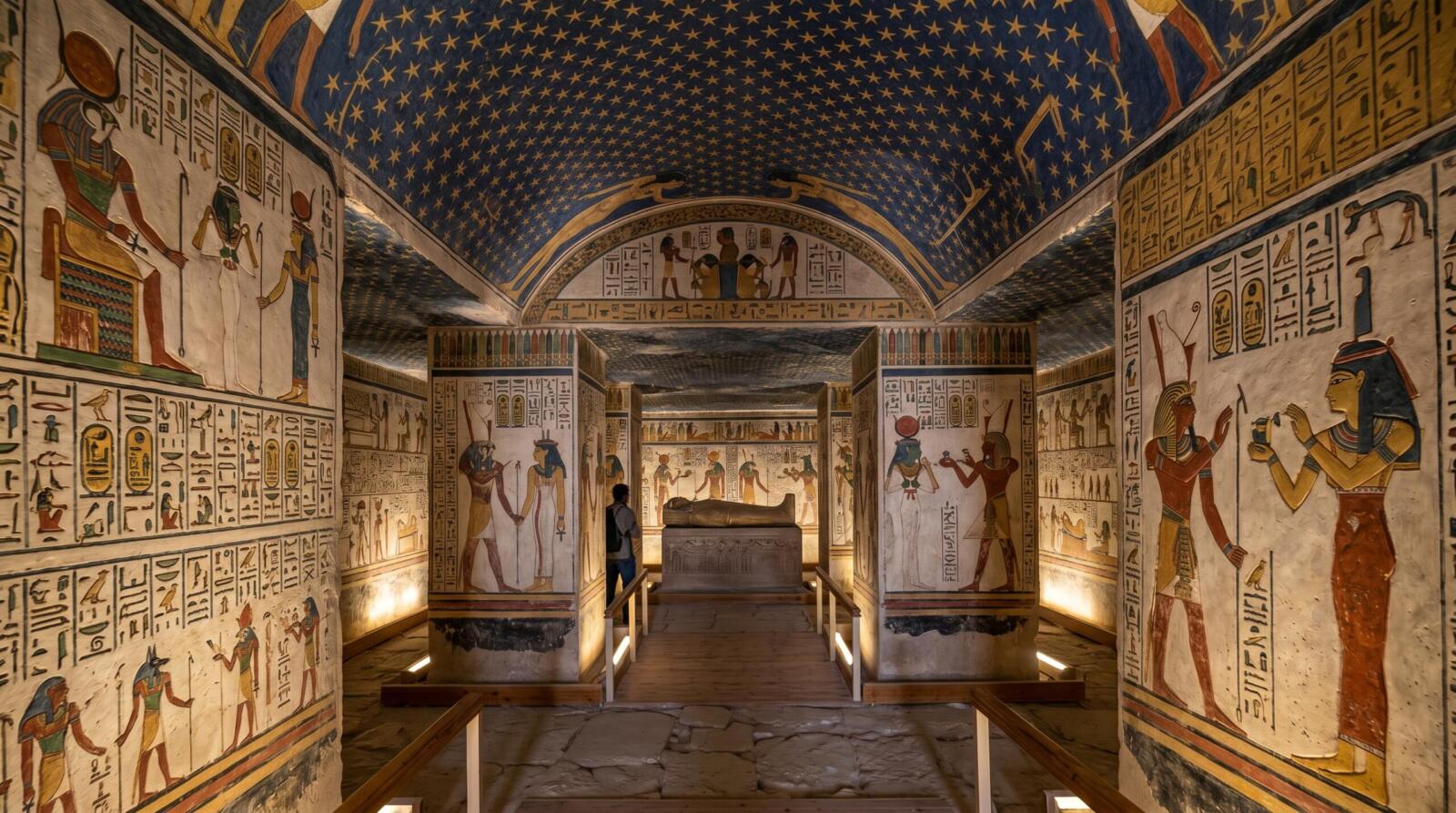
Ancient dance scenes fill the painted Tombs of the Nobles in Luxor and the walls of Dendera, the temple of Hathor. Modern Egyptian dance is a different tradition, but on a Nile cruise or in Cairo you can watch the spinning Tanoura dance and folk troupes, and enjoy a galabeya night of Egyptian music on board. See the art of the tombs in ancient Egyptian art.
Dance and Music in Ancient Egypt: FAQ
Did ancient Egyptians dance?
Yes, at festivals, funerals and banquets; tomb paintings show many kinds of dance, from slow processions to acrobatics.
What instruments did ancient Egyptians play?
Harps, lutes, lyres, flutes, double pipes, drums, clappers, trumpets and the sistrum rattle.
Who was the Egyptian goddess of music and dance?
Hathor, goddess of love, music and joy.
Is belly dancing from ancient Egypt?
Not directly: modern Egyptian dance developed much later, though Egyptians have danced at celebrations for thousands of years.




























