Summary
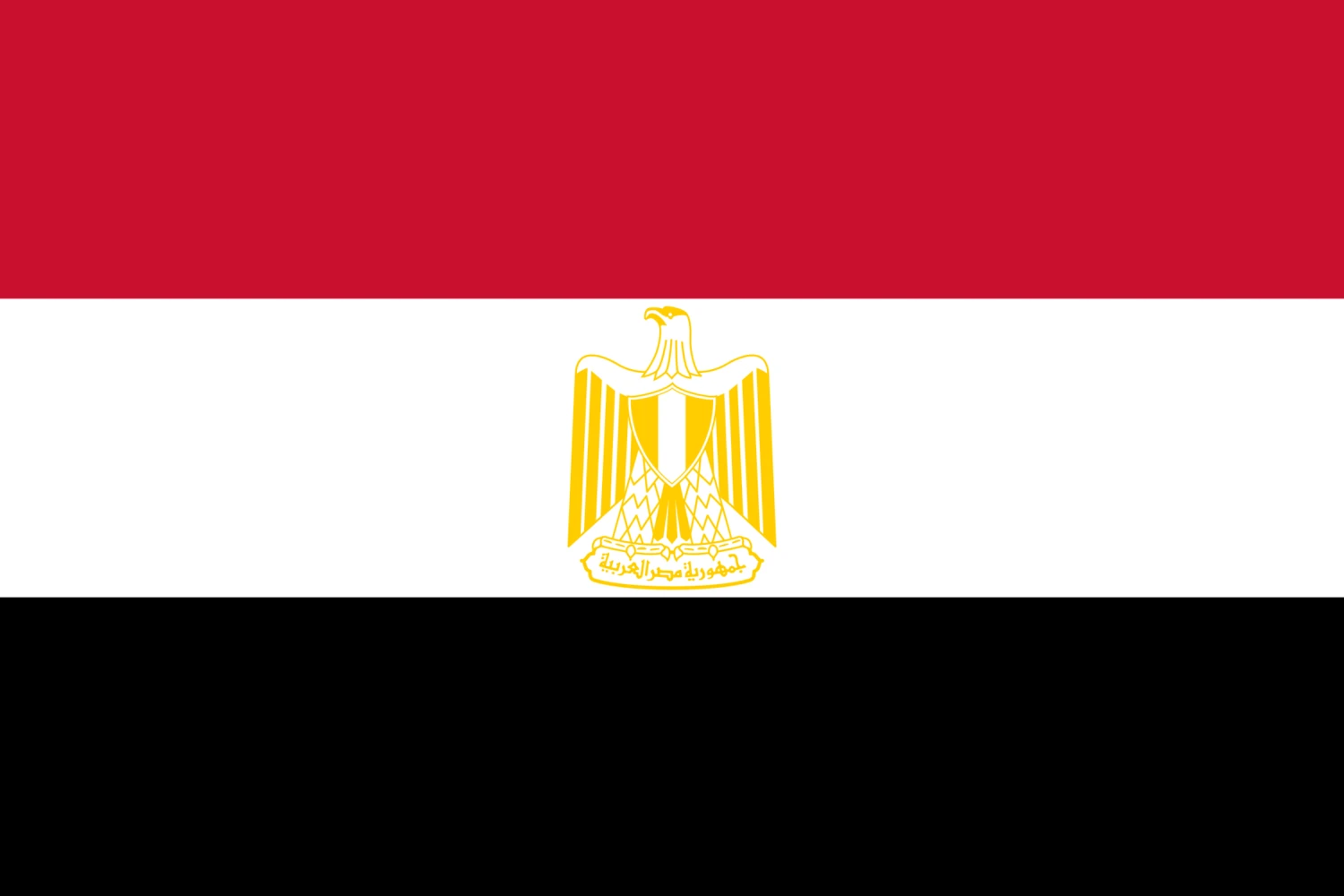
The flag of Egypt is a tricolour of red, white and black horizontal stripes with a golden eagle, the Eagle of Saladin, in the centre of the white stripe. The three colours come from the flag of the 1952 revolution that ended the monarchy, and the current design was adopted on 4 October 1984. Its proportions are 2:3.
What the Colours Mean
The usual official explanation of the three stripes is:
- Red: the struggle and sacrifice of the period before the 1952 revolution, the blood of those who fought colonial rule.
- White: the 1952 revolution itself, which overthrew the monarchy without bloodshed, and a bright future.
- Black: the end of the dark years of oppression under the monarchy and foreign occupation.
Red, white and black are the colours of the Arab Liberation Flag of 1952, later shared, with different emblems, by Iraq, Syria, Yemen and Sudan.
The Eagle of Saladin
The golden eagle is the Eagle of Saladin (Salah al-Din), the Muslim sultan who ruled Egypt and Syria in the 12th century and built the Citadel of Cairo. The eagle holds a shield with the flag’s colours, turned vertical, and stands on a scroll bearing the country’s official name in Arabic: Jumhuriyat Misr al-Arabiya, “the Arab Republic of Egypt”. The same eagle is Egypt’s coat of arms.
Flags of Egypt Through History
| Years | Flag |
|---|---|
| 1867–1922 | Khedivate and Sultanate of Egypt: red flag with three white crescents, each with a star |
| 1923–1953 | Kingdom of Egypt: green flag with a white crescent and three white stars |
| 1953–1958 | Republic: red, white and black, with the eagle on a green emblem |
| 1958–1972 | United Arab Republic with Syria: red, white and black with two green stars |
| 1972–1984 | Federation of Arab Republics: the Hawk of Quraish in the centre |
| 1984–today | Red, white and black with the golden Eagle of Saladin |
The green flag of the kingdom is still sometimes seen on old buildings and in films. Its three stars are usually explained as Egypt, Nubia and Sudan.
Ancient Egypt Had No National Flag
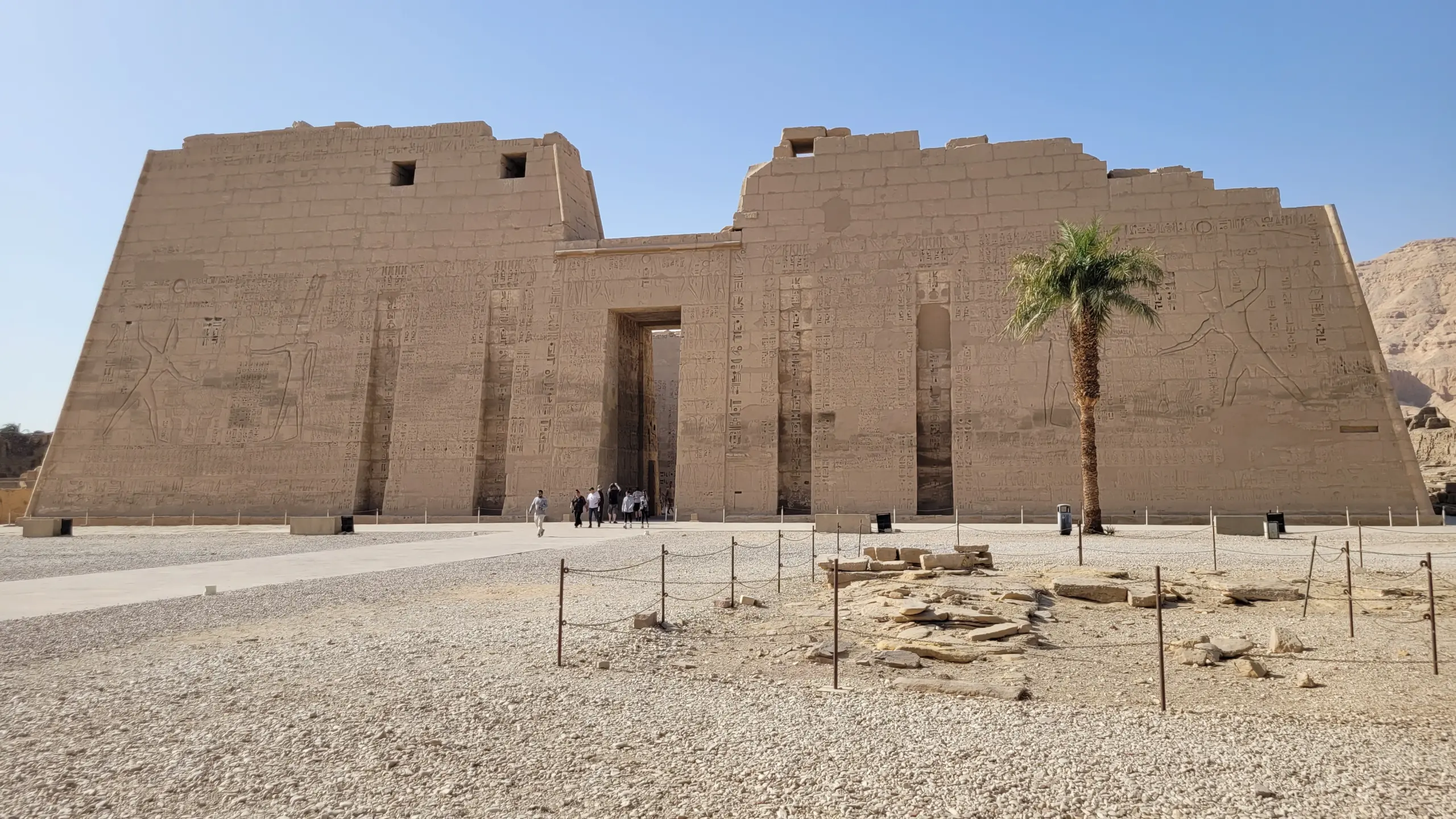
The pharaohs did not have a flag in the modern sense. Temples flew long pennants from tall cedar flagpoles set in the front pylons, and the hieroglyph for “god”, netjer, is a picture of one of these poles with a cloth tied to it. You can still see the grooves for the flagpoles on the pylons of Karnak, Luxor Temple and Edfu. Learn more signs in Egyptian hieroglyphs and ancient Egyptian symbols.
Seeing the Flag in Egypt
The largest flags fly over government buildings, the Citadel and Tahrir Square, and every one of Egypt’s national holidays fills the streets with them, especially 6 October (Armed Forces Day) and 23 July (Revolution Day). See where everything is on the map of Egypt, and plan your trip with our Egypt travel guide.
Egyptian Flag: FAQ
What are the colours of the Egyptian flag?
Red, white and black horizontal stripes, with a golden eagle in the centre.
What does the eagle on the Egyptian flag mean?
It is the Eagle of Saladin, a symbol of strength and of the 12th-century sultan who ruled Egypt.
When was the current flag adopted?
On 4 October 1984.
What was Egypt’s old flag?
Under the kingdom (1923–1953) it was green with a white crescent and three white stars.
Which flags look like Egypt’s?
The flags of Iraq, Syria and Yemen use the same red, white and black stripes with different emblems, or none.