



Testimonials
Our Clients Reviews
See what our happy travelers say about us
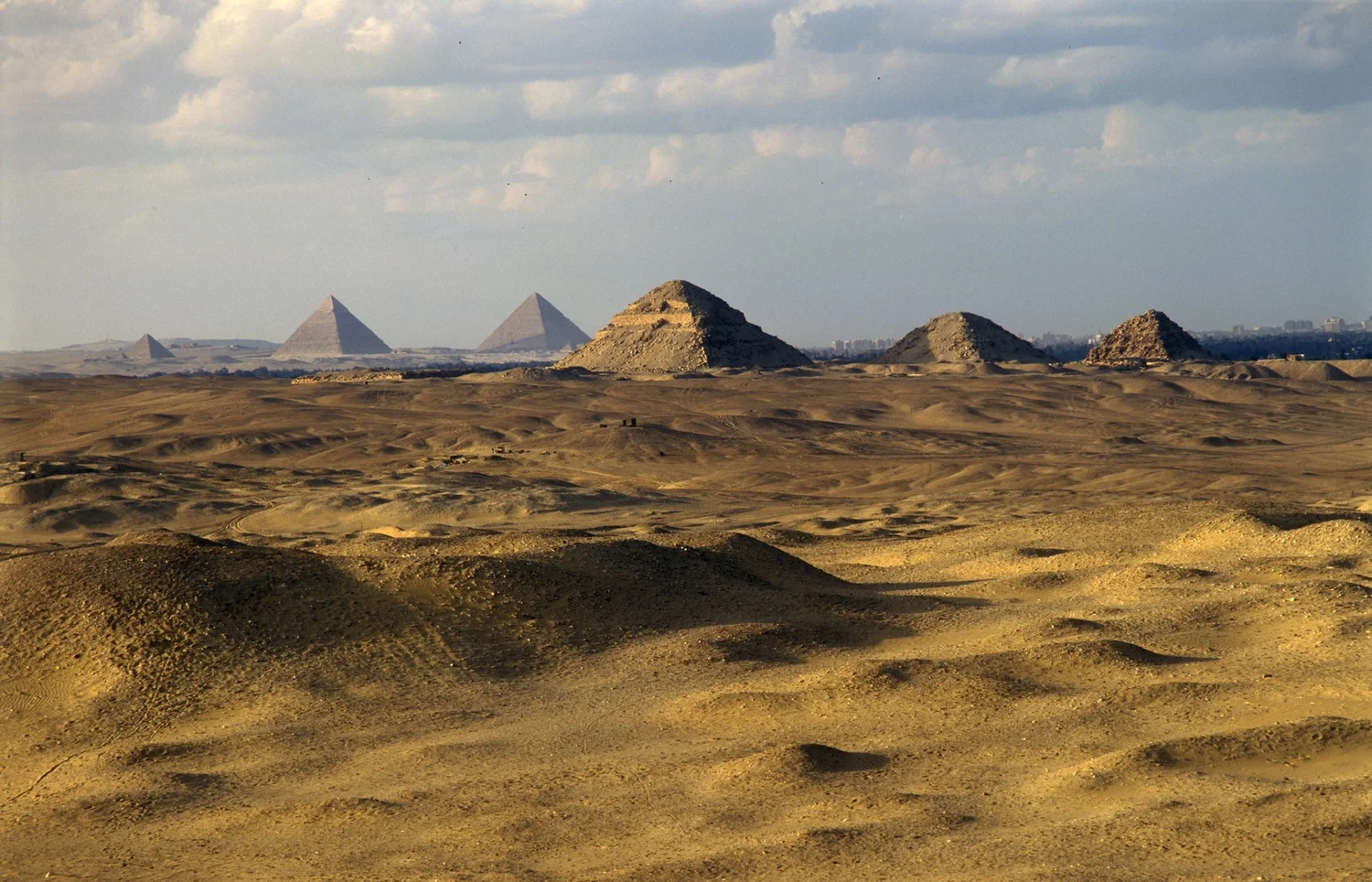

Abu Sir Pyramids is a royal necropolis of the 5th Dynasty located roughly 15 km south of Cairo, between Giza and Saqqara. The site holds four main pyramids — those of Sahure, Niuserre, Neferirkare, and Neferefre — along with the remains of their associated mortuary temples and a solar temple complex. Unlike the more famous Giza plateau, Abu Sir receives far fewer visitors, making it one of the more peaceful pyramid sites in Egypt.
The pyramids here are smaller and less well preserved than those at Giza or Dahshur, but the site compensates with rich archaeological context. Excavations have uncovered papyri known as the Abu Sir Papyri — the oldest administrative archive ever found in Egypt — as well as remarkable carved reliefs in the mortuary temples. The pyramid of Sahure in particular contains some of the finest surviving relief work from the Old Kingdom, depicting military campaigns and maritime expeditions.
For travelers interested in Egyptology beyond the blockbuster sites, Abu Sir offers direct access to the atmosphere of a working archaeological zone with none of the crowds.
Abu Sir served as the primary royal burial ground during the 5th Dynasty (c. 2494–2345 BCE), when the cult of the sun god Ra reached its political and religious peak. The four kings buried here — Sahure, Neferirkare Kakai, Neferefre, and Niuserre — each built pyramid complexes following the standard Old Kingdom template: a valley temple, a causeway, a mortuary temple, and the pyramid itself.
The Abu Sir Papyri, discovered in the late 19th century, are among the most important administrative documents from ancient Egypt. Written on papyrus and dating to the reign of Neferirkare, they record the daily rituals, guard rosters, and inventory logs of a functioning royal mortuary cult — offering a glimpse into institutional life nearly 4,500 years ago.
Czech and German archaeological teams have worked the site extensively since the 1960s, and excavations continue today. A shaft tomb found in 2022 near the pyramid of Neferirkare contained well-preserved wooden coffins and funerary equipment, confirming that Abu Sir still yields significant discoveries.
The best-preserved at the site, with surviving causeways and mortuary temple reliefs showing naval scenes and foreign captives.
Carved limestone panels in Sahure's temple rank among the finest surviving relief work from the entire Old Kingdom.
The largest at Abu Sir, its unfinished state reveals how pyramid cores were built in steps before casing stones were applied.
One of only two surviving Old Kingdom solar temples, built to honor the sun god Ra with an open-air obelisk altar.
The elevated plateau gives clear sightlines to Giza, Saqqara, and Dahshur — ideal for understanding the full scope of the Memphis necropolis.
Packages travelling to Giza, where Abu Sir Pyramids is located.
Start From


See what our happy travelers say about us



