
Summary
The “lotus” of ancient Egypt was really a water lily: above all the blue lotus, which opens its petals at sunrise and closes them at night. Because of that daily cycle the Egyptians made it a symbol of the sun, of creation and of rebirth. In myth, the sun god rose from a lotus floating on the first waters. The lotus was also the emblem of Upper Egypt, and it appears everywhere in Egyptian art: on columns, in jewellery, and held to the nose of guests at banquets.
Which Lotus? The Blue and the White
- The blue lotus (Nymphaea caerulea), with pale blue, pointed petals and a strong scent, opens in the morning and closes in the evening. It is the one most often shown in art.
- The white lotus (Nymphaea lotus) opens at night.
- The pink lotus of India (Nelumbo) only reached Egypt late, in the Persian period.
Creation and Rebirth
In one Egyptian creation story, a lotus rose from the dark waters of chaos, and when its petals opened, the young sun god sat inside it. Each sunrise repeated that first morning. The lotus therefore stood for the sun, for new life and for rebirth after death. One of the best-known objects from the tomb of Tutankhamun shows the boy king’s head rising from a lotus flower, reborn like the sun. The god Nefertem, son of Ptah and Sekhmet, wore a lotus on his head and was the god of its perfume.
The Lotus and the Papyrus: Upper and Lower Egypt
The lotus was the plant of Upper Egypt, the south, and the papyrus that of Lower Egypt, the Delta. Carvings of the two plants tied together around a windpipe-shaped sign, the sema-tawy, stood for the union of the Two Lands under one king. You see it on the sides of royal thrones and statues. See ancient Egyptian symbols for more.
The Lotus in Art and Architecture
- Columns: temples were built as stone forests of plants, and many columns end in closed or open lotus or papyrus buds.
- Banquets: tomb paintings show guests holding lotus flowers to their noses and wearing lotus garlands.
- Jewellery and cups: lotus-shaped cups, amulets and inlays were favourites; see clothing, make-up and jewellery.
- Perfume: lotus scent was one of the most prized.
Where to See the Lotus in Egypt
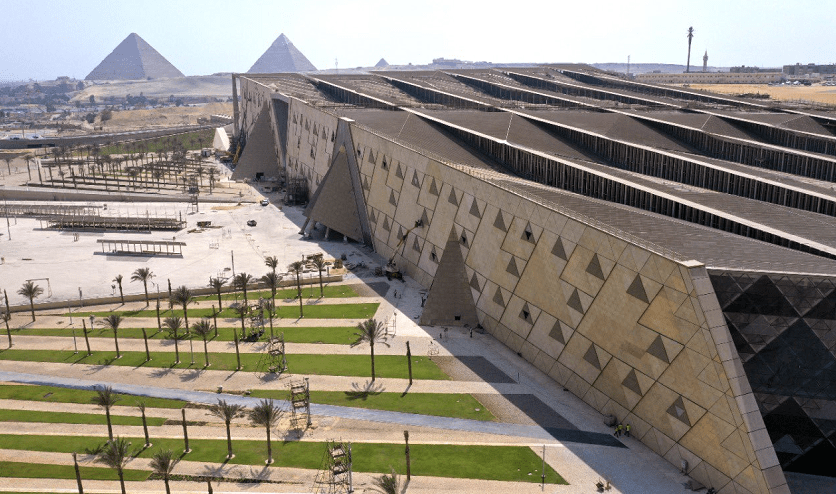
Look for lotus capitals and plant columns at Karnak and Luxor Temple, banquet scenes in the Tombs of the Nobles, and the lotus head of Tutankhamun at the Grand Egyptian Museum. Water lilies still grow in the canals of the Nile valley. Visit the temples on our Karnak and Luxor Temple tour.
Egyptian Lotus: FAQ
What does the lotus flower mean in ancient Egypt?
The sun, creation and rebirth, because the blue lotus opens at dawn and closes at night. It was also the symbol of Upper Egypt.
Is the Egyptian lotus a real lotus?
No. It is a water lily, mainly the blue lotus, Nymphaea caerulea. The true lotus, Nelumbo, arrived later.
Which god is linked with the lotus?
Nefertem, god of the lotus and its perfume. In myth the sun god himself rose from a lotus.