
Summary
Ancient Egypt did not fall in a day. It faded over about a thousand years:
- The last native pharaoh, Nectanebo II, lost Egypt to the Persians in 343 BC.
- Alexander the Great took it in 332 BC, and his Greek successors, the Ptolemies, ruled until Cleopatra’s death in 30 BC.
- Egypt then became a Roman province.
- The old religion lasted longest: the last known hieroglyphic inscription was carved at Philae in AD 394, and the temple there closed in the 6th century.
The Timeline of the End
| Date | Event |
|---|---|
| c. 1069 BC | End of the New Kingdom; Egypt splits between north and south |
| c. 747–656 BC | Kings from Kush (Nubia) rule Egypt as the 25th Dynasty |
| 663 BC | The Assyrians sack Thebes |
| 525 BC | The Persian king Cambyses conquers Egypt |
| 343 BC | Nectanebo II, the last native pharaoh, is defeated by the Persians |
| 332 BC | Alexander the Great takes Egypt |
| 30 BC | Death of Cleopatra VII; Egypt becomes a Roman province |
| AD 394 | The last known hieroglyphic inscription, at Philae |
| 6th century AD | The temple of Isis at Philae is closed |
Decline After the New Kingdom
After the great age of Ramesses II, Egypt faced invasions by the “Sea Peoples”, the loss of its empire in the Levant, and weak kings. By about 1069 BC power was split between the kings in the north and the high priests of Amun at Thebes. For four centuries Egypt was often divided or ruled by outsiders: Libyan chiefs, then kings from Kush, who saw themselves as true pharaohs and restored the old traditions. See the New Kingdom for the age before.
Assyrians and Persians
In 663 BC the Assyrian army sacked Thebes, the religious capital. A native dynasty from Sais revived Egypt for a while, but in 525 BC the Persians conquered it. After a last period of independence, the 30th Dynasty built temples and gates that still stand, but its last king, Nectanebo II, was defeated in 343 BC. He was the last Egyptian-born ruler of Egypt for more than two thousand years.
Greeks and Romans
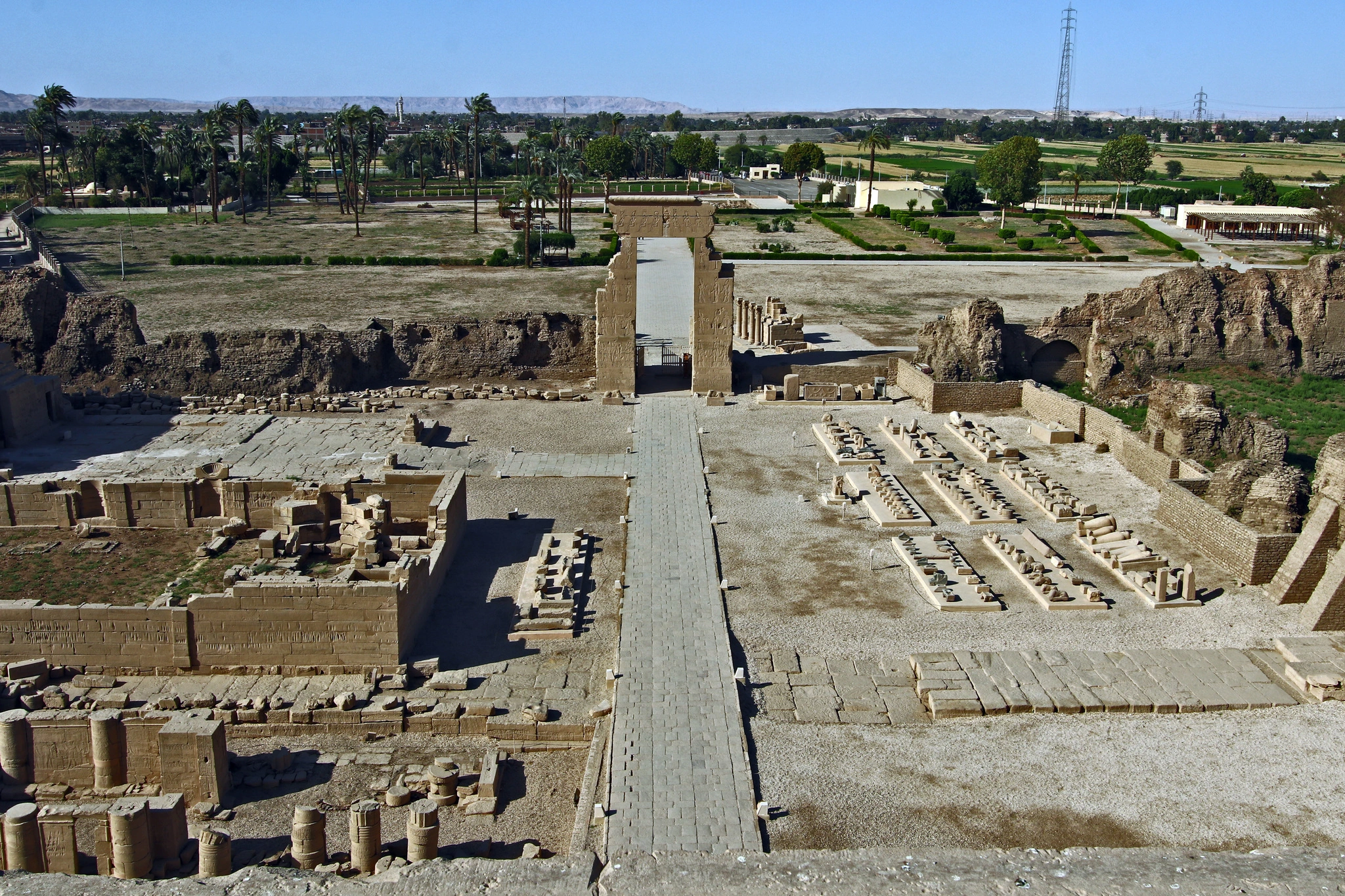
Alexander the Great arrived in 332 BC and was welcomed as a liberator from the Persians. His general Ptolemy founded a Greek dynasty that ruled as pharaohs, built great temples such as Edfu and Dendera, and ended with Cleopatra. After her death in 30 BC Egypt was ruled from Rome; see Roman Egypt. Emperors still appeared on temple walls as pharaohs, but there was no longer a king living in Egypt.
The Last Hieroglyph and the Last Temple
The old religion survived longest at Philae, near Aswan, where the cult of Isis drew pilgrims from Nubia. There, on 24 August AD 394, a priest carved the last known hieroglyphic inscription. The last writing in demotic followed there in the 450s, and the temple was closed in the 6th century, under the emperor Justinian. The Egyptian language itself lived on in Coptic, which is still used in the liturgy of the Coptic Church.
See the Last Chapters of Ancient Egypt
- Philae, the last temple, near Aswan.
- Edfu and Dendera, the great Ptolemaic temples.
- Alexandria, the Greek and Roman capital; see our Alexandria day trip.
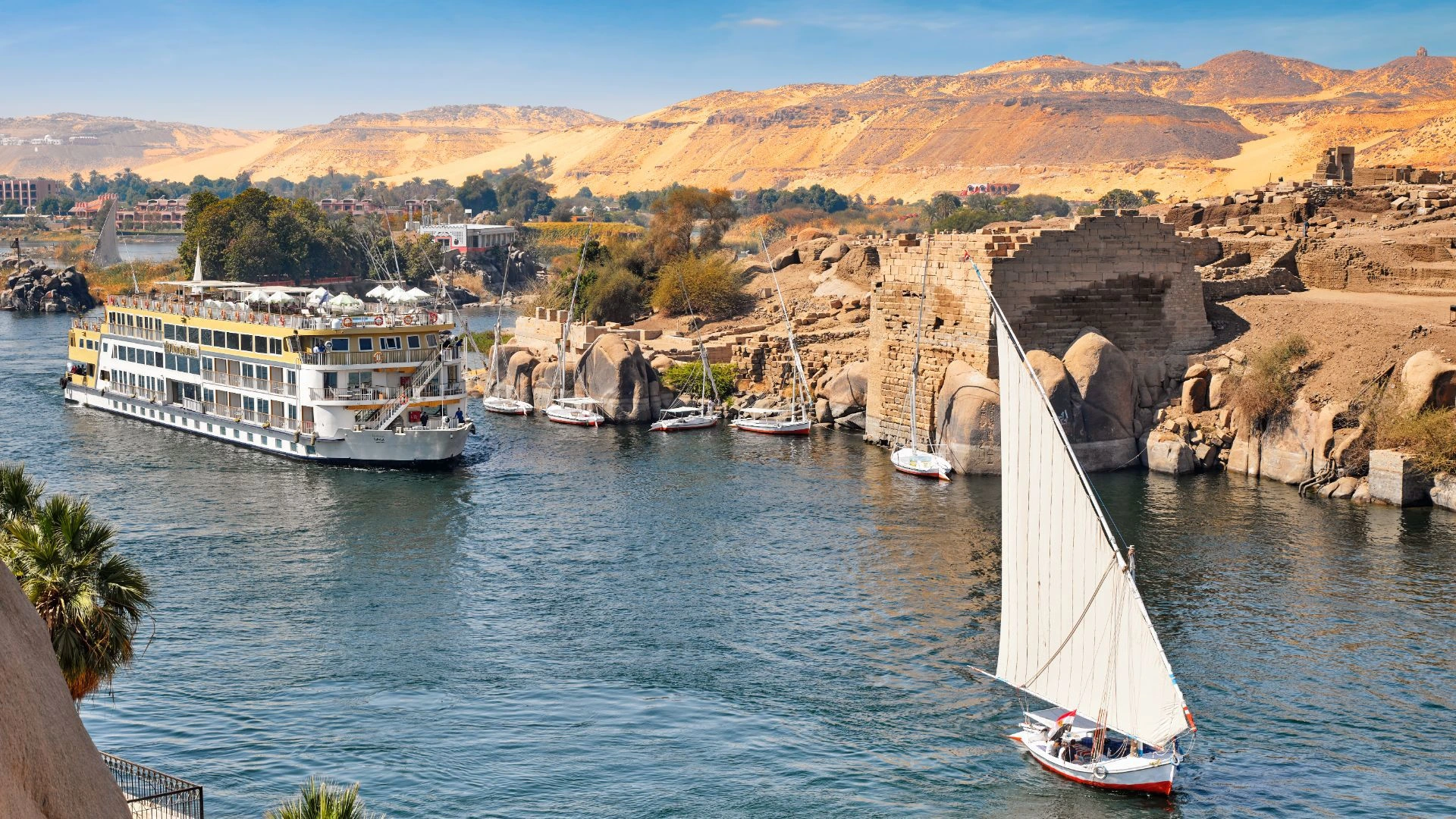
A Nile cruise between Luxor and Aswan covers Edfu and Philae.
How Did Ancient Egypt End? FAQ
When did ancient Egypt end?
There is no single date. The last native pharaoh fell in 343 BC, the last Ptolemaic ruler, Cleopatra, died in 30 BC, and the last hieroglyphs were carved in AD 394.
Who was the last pharaoh of Egypt?
The last native Egyptian pharaoh was Nectanebo II. The last ruler to reign as pharaoh was Cleopatra VII.
Why did ancient Egypt decline?
Division at home, the loss of its empire, and conquest by stronger neighbours: the Assyrians, Persians, Macedonians and Romans.
Did the ancient Egyptian language die out?
It survives in Coptic, still used in the Coptic Church.