
Testimonials
Our Clients Reviews
See what our happy travelers say about us
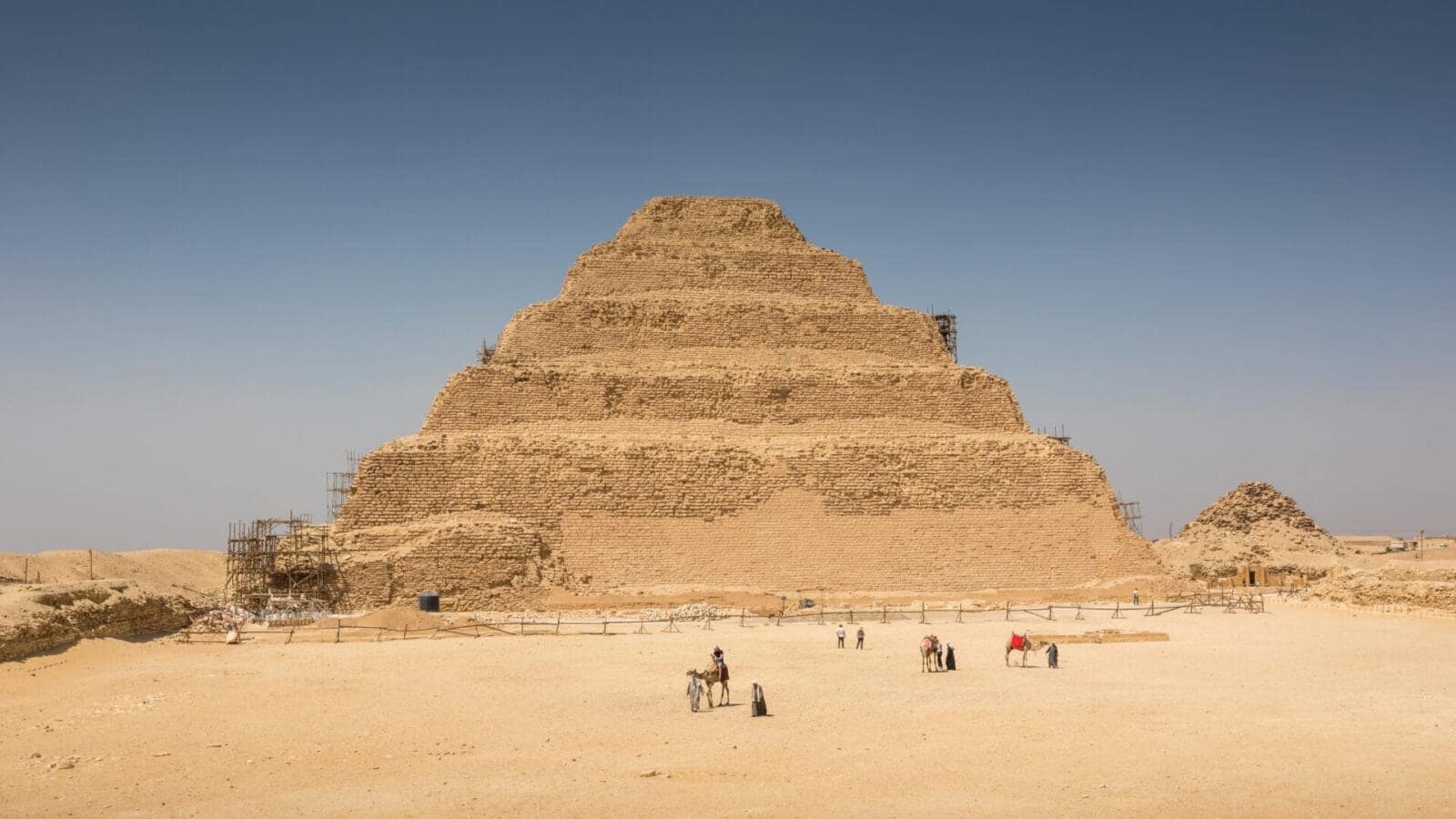
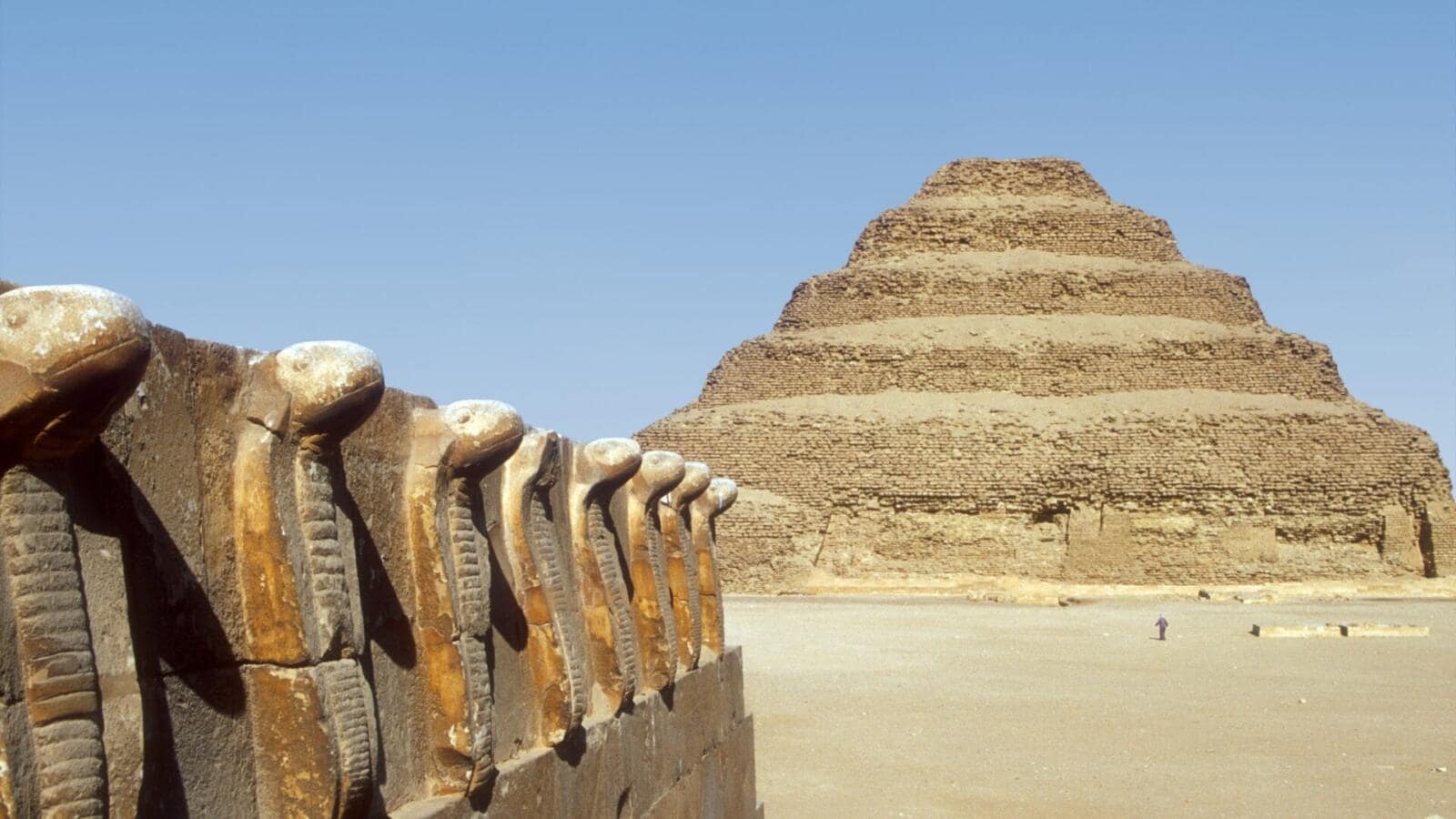
The Step Pyramid of Djoser at Saqqara stands as the world’s oldest large-scale stone monument, predating the Giza pyramids by over 60 years. Built around 2630 BCE during the reign of Pharaoh Djoser of the 3rd Dynasty, the pyramid was designed by the royal architect Imhotep — the first named architect in recorded history. It rises in six unequal steps to a height of 62 meters and is surrounded by an elaborate funerary complex designed to replicate the royal palace in stone.
The pyramid began as a flat-topped mastaba tomb in the traditional style and was expanded by Imhotep four additional times before reaching its final stepped form. The shift from mud-brick mastaba construction to large-scale dressed limestone represented a technical and conceptual revolution in Egyptian architecture — the first time any civilization had attempted a monumental structure in stone.
The complex underwent a major restoration project lasting nearly two decades, reopening to visitors in 2020. The restoration stabilized the pyramid’s interior chambers and restored sections of the surrounding enclosure wall and ceremonial buildings. Visitors can now enter the pyramid’s subterranean gallery system and the restored Heb-Sed courtyard, which replicated the ritual running ground used in the king’s jubilee ceremony.
Djoser was the second pharaoh of the 3rd Dynasty and the first ruler to commission a pyramid burial. His architect Imhotep — later deified as a god of medicine and wisdom — conceived the stepped form by stacking successively smaller mastabas atop one another. The pyramid’s substructure contains a network of over 5.7 km of shafts and tunnels, including the burial chamber itself, which is lined with blue faience tiles to replicate reed-mat paneling from the royal palace.
The enclosure wall surrounding the complex stretches 1,645 meters and originally stood 10.5 meters high, pierced by 14 false doors and one genuine entrance. Inside, a series of dummy buildings — temple facades with no interior rooms — reproduced the architectural forms of royal administrative buildings for the king’s use in the afterlife. The Heb-Sed Court, a long rectangular space flanked by dummy chapels, was designed for the ritual renewal of the king’s power to be reenacted in perpetuity.
Imhotep was deified during the Late Period and venerated as a patron of scribes and physicians. Greek colonists identified him with their own god Asclepius. He remains one of the few commoners in ancient Egyptian history to achieve the status of a god.
Six unequal limestone steps rise to 62 meters; the outer surface remains partially intact, revealing the construction technique of stacked mastaba expansions.
A descending corridor leads to the royal burial chamber and a network of storage galleries lined with blue faience tiles — among the oldest decorative stonework in existence.
A long ceremonial courtyard flanked by dummy chapels, designed for the ritual renewal of royal power; now restored and walkable by visitors.
The 1,645-meter paneled boundary wall with 14 false doors has been partially restored, giving a clear impression of the complex's original scale.
A second burial structure within the complex, purpose debated — possibly built for the king's ka (spirit double) or for the royal regalia.

See what our happy travelers say about us
