
 Day Tour
 Day Tour
 Day Tour
 Day Tour
 Day Tour
 Day Tour
 Attraction
 Attraction
 Attraction
 Attraction
 Attraction
 Attraction
Testimonials
Our Clients Reviews
See what our happy travelers say about us
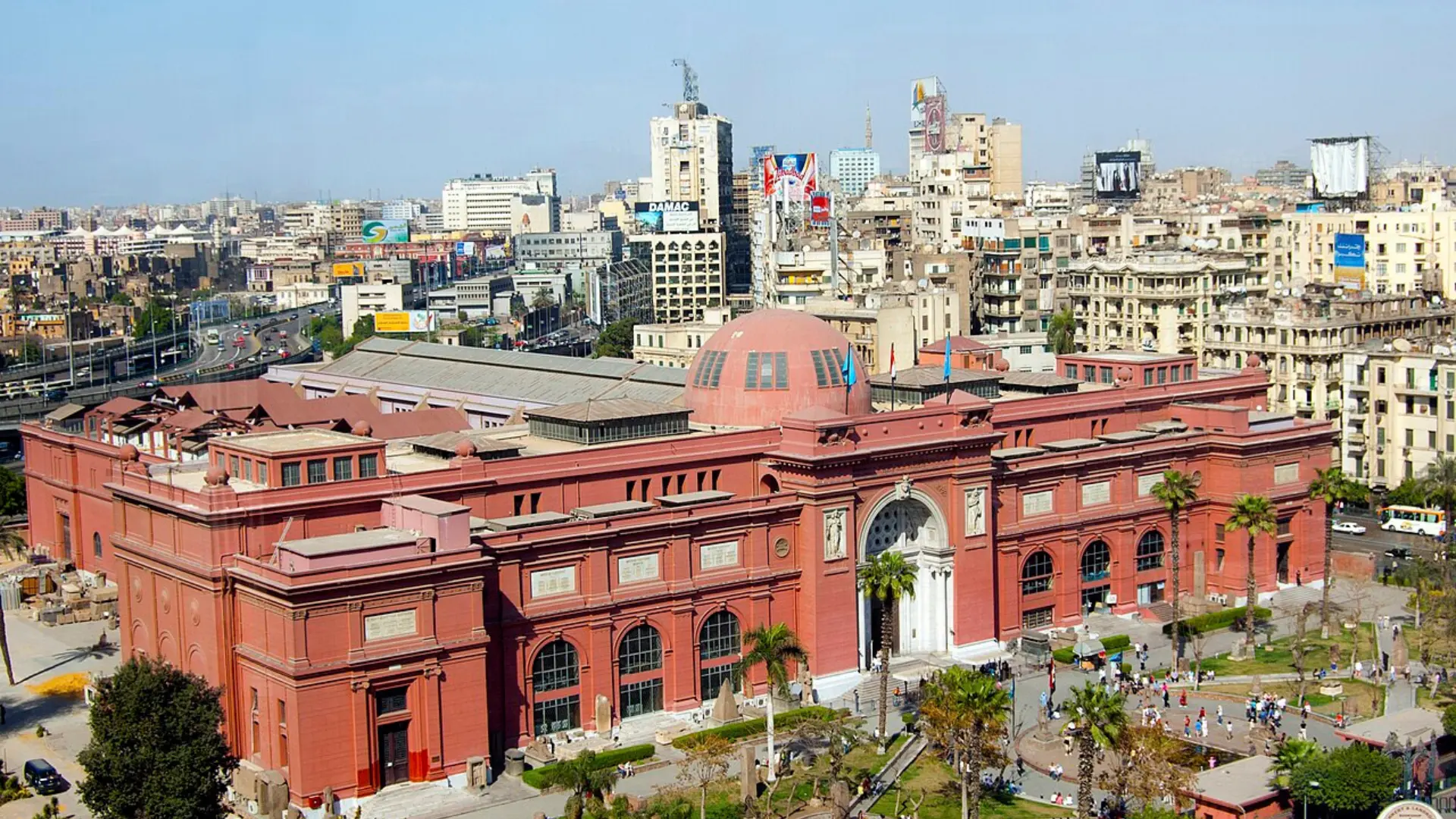
Tahrir Square, Midan el-Tahrir or “Liberation Square”, is the great central square of downtown Cairo, on the east bank of the Nile. Laid out in the 19th century under Khedive Ismail as Ismailia Square, it took its present name after the revolution of 1952. It is ringed by some of Cairo’s best-known buildings: the Egyptian Museum on its north side, the Omar Makram Mosque, the headquarters of the Arab League and the old campus of the American University in Cairo.
The square is also part of modern Egyptian history: it was the main gathering place of the 2011 revolution. In 2020 it was redesigned as an open plaza, with an ancient obelisk of Ramesses II at its centre, surrounded by four ram-headed sphinxes brought from Karnak in Luxor. Lit at night, it is now one of the most striking places in central Cairo, and the natural starting point for a visit to the Egyptian Museum.
Khedive Ismail planned this part of Cairo in the 1860s as a modern European-style district, and the square was named Ismailia after him. Under British occupation it held barracks; after the 1952 revolution it was renamed Tahrir, “Liberation”. The Egyptian Museum opened on the square in 1902, and the vast Mogamma government building was completed in 1951. In January and February 2011, hundreds of thousands of Egyptians gathered here during the 18 days of protest that ended President Mubarak’s rule. The 2020 redevelopment added the granite obelisk of Ramesses II, brought from Tanis in the Nile Delta, and four ram-headed sphinxes from the Avenue of Sphinxes at Karnak.
A red granite obelisk of the great pharaoh, now the centrepiece of the square.
Four sphinxes from Karnak, symbols of the god Amun, set around the obelisk.
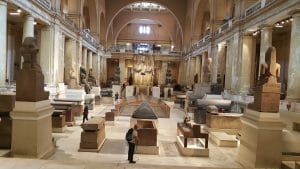
The famous pink museum on the north side, with the Narmer Palette and the treasures of Tanis.
The obelisk and sphinxes are lit after dark, the best time for photos.
The square is a public space, open all day and night with no ticket. Most visitors combine it with the Egyptian Museum on its north side, then walk along the Nile Corniche or cross the Qasr el-Nil bridge towards the Cairo Tower. Allow 30 minutes for the square itself, or half a day with the museum.
The centrepiece since 2020 is a red granite obelisk of Ramesses II, moved from the ruins of Tanis in the Nile Delta. Around it stand four ram-headed sphinxes, the sacred animal of the god Amun-Ra, brought from the Avenue of Sphinxes at Karnak. Together they turned a busy roundabout into an open-air gallery of ancient Egypt in the heart of the modern city.
It is Cairo's central square, home of the Egyptian Museum, and the main gathering place of the 2011 revolution. Since 2020 it also displays an obelisk of Ramesses II and four ram-headed sphinxes.
Yes. It is an open public square; only the Egyptian Museum next to it charges admission.
Yes, it is a busy, well-policed central area. Watch for traffic and use the marked crossings.
Take the Cairo metro to Sadat station, directly beneath the square, or a taxi or ride-hailing car from your hotel.

See what our happy travelers say about us



