
 Package
 Attraction
 Attraction
 Attraction
 Attraction
 Attraction
 Attraction
Testimonials
Our Clients Reviews
See what our happy travelers say about us

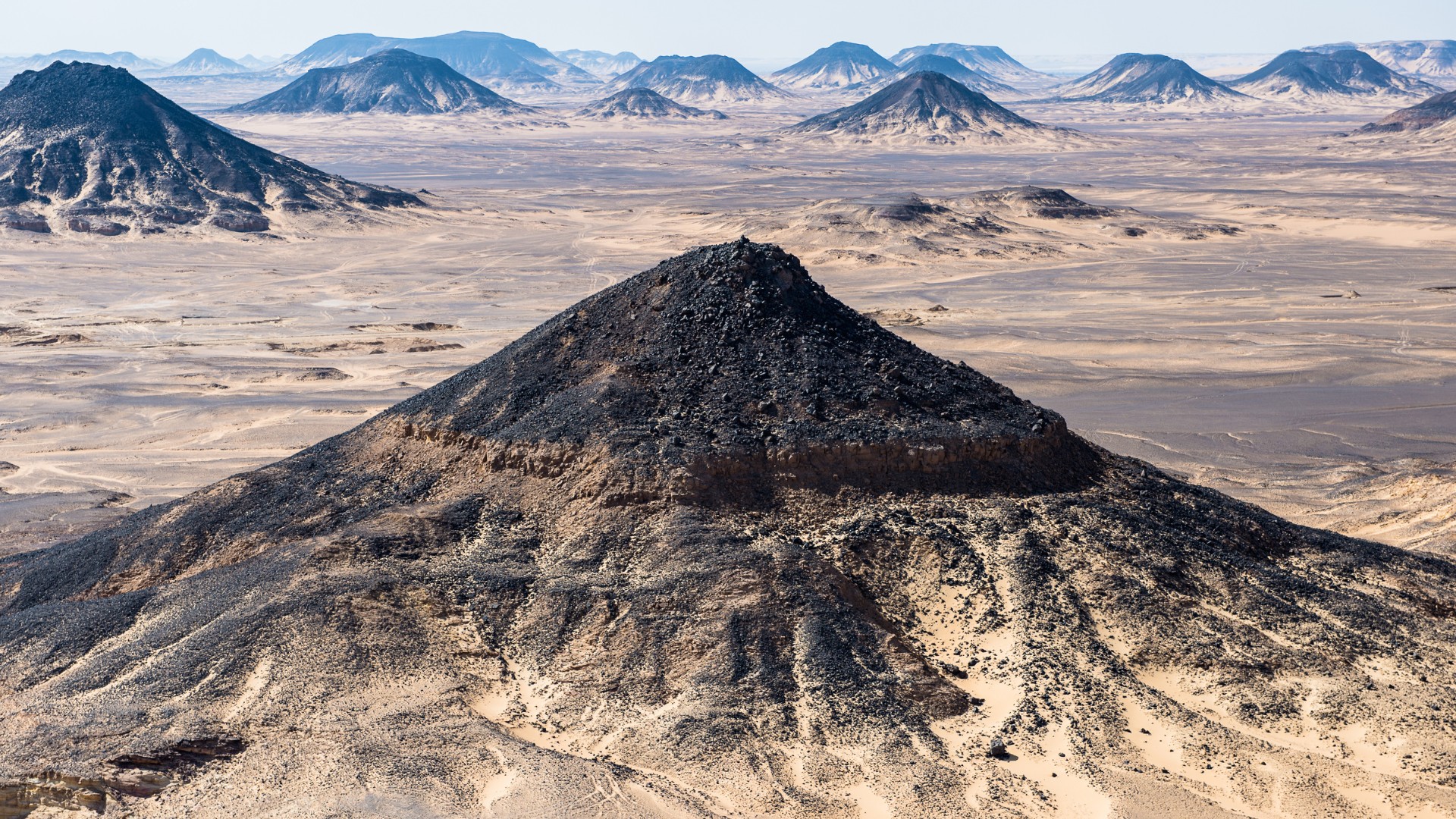
The Black Desert is a volcanic plateau located approximately 30–50 km north of Bahariya Oasis, where the desert floor and low conical hills are carpeted in dark basalt chips — a geological phenomenon that gives the landscape a striking visual character completely unlike the pale limestone and golden sand typical of the Egyptian desert. Hundreds of black-capped volcanic cones rise steeply from the basalt plain, their dark surfaces absorbing the heat and contrasting dramatically with the surrounding pale desert. The effect is especially vivid at sunrise and sunset, when the black hills cast long shadows across the dark plain and the light picks out individual basalt fragments with extraordinary definition.
The Black Desert was formed by ancient volcanic activity that deposited dark basalt over the existing limestone plateau. Over millions of years, erosion removed the softer surrounding material, leaving the harder basalt as a surface layer on the hills and scattered as chips across the valley floors between them. The conical hill shapes — each capped with a dark crown of resistant basalt — are classic volcanic remnants whose form is best appreciated from an elevated position or from the surrounding plain.
The Black Desert is typically visited as part of a Bahariya Oasis excursion, either as a standalone landscape drive or as the northern section of the route south toward Crystal Mountain and the White Desert. Most 4WD tours from Bahariya include a stop at the Black Desert for exploration and photography before continuing to the more dramatic White Desert formations further south.
The volcanic activity that created the Black Desert occurred tens of millions of years ago as part of the broader geological upheaval that formed the Western Desert’s varied terrain. The basalt deposits are associated with the same ancient volcanic episode that created the basalt plateaus visible across much of the Eastern Sahara. The contrast between the dark volcanic basalt and the pale Cretaceous limestone beneath it makes the Black Desert one of the most geologically legible landscapes in Egypt.
The ancient Egyptians were aware of the Black Desert as a distinctive landscape feature — the dark stone was used locally as a building and tool material, and the region’s unusual appearance likely contributed to the desert’s reputation as a liminal, spiritually significant space. Modern geological survey of the Black Desert began in the 20th century as part of broader Western Desert resource mapping, with the volcanic features studied in the context of regional tectonic history.
Hundreds of dark-capped conical hills rising from the basalt plain — the most distinctive geological landform in the Egyptian Western Desert, best appreciated from an elevated vantage point.
The dark chip-covered desert floor between the cones — walking across the black surface and picking up individual basalt fragments gives a direct geological engagement with the ancient volcanic landscape.
At sunset the low-angle light picks out individual basalt fragments and turns the black hills a deep orange-brown, creating a color contrast with the lighter desert sky that is unique to this landscape.
These packages visit this site as part of the itinerary.

Start From

See what our happy travelers say about us



