
Testimonials
Our Clients Reviews
See what our happy travelers say about us

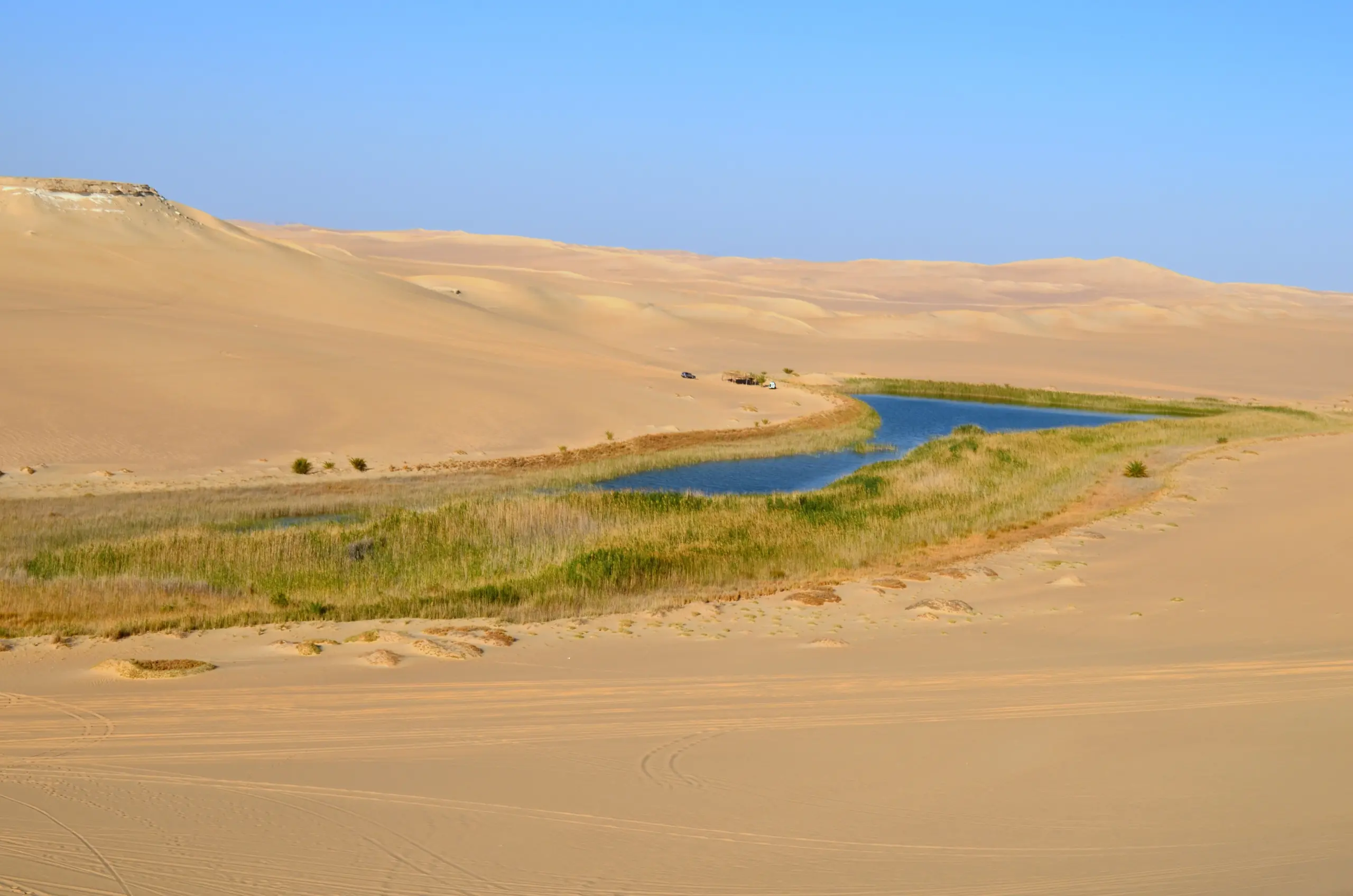
Siwa Oasis is the most remote, most distinctive, and most celebrated of Egypt’s major oases, located approximately 560 km west of Alexandria near the Libyan border in the northwestern corner of the Western Desert. Surrounded by the Great Sand Sea — one of the largest sand dune fields in the world — and accessible until the 1980s only by long desert tracks, Siwa has maintained a cultural identity unlike any other Egyptian community: the Siwan people speak their own Berber language (Siwi), maintain distinct customs and social traditions, and preserve a material culture of kershef (salt-rock) architecture, silver jewelry, and woven textiles that is not found elsewhere in Egypt.
Siwa Oasis is most famous historically as the location of the Oracle of Amun — the ancient Greek temple whose oracle was consulted by Pharaoh Nectanebo I, the Persian king Cambyses, and most famously by Alexander the Great in 331 BCE, when the Macedonian conqueror made his legendary desert crossing to receive divine confirmation of his status as son of Amun and legitimate ruler of Egypt. The Temple of the Oracle (Aghurmi) still partially survives on a rocky outcrop above the modern oasis.
Beyond the oracle temple, Siwa offers salt lakes for floating and swimming, the spectacular Great Sand Sea for 4WD dune driving and sandboarding, natural freshwater and hot springs, the dissolving medieval fortress of Shali, pharaonic tombs on the Gebel al-Mawta (‘Mountain of the Dead’), and a quality of isolation and cultural distinctiveness that makes it unlike any other destination in Egypt.
Siwa Oasis has been inhabited since at least the 10th millennium BCE and was known to the ancient Egyptians as Sekht-am (‘Palm Land’). The Oracle of Amun at Aghurmi became a celebrated consultation site from at least the 7th century BCE onward, drawing visitors from across the ancient Mediterranean. The oracle reportedly predicted the future accurately enough to attract the Persian king Cambyses — who sent an army to capture it in 525 BCE, the army being swallowed by a sandstorm in the desert.
Alexander the Great’s visit to the oracle in January 331 BCE is one of the most discussed events of his life. After his conquest of Egypt, Alexander made the arduous desert crossing from Paraetonium (modern Mersa Matruh) to Siwa specifically to consult the oracle — a journey of approximately eight days. The oracle reportedly addressed him as ‘son of Amun,’ confirming his divine parentage and his right to rule Egypt. The precise content of the oracle’s response was never publicly revealed by Alexander.
Siwa maintained its isolation through the Arab conquest, the Ottoman period, and into the modern era. The oasis was not formally incorporated into the Egyptian administrative system until the late 19th century, and its population resisted outside authority with periodic rebellions. The paved road connecting Siwa to Mersa Matruh on the Mediterranean coast was completed in the 1980s, ending centuries of effective isolation.
The partially surviving 26th Dynasty temple where Alexander the Great consulted the oracle in 331 BCE — on a rocky outcrop with views across the full oasis depression.
One of the world's largest continuous sand dune fields — accessible by 4WD from Siwa for dune driving, sandboarding, and camping among dunes reaching over 100 meters.
Highly saline lakes scattered across the oasis depression — the extreme buoyancy makes effortless floating possible; Fatnas Island lake is the most visited for its palm-grove setting.
The dissolving medieval kershef citadel at Siwa's center — glowing gold at sunset and offering panoramic views across the oasis from its partially accessible summit.
A hill of rock-cut 26th Dynasty tombs with painted scenes — used as bomb shelters by Siwan residents during WWII, the tombs retain original painted decoration in several chambers.
Packages travelling to Siwa Oasis, where Siwa Oasis is located.

Start From
Start From
Start From

See what our happy travelers say about us



