


Testimonials
Our Clients Reviews
See what our happy travelers say about us

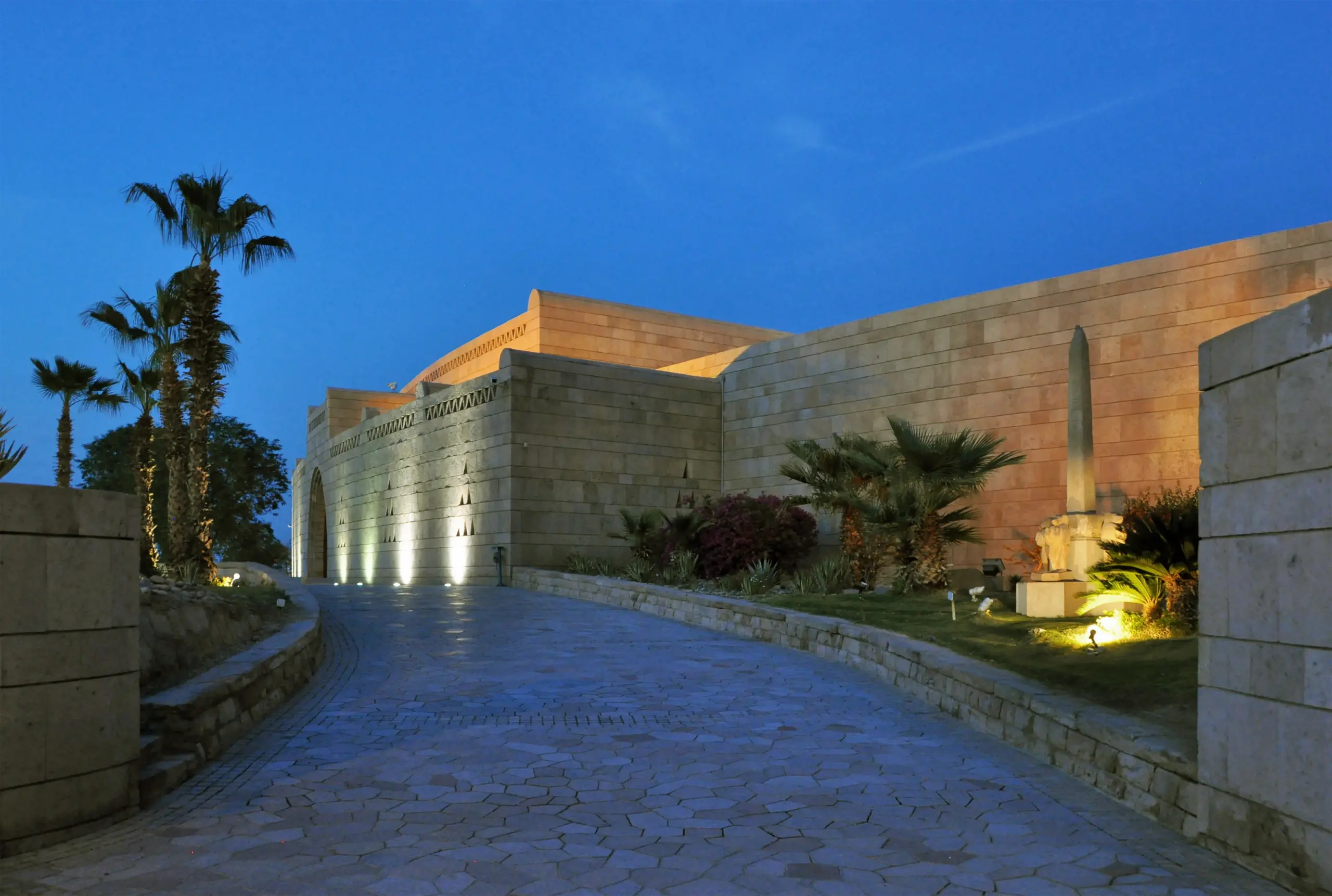
The Nubian Museum in Aswan is the most important museum dedicated to the history, culture, and civilization of the Nubian people — an ancient African civilization with its own language, art tradition, and political history that flourished along the Nile south of Aswan for over 4,000 years and whose homeland was permanently submerged beneath Lake Nasser following the construction of the Aswan High Dam in the 1960s. Opened in 1997 and awarded the Aga Khan Award for Architecture, the museum is built into a granite hillside using local sandstone and traditional Nubian architectural motifs, creating a building that is itself a statement of cultural identity and pride.
The museum’s collection covers Nubian history from prehistoric times through the pharaonic, Meroitic, Christian, and Islamic periods, to the modern Nubian community in Egypt and Sudan. It includes artifacts from the UNESCO salvage excavations of the 1960s that preceded the inundation of Nubia, scale models and photographs of the drowned villages, examples of traditional Nubian domestic architecture, painted house decoration, musical instruments, jewelry, clothing, and household objects — making it one of the few museums that preserves the living material culture of a displaced community alongside its ancient heritage.
The museum’s garden contains a cave with ancient rock art, original Nubian architectural elements including decorated doorways and painted plasterwork transplanted from villages before inundation, and outdoor sculpture — creating an extended open-air experience that complements the indoor galleries.
Nubian civilization developed along the Nile south of Aswan from at least 8000 BCE and produced a succession of powerful states: the Kingdom of Kerma (c. 2500–1500 BCE), the Egyptian-influenced Napatan Kingdom (c. 900–270 BCE), and the independent Meroitic Kingdom (c. 270 BCE–350 CE), which had its own script, produced its own pyramids, and maintained extensive trade networks across sub-Saharan Africa and the Red Sea.
The construction of the Aswan Low Dam in 1902 and the subsequent raising of the dam in 1912 and 1933 began flooding parts of Lower Nubia seasonally. The construction of the Aswan High Dam between 1960 and 1970 resulted in the permanent inundation of virtually the entire Nubian homeland — approximately 100,000 Nubian people were relocated from their ancestral villages (which now lie under 5–15 meters of Lake Nasser) to new settlements in Aswan and Kom Ombo. The UNESCO Nubian Monuments Campaign (1960–1980) rescued approximately 24 temples and monuments, but the villages, agricultural land, cemeteries, and oral cultural landscape were lost.
The Nubian Museum was created in direct response to this loss — a project of cultural reclamation and documentation built with Egyptian government and UNESCO support. It was awarded the Aga Khan Award for Architecture in 2001 for the quality of its building design and its successful integration of contemporary architecture with Nubian cultural identity.
Chronological galleries covering 10,000 years of Nubian civilization — from prehistoric rock art through the Kerma, Napatan, and Meroitic kingdoms to the modern Nubian community.
Scale models, photographs, and archival material documenting the Nubian villages that now lie permanently submerged beneath Lake Nasser — one of the most poignant museum displays in Egypt.
Painted house decoration, jewelry, textiles, musical instruments, and household objects from the pre-inundation Nubian community — preserving a living cultural tradition that was physically destroyed.
The museum garden contains original Nubian architectural elements including decorated doorways and painted plasterwork moved from villages before inundation — an open-air archive of vernacular design.
A natural cave within the garden area containing ancient rock art from the Nubian region — providing a direct connection to the prehistoric dimension of the Nubian cultural landscape.
Packages travelling to Aswan, where The Nubian Museum: A Tribute to a Lost Heritage is located.

Start From


Start From

See what our happy travelers say about us



