
Testimonials
Our Clients Reviews
See what our happy travelers say about us

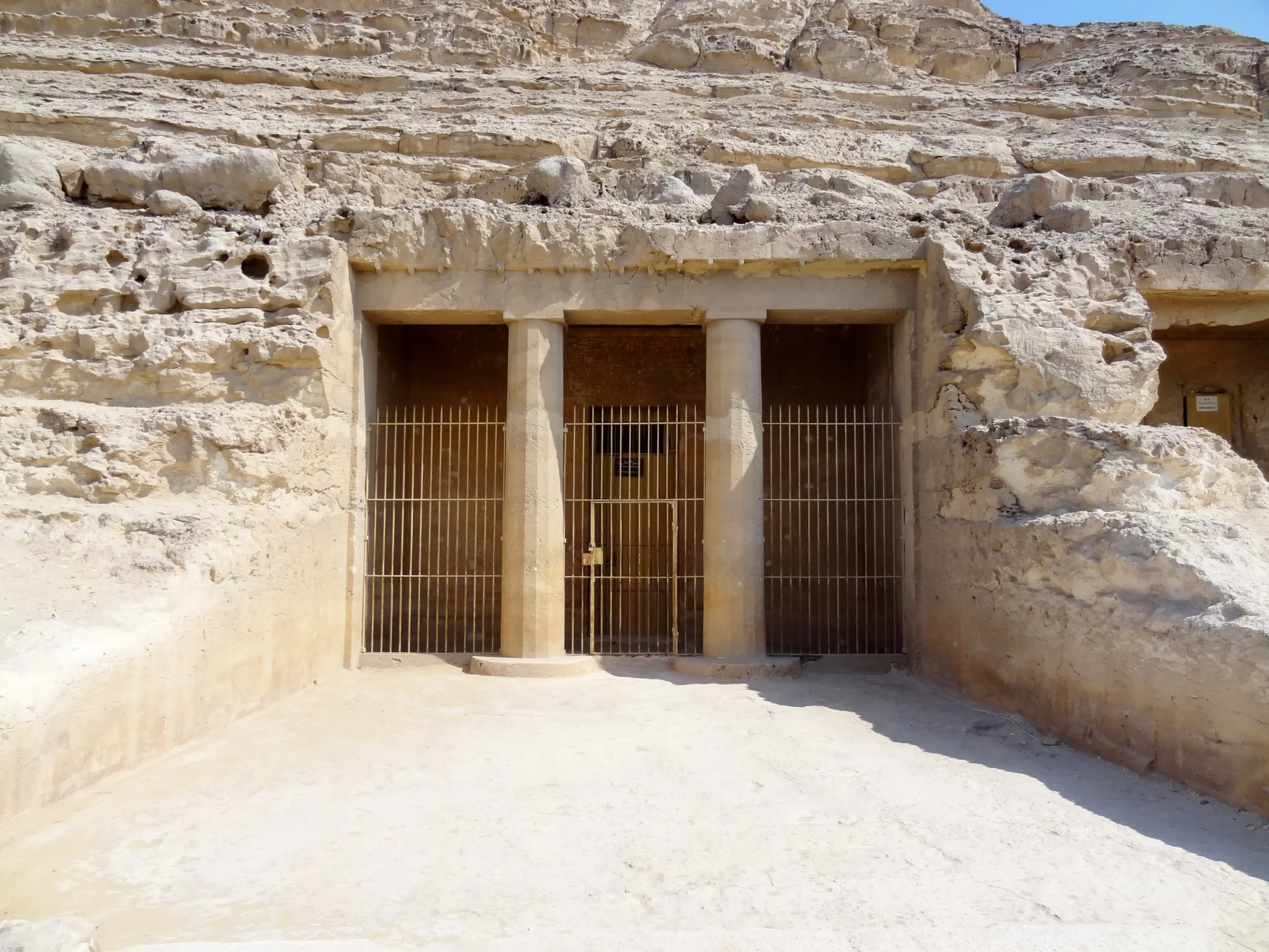
The Beni Hassan Tombs are a group of 39 rock-cut tombs carved into limestone cliffs on the east bank of the Nile, approximately 20 km south of the city of Minya in Middle Egypt. Dating to the Middle Kingdom period (c. 2055–1650 BCE), they belong to the nomarchs — regional governors — of the Oryx Nome (the 16th nome of Upper Egypt). Twelve of the tombs are decorated and open to visitors, and they contain some of the most vivid and detailed paintings of everyday life from the entire Middle Kingdom period, making Beni Hassan one of the most important painted tomb sites in Egypt after the Theban necropolis.
The painted programs at Beni Hassan are remarkable for their subject matter. Unlike the more formally religious decoration of New Kingdom royal tombs in the Valley of the Kings, these Middle Kingdom nomarch tombs depict a wide range of daily activities: wrestling matches shown in over 200 individual poses, military training and combat, fowling and fishing, agricultural scenes, carpentry and weaving workshops, and banqueting. One tomb — that of Khnumhotep II — contains the earliest known representation of a Semitic group entering Egypt, with a caravan of 37 Asiatic people shown in colorful striped robes, interpreted by some scholars as an early historical precedent referenced in the biblical story of Joseph.
The tombs are cut high into the cliffs above the Nile floodplain, and the approach involves a 15-minute climb up a series of steps cut into the rock. The views from the tomb entrances across the Nile valley are exceptional.
The Beni Hassan tombs were built during the 11th and 12th Dynasties of the Middle Kingdom, a period when regional governors (nomarchs) wielded considerable autonomy and competed with each other in the scale and quality of their funerary monuments. The most important tombs belong to nomarchs named Amenemhat, Khnumhotep I, Khnumhotep II, and Baqet — names recorded in the hieroglyphic inscriptions that accompany the painted scenes.
The tomb of Khnumhotep II (Tomb 3) is the most celebrated at the site for its biographical inscriptions, its hunting and nature scenes, and the famous ‘Asiatic caravan’ painting. The inscription records Khnumhotep’s career and his family history across several generations, making it one of the most detailed biographical texts from the Middle Kingdom. The caravan painting — showing 37 people labeled ‘Aamu’ (Asiatics) led by a figure named Abisha bringing eye paint to Egypt — is dated by an inscription to the 6th year of Senusret II (c. 1890 BCE).
The site was documented by Egyptologist Percy Newberry in the 1890s and his detailed copies of the painted scenes remain an important reference, as some details have faded since his time. The tombs were used and modified during later periods, with Greek and Coptic graffiti visible on some walls.
Over 200 individual wrestling poses depicted in rows across the chamber walls — the most comprehensive ancient record of Egyptian martial arts and athletic training.
The earliest known representation of Semitic people in Egyptian art — 37 figures in striped robes, dated precisely to c. 1890 BCE by an accompanying inscription.
Paintings of carpentry, weaving, agricultural labor, fishing, and fowling across multiple tombs provide the most complete pictorial record of Middle Kingdom daily life outside the Theban necropolis.
The tombs are cut high into limestone cliffs above the floodplain; the view from the tomb entrances across the Nile and agricultural plain is one of the finest panoramas in Middle Egypt.
The lengthy hieroglyphic texts in Khnumhotep II's tomb record family history across four generations — among the most detailed biographical inscriptions surviving from the Middle Kingdom.

See what our happy travelers say about us



