
Testimonials
Our Clients Reviews
See what our happy travelers say about us
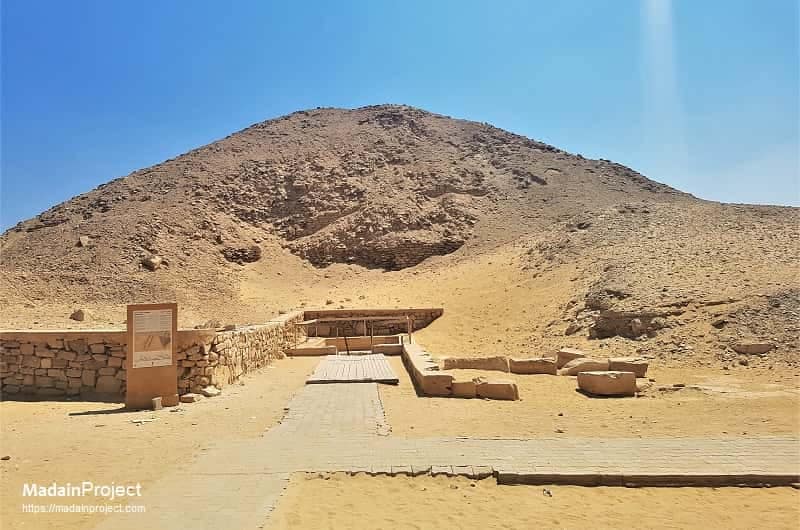
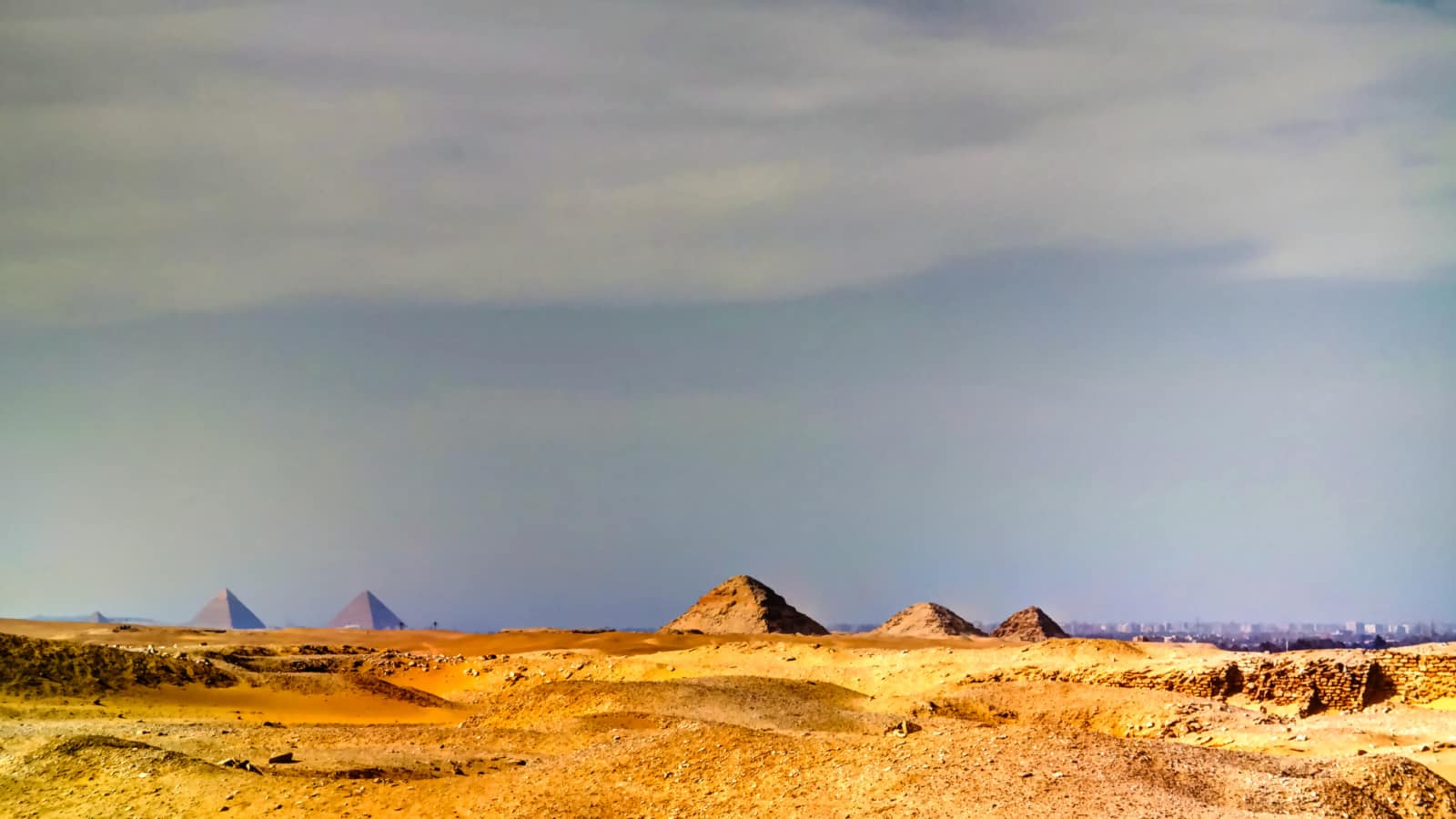
The Pyramid of Teti is the northernmost pyramid at Saqqara and one of the most accessible interiors in the entire Egyptian pyramid field. Built during the reign of Pharaoh Teti, founder of the 6th Dynasty (c. 2345–2323 BCE), it stands close to the main Saqqara visitor area and its interior can be entered with relatively little physical difficulty compared to other pyramid descents. The exterior has substantially collapsed and today appears as a natural-looking hill of rubble — an appearance that earned it the local Arabic name Haram el-Shawwaf (‘the watchman’s pyramid’).
The interior is the main reason to visit. Like the pyramid of Unas, Teti’s burial chambers are covered with Pyramid Texts — the religious spells designed to guide and protect the king in the afterlife. The texts in Teti’s pyramid are exceptionally well preserved, with hieroglyphs carved in precise relief and painted in the characteristic blue-green color that was used consistently in this period. The burial chamber ceiling is carved to replicate a night sky, covered with painted stars.
Teti’s complex also includes two queens’ pyramids — those of Iput I and Khuit — and a large cemetery of mastaba tombs belonging to officials of his court, including the decorated tombs of Mereruka and Kagemni, which are among the largest and most detailed private tombs from the Old Kingdom.
Teti founded the 6th Dynasty following the death of the last 5th Dynasty pharaoh, Unas, and is thought to have consolidated power partly through strategic marriages. He ruled for approximately 12 years and was, according to Manetho’s later king lists, assassinated — though this cannot be confirmed from contemporary evidence.
The Pyramid Texts in Teti’s pyramid were first documented by Gaston Maspero in 1881–82, shortly after he opened several pyramids at Saqqara and discovered the inscribed interior walls. The texts in Teti’s pyramid form part of the same corpus as those in the pyramids of Unas, Pepi I, Merenre, and Pepi II — collectively constituting the oldest known religious literature in the world.
The adjacent mastaba tomb of Mereruka, Teti’s vizier and son-in-law, is one of the largest private tombs of the Old Kingdom with 32 decorated chambers covering various aspects of daily life, official duties, and funerary ritual. It was discovered and published by Jacques de Morgan in the late 19th century.
The sarcophagus hall and antechamber are lined with vertical columns of hieroglyphic Pyramid Texts in crisp carved relief, painted blue-green and exceptionally well preserved.
The burial chamber ceiling carries a painted sky of five-pointed stars, creating a symbolically celestial space for the king's eternal rest.
Adjacent 32-room tomb of Teti's vizier, containing painted reliefs of fishing, fowling, athletics, and craftsmen — the most comprehensive pictorial record of Old Kingdom daily life in any private tomb.
Another official's tomb nearby with detailed painted reliefs of animal husbandry and river scenes, also open to visitors.

See what our happy travelers say about us
