



 Nile Cruise
Testimonials
Our Clients Reviews
See what our happy travelers say about us


The Temple of Kalabsha is the largest freestanding ancient temple in Nubia and one of the best-preserved monuments from the early Roman period in Egypt. Originally built near the ancient site of Talmis in Lower Nubia approximately 50 km south of Aswan, it was dedicated to Mandulis — a Nubian solar deity identified with Horus — as well as Osiris and Isis. The temple was relocated to an artificial island near the Aswan High Dam during the UNESCO Nubian salvage campaign of 1963–1968, with the operation funded and executed by West Germany.
The temple’s outer pylons, colonnade court, hypostyle hall, and sanctuary survive largely intact. The pylon towers stand approximately 12 meters tall with classical proportions, and the outer ambulatory corridor preserves inscriptions from multiple periods including a notable Byzantine-era Greek text. A steep staircase within the pylon tower leads to roof-level terraces with views across the High Dam reservoir.
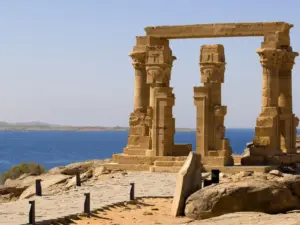
The island also holds two additional relocated monuments: Beit el-Wali (an early Ramesses II temple) and the Kiosk of Qertassi, a delicate Roman-period open kiosk with slender columns. Three monuments from different dynasties on a single small island accessible only by boat makes New Kalabsha one of the most rewarding half-day excursions from Aswan.
The Temple of Kalabsha was built during the reign of Augustus Caesar (c. 30 BCE–14 CE) on the site of an earlier 18th Dynasty sanctuary attributed to Amenhotep II, and was expanded by several successors including Tiberius, Caligula, and Trajan. The dedication to Mandulis reflects the cultural synthesis between Egyptian and African religious traditions that characterized the Roman-era southern border region.
When the Aswan High Dam project threatened to inundate the site, the Federal Republic of Germany offered to fund and execute the relocation. The dismantling began in 1961: 13,000 sandstone blocks, some weighing 25 tonnes, were cut, numbered, transported by barge, and reassembled on New Kalabsha island in 18 months — one of the earliest major temple relocations of the Nubian salvage effort.
In recognition of Germany’s contribution, Egypt gifted a reconstructed Roman-era temple gateway from Kalabsha to the Ägyptisches Museum in Berlin, where it is now permanently displayed.
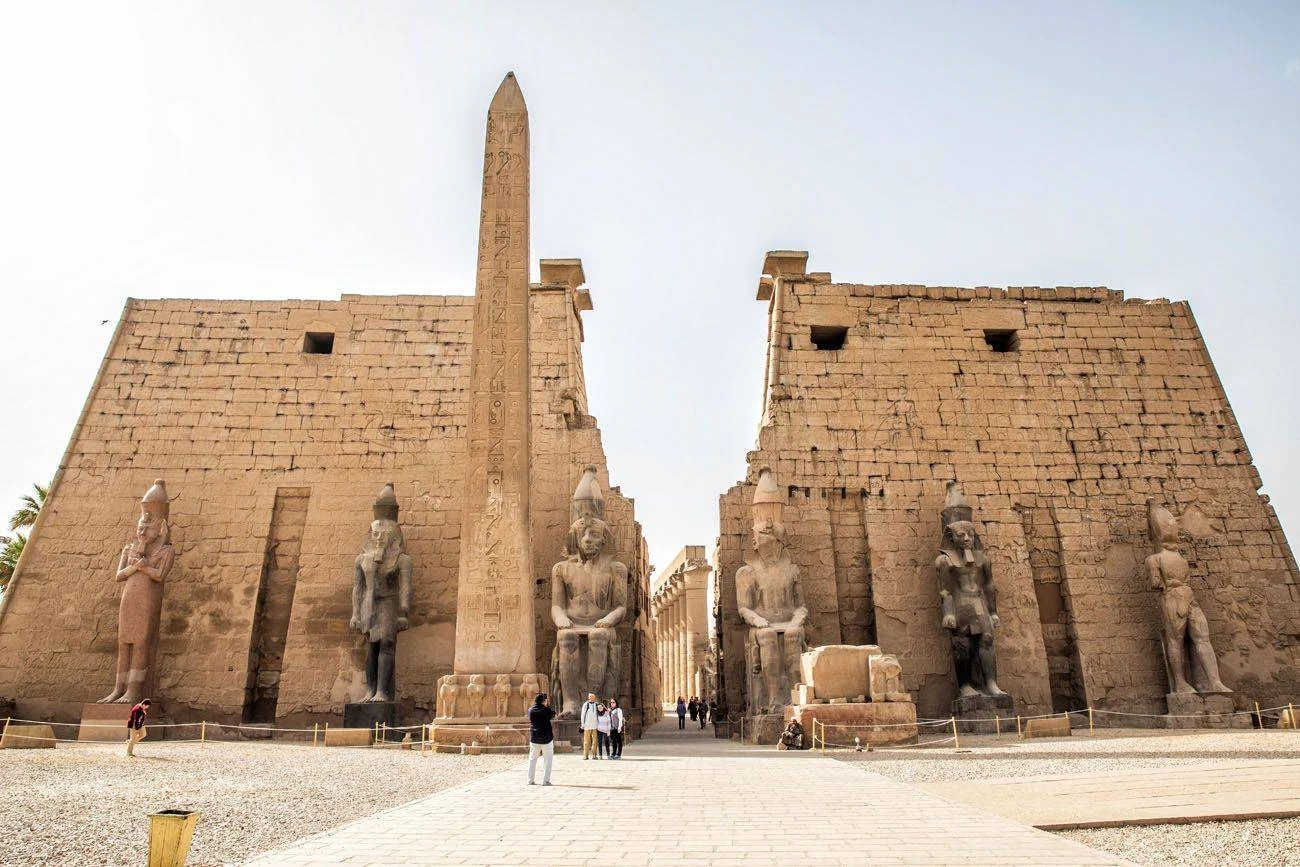
Two 12-meter intact pylon towers frame the temple entrance; internal staircases lead to roof terraces with views across the High Dam reservoir.
The outer colonnade corridor carries inscriptions from multiple periods including a significant Byzantine-era Greek text — a layer-cake of historical writing in a single space.
A delicate Roman-period open kiosk with slender Hathor-headed columns at the island's south end — one of the most elegant small structures from the Roman-era Nubian building program.
The motorboat ride from the High Dam jetty gives a panoramic view of the island with all three monuments visible — Kalabsha's pylon, Beit el-Wali, and the Kiosk of Qertassi.
Packages travelling to Aswan, where The Temple of Kalabsha: The Pristine Marvel of Lower Nubia is located.

Start From


Start From

See what our happy travelers say about us



