
Testimonials
Our Clients Reviews
See what our happy travelers say about us
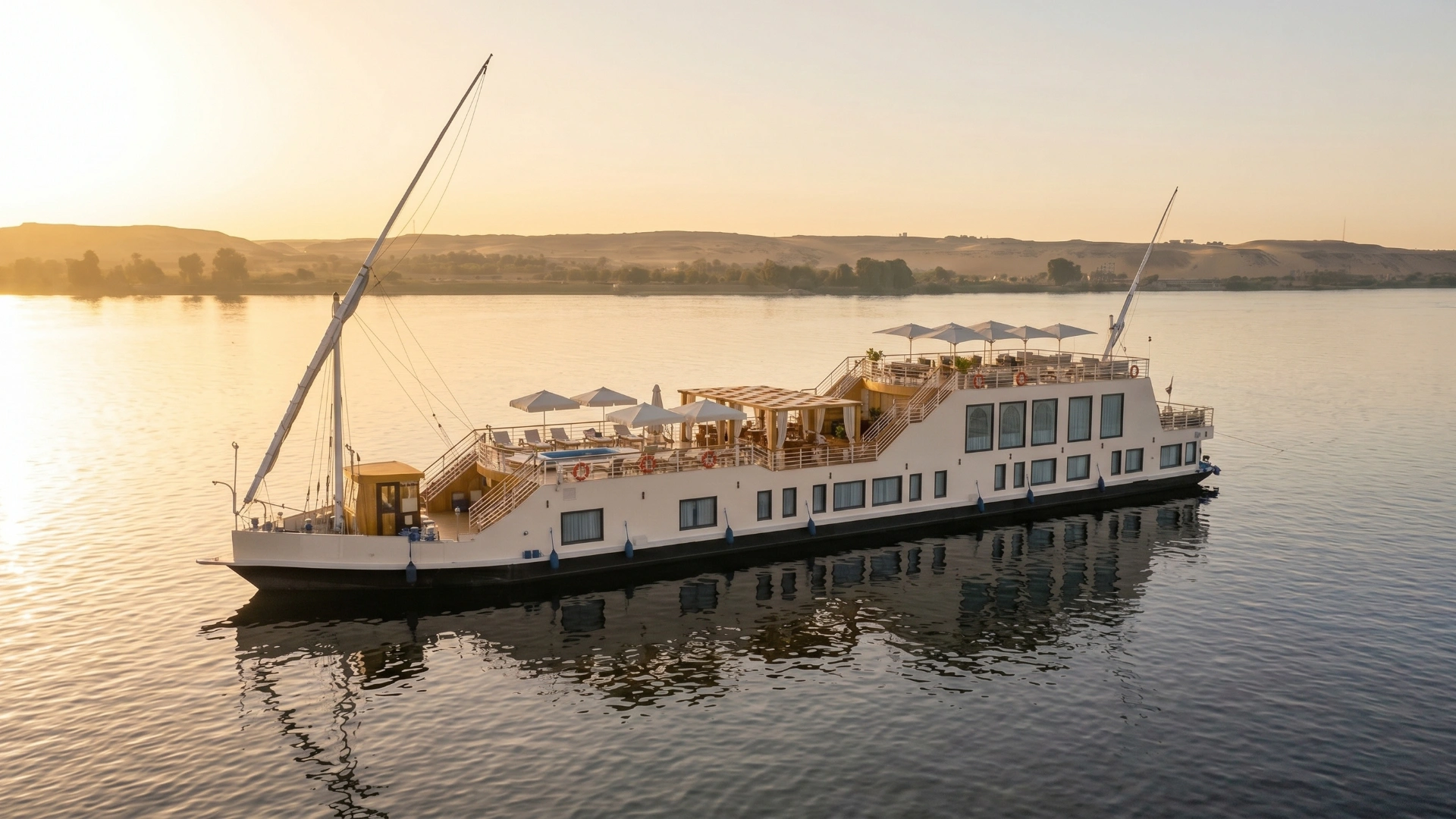
A Luxury cruise aboard the Jubal Dahabiya is the most intimate and historically authentic way to travel between Luxor and Aswan. This exclusive experience takes place aboard small, traditional wooden sailing boats that carry between 8 and 24 passengers — a stark contrast to the 100–300 passenger motor cruisers that dominate the Luxor-Aswan route.
The word ‘dahabiya’ means ‘golden one’ in Arabic, referring to the gilded decoration of the grand 19th-century vessels that carried wealthy European travelers on Nile voyages lasting several weeks. Modern dahabiyas are revived versions of these traditional vessels, meticulously fitted with private cabins, quality catering, and shaded sun decks, but powered primarily by sail with auxiliary motors for windless stretches.
The Jubal dahabiya fleet, operated by experienced Nile cruise specialists, represents one of the premium ends of the river market. Each vessel is designed to offer the sailing and visual experience of a traditional wooden Nile boat combined with the comfort expectations of contemporary high-end travel. Booking this specific Luxury cruise means passengers enjoy a fundamentally different relationship with the river than motor cruise guests: they stop at lesser-visited temples and villages, anchor overnight in quiet bends of the river away from the massive cruise ship flotillas, and experience the water at a pace that allows observation of local river life in detail.
The itinerary of this Luxury cruise typically covers the same iconic Luxor-Aswan arc as motor cruises but takes longer — 6 to 7 nights instead of 4 — allowing for a deeply relaxed pace. It includes dedicated stops at sites that standard motor cruisers skip, such as the Temple of Esna (entering the town by foot rather than by minibus), smaller traditional villages accessible only from the river, and agricultural landscapes that provide the living context for understanding the ancient civilization. Ultimately, choosing a Luxury cruise on the Jubal Dahabiya ensures an unforgettable journey steeped in elegance, privacy, and deep cultural immersion.
The original dahabiyas were large wooden houseboats used by wealthy Nile travelers in the 19th century, when the journey from Cairo to Luxor and Aswan took several weeks under sail. Thomas Cook’s introduction of steam-powered passenger vessels in the 1870s made the dahabiya commercially obsolete as a transport vessel — they were simply too slow to compete. The last commercial dahabiyas were replaced by motor cruise ships in the early 20th century.
The revival of the dahabiya tradition began in the 1990s, driven by travelers seeking a slower and more intimate Nile experience than the large cruise ships offered. Egyptian boat builders familiar with traditional construction techniques were commissioned to build new vessels following the original dahabiya design but with modern plumbing, electrical systems, and safety equipment. Several companies now operate dahabiya fleets on the Luxor-Aswan route, positioning the vessels as premium alternatives to motor cruisers.
The dahabiya revival has also preserved traditional Nile boat-building skills that might otherwise have been lost — the wooden construction techniques, sail-rigging knowledge, and Nile navigation understanding of the captains who operate these vessels represent a living connection to a centuries-old tradition of river travel.
The experience of traveling the Nile on a wooden sailing boat — the creak of the rigging, the sound of wind in the sail, and the river's pace setting the rhythm of the journey.
8–24 passengers rather than 100–300 — a completely different social and cultural atmosphere that allows genuine conversation with fellow travelers and a more personal relationship with the Egyptologist guide.
Villages, smaller temple sites, and agricultural landscapes that motor cruisers pass without stopping — the dahabiya's flexibility allows access to the living river culture that large ships cannot reach.
Anchoring in quiet bends of the Nile away from the motor cruise flotillas — falling asleep to the sound of the river rather than the generator of a large ship.
Packages travelling to Nile Cruise, where Jubal Dahabiya Cruise is located.


Start From

Start From

Start From

See what our happy travelers say about us



