
 Package
 Package
 Package
 Attraction
 Attraction
 Attraction
 Attraction
 Attraction
 Attraction
Testimonials
Our Clients Reviews
See what our happy travelers say about us
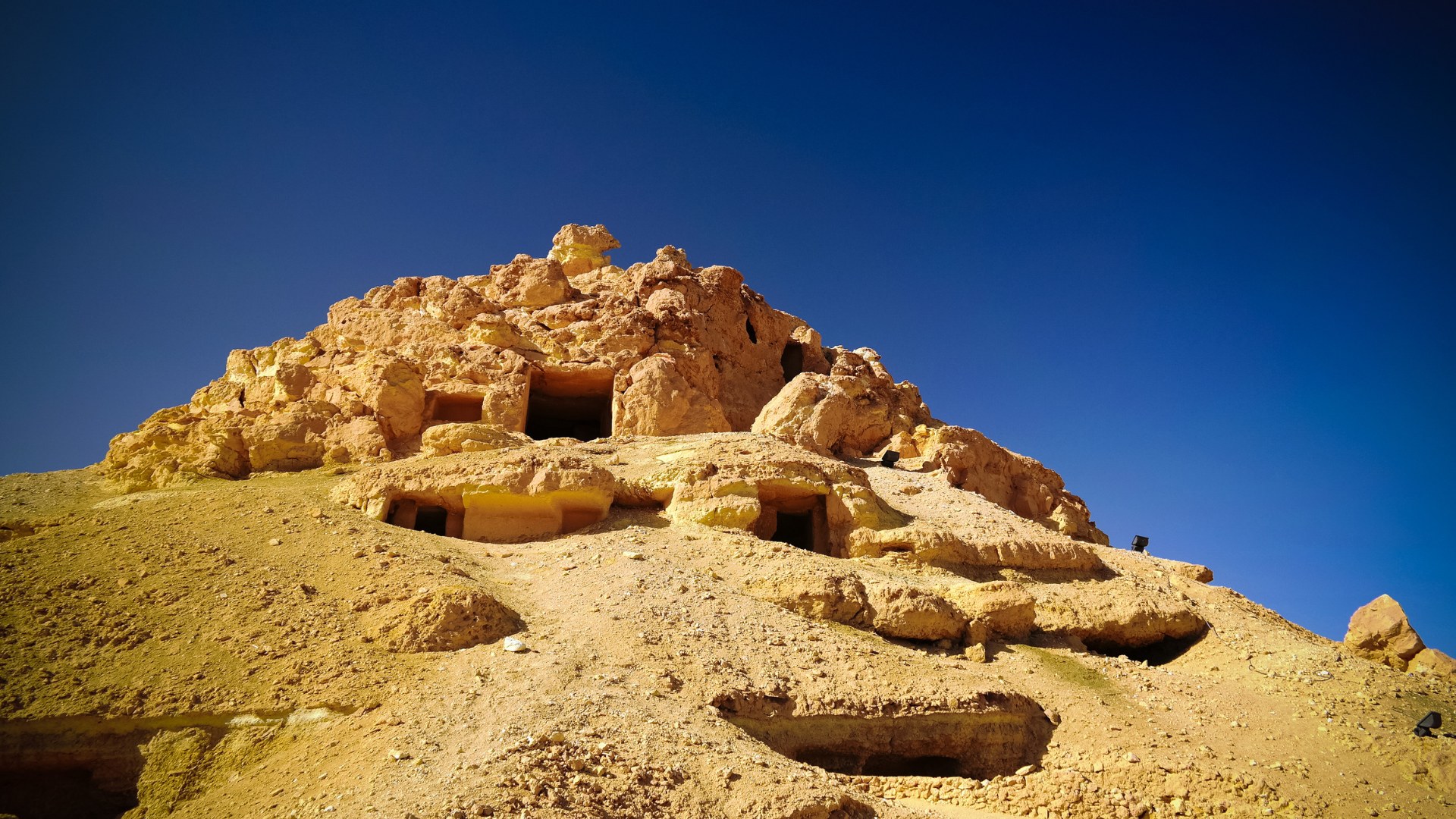
Gebel al-Mawta (‘Mountain of the Dead’) is a rocky hill on the northern edge of Siwa town containing approximately 300 rock-cut tombs dating from the 26th Dynasty through the Greco-Roman period, making it the most significant ancient funerary site in Siwa Oasis. Four of the tombs are decorated and open to visitors, containing painted scenes of religious ceremonies, funerary rites, and daily life that represent the only surviving examples of ancient painted tomb decoration in Siwa.
The hill is compact and walkable in under an hour, with the tombs distributed across the rocky hillside at varying levels — some reached by steps cut into the rock, others requiring short scrambles. The decorated tombs include the Tomb of Si-Amun, whose ceiling carries vivid painted scenes of the Greek-Egyptian 26th Dynasty period; the Tomb of Mesu-Isis, with its painted false door and offering scenes; and the Tomb of the Crocodile, which takes its name from a painted crocodile image on the wall.
Gebel al-Mawta has an additional layer of 20th-century history: during World War II’s North African Campaign, Siwan residents used the ancient tombs as air-raid shelters during Allied and Axis bombing raids in the Western Desert. Local accounts describe families living in the ancient burial chambers for extended periods, and the tombs’ use as wartime shelters is part of the community memory that surrounds the site.
The Gebel al-Mawta tombs date primarily from the 26th Dynasty (Saite Period, c. 664–525 BCE) through the Ptolemaic and Roman periods. This chronological range reflects Siwa’s development as an important religious and administrative center from the Late Period onward, particularly after the Oracle of Amun attracted visitors from across the Mediterranean world.
The decorated tomb of Si-Amun is the most important: a large private tomb belonging to a wealthy Greek merchant of the Ptolemaic period who adopted Egyptian religious practices, the decoration shows Si-Amun in Egyptian funerary costume making offerings before Osiris, Anubis, and other Egyptian gods, while his features and the decorative style reflect Hellenistic artistic conventions. The fusion of Greek identity and Egyptian religious practice visible in Si-Amun’s tomb is a perfect microcosm of the Alexandrian cultural synthesis that characterized Ptolemaic Egypt.
The use of the tombs as World War II shelters was documented by Egyptian archaeologists in the post-war period. The presence of modern graffiti, candle soot, and in some cases structural damage from wartime use adds an unexpected layer to a site already rich with historical strata — the tombs that sheltered the dead through eternity briefly sheltered the living through the most destructive war in modern history.
The finest decorated tomb at Gebel al-Mawta — a Ptolemaic-era Greek merchant in Egyptian funerary dress, with ceiling paintings showing vivid religious scenes in a blend of Hellenistic and Egyptian artistic conventions.
A small tomb with a painted crocodile image on the wall — one of the most unusual painted motifs in any Siwan tomb, reflecting the penetration of Nile Valley religious imagery into the western oasis.
From the upper tombs, panoramic views across the full Siwa Oasis depression — palm groves, salt lakes, the Shali Fortress, and the surrounding desert escarpment visible in a single sweep.
The documented wartime use of the ancient tombs as air-raid shelters — candle soot and wartime-era modifications visible in several tomb chambers, adding an unexpected modern dimension to the ancient site.
These packages visit this site as part of the itinerary.

Start From
Start From
Start From

See what our happy travelers say about us



