
Testimonials
Our Clients Reviews
See what our happy travelers say about us
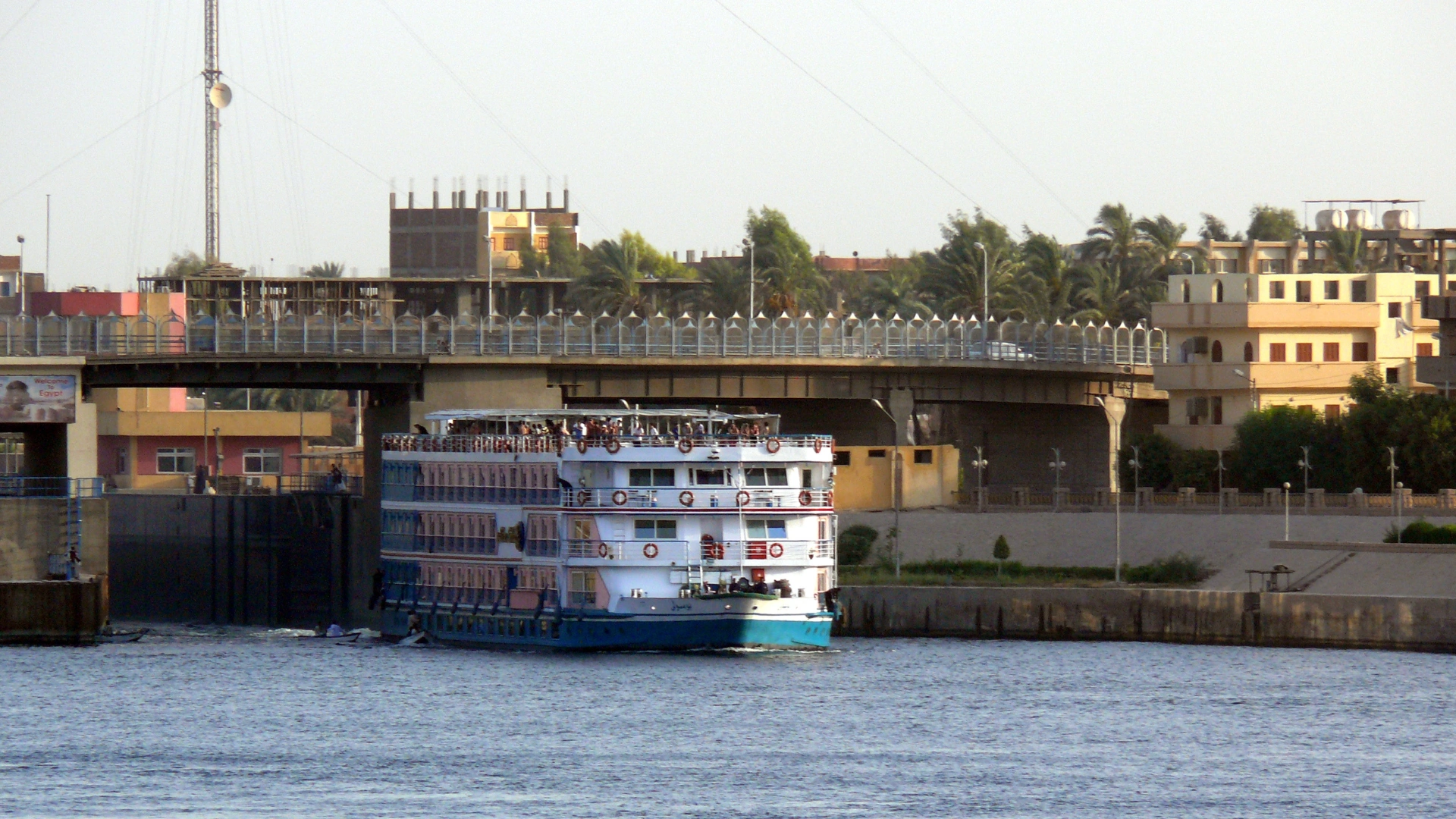
The Esna Lock is the only lock on the navigable stretch of the Nile between Aswan and Cairo, and every Nile cruise ship traveling between Luxor and Aswan must pass through it. Built in 1908 and last reconstructed in 1994, the lock raises or lowers vessels approximately 3 meters to compensate for the difference in water levels above and below the Esna Barrage. Transit time through the lock is 20–30 minutes, but vessels typically wait in queue for 1 to 3 hours depending on river traffic volume.
For cruise passengers, the lock experience is one of the most memorable moments of any Nile voyage. As ships idle in the holding area, local merchants launch an extraordinary commerce: vendors on small rowboats throw bags of goods — gallabiyas, scarves, papyrus, perfume bottles — onto the ship’s decks, and passengers throw money back. The exchange, conducted entirely in improvised sign language and shouted prices, is chaotic, lighthearted, and completely unlike any other retail experience in Egypt.
The lock also offers passengers their best opportunity to see working riverbank life at close range: women doing laundry, children swimming, fishing boats, and the texture of daily Nile life that is invisible when traveling at speed.
The Esna Barrage and its lock were built by the Egyptian government under British administration in 1906–1908 to regulate the Nile’s flow and provide irrigation water for agricultural land south of Luxor. Unlike the Aswan Dam, the Esna Barrage was not designed to create a reservoir but to raise water levels for canal intake — a run-of-river structure.
As Nile cruise tourism expanded from the 1960s onward, the Esna Lock transition evolved from a logistical inconvenience into a genuine attraction. Cruise companies now typically schedule the approach so passengers are awake and on deck when the vendor boats appear.
The Esna Temple nearby, built during the reigns of several Roman emperors, is known for its extraordinary astronomical ceiling decorated with a detailed star calendar.
Local merchants throw bags of textiles and souvenirs onto ship decks from rowboats and the bridge while passengers negotiate prices by gesture — a spontaneous cultural experience unlike anything else in Egypt.
Watching the lock gates close and the water level shift around a large cruise ship provides an unexpected industrial spectacle in an ancient river landscape.
The slow passage through the lock approach gives extended close-up views of the Esna embankment — laundry, children, fishing boats — normally seen only at speed from the river.

See what our happy travelers say about us



