
 Attraction
 Attraction
 Attraction
 Attraction
 Attraction
Testimonials
Our Clients Reviews
See what our happy travelers say about us
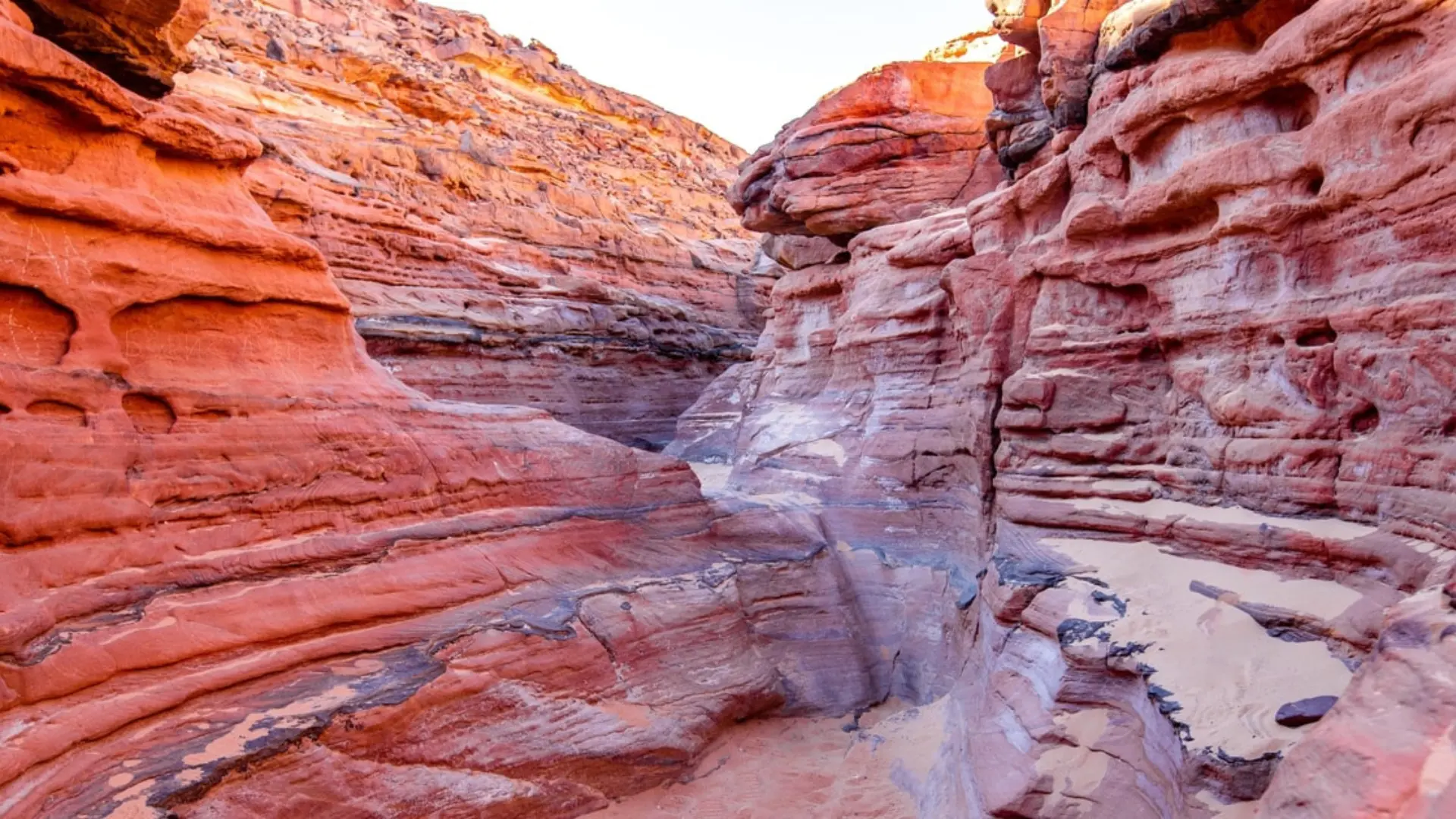
The Colored Canyon is a narrow slot canyon in the southern Sinai Peninsula approximately 15 km west of Nuweiba, where millennia of water erosion have cut a sinuous passage through layered sandstone and limestone, revealing a spectrum of rock colors — deep reds, purples, yellows, ochres, and whites — in banded formations that shift and intensify as the sun moves across the narrow sky opening above. The canyon walls, which in places squeeze to less than a meter apart, are polished smooth by ancient flash floods and worn into rounded organic forms that amplify the visual effect of the colored strata.
The Colored Canyon is one of the most distinctive natural features in the Sinai Peninsula and one of the most visited natural sites in South Sinai outside the main beach resorts. The canyon walk involves scrambling over boulders, squeezing through narrow passages, and climbing a short rope section — making it accessible to most visitors with reasonable fitness but not suitable for those with claustrophobia or significant mobility limitations. The full circuit through the canyon takes approximately 1.5–2 hours.
The canyon is typically approached via a short desert drive from Nuweiba or Dahab and involves a 20–30 minute walk across open desert before entering the canyon mouth. Guides are strongly recommended both for navigating the route and for identifying the most photogenic sections of the colored walls.
The Colored Canyon was formed by a combination of geological uplift, tectonic faulting, and the long-term action of rare but intense flash floods that carved through the layered sedimentary rock of the Sinai’s interior plateau. The rock layers visible in the canyon walls were deposited over millions of years when the Sinai region lay beneath shallow tropical seas — each colored band represents a different period of sedimentation with varying mineral content. Iron oxides create the reds and oranges; manganese compounds produce the purples; calcium carbonate gives the whites; and varying silica content contributes the yellows and ochres.
The canyon was used by the indigenous Bedouin communities of the Sinai — particularly the Tarabin tribe of the Nuweiba area — as a known navigational landmark and occasional shelter for centuries before its recognition as a tourist destination. Tourism to the canyon developed in the 1990s as the Sinai’s Red Sea coast became an international diving and beach destination, with the canyon established as the primary inland natural excursion for visitors based in Nuweiba and Dahab.
The layered sandstone and limestone walls in reds, purples, yellows, and whites — most vivid in the mid-morning when the sun is directly overhead and light penetrates the full depth of the narrow slot.
The canyon squeezes to less than a meter in its narrowest sections — walking through with polished colored walls inches from both sides is the defining physical experience of the Colored Canyon.
Ancient flash floods have worn the sandstone to a smooth, glassy finish — running your hand along the curved polished surfaces while the colors shift above gives a tactile encounter with millions of years of geological time.
We do not run a scheduled tour to Sinai yet, but our team can build a private trip that includes Colored Canyon, with a guide, transport and hotels arranged for you.
Plan a tailor-made trip
See what our happy travelers say about us



