
Testimonials
Our Clients Reviews
See what our happy travelers say about us

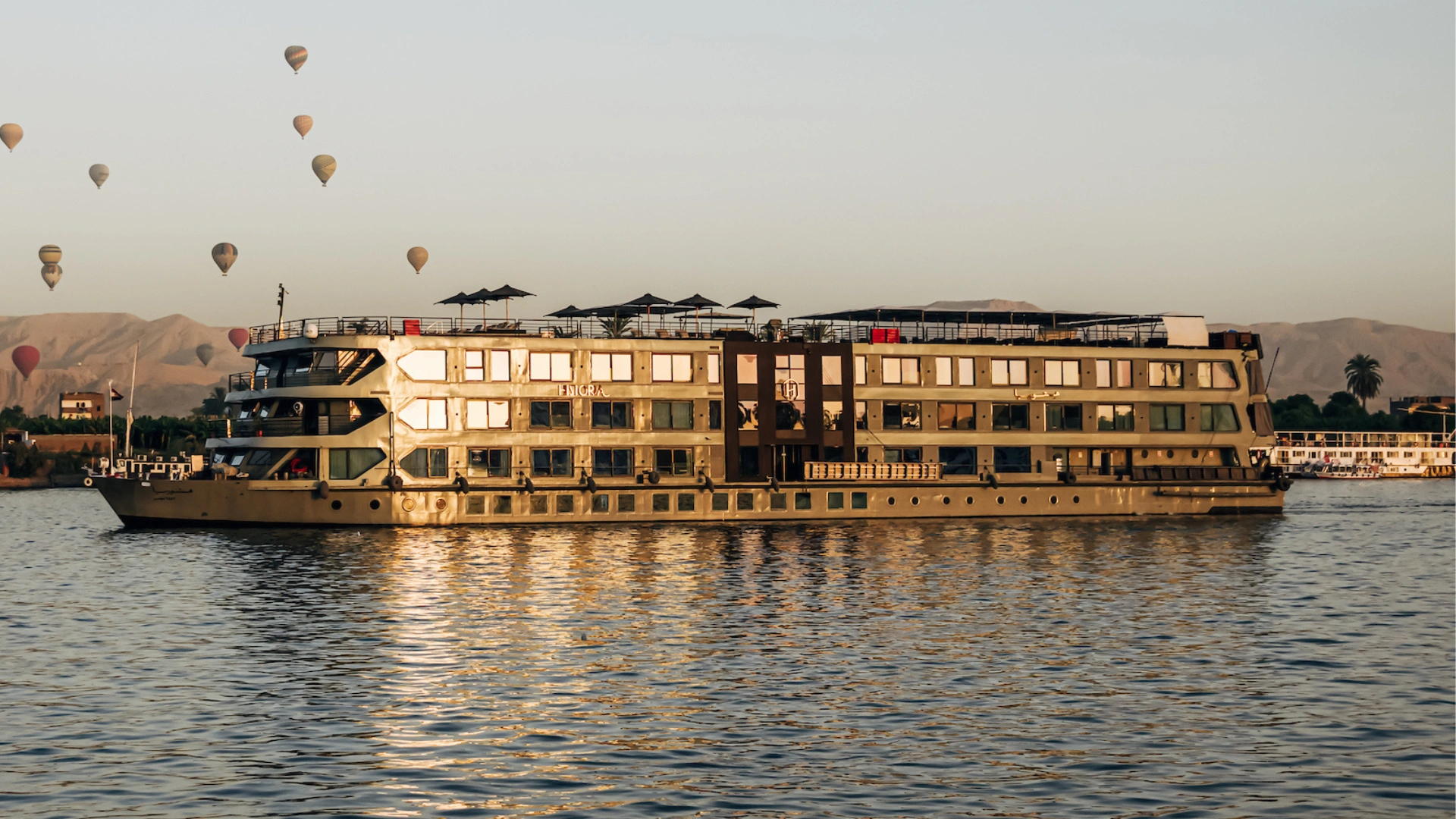
The classic Nile cruise between Luxor and Aswan is one of the world’s great river journeys — a 200-km voyage through the heartland of ancient Egyptian civilization aboard a traditional river cruise ship, stopping at the most significant temple complexes between the two cities. The route passes through the landscapes that formed the backdrop of pharaonic civilization for three millennia: the green ribbon of the Nile floodplain flanked by golden desert cliffs, small farming villages, sugar cane fields, and the occasional felucca sailing upstream under a white sail.
The standard Classic Nile cruise is four-night cruise departs Luxor and stops at the Karnak Sound and Light Show (evening, Luxor), the Temple of Horus at Edfu, the Temple of Kom Ombo, and arrives at Aswan — with optional excursions to the Valley of the Kings, Hatshepsut’s Temple, and the Colossi of Memnon from the Luxor base. The reverse direction (Aswan to Luxor) is equally available. Longer seven-night cruises allow more time at each stop and additional excursions.
Classic Nile cruise ships range from three-star budget vessels with basic cabins and buffet dining to five-star luxury ships with private balconies, gourmet restaurants, and dedicated Egyptologist guides. The best ships have observation decks from which the river, the temples, and the desert landscapes can be watched continuously as the ship moves. Passing through the Esna Lock — where vendors throw textiles onto the ship from the canal banks — is universally cited as one of the most spontaneously entertaining moments of any cruise.
Passenger travel on the Nile between Luxor and Aswan has been conducted since the 19th century, when Thomas Cook organized the first organized tourist journeys up the Nile in the 1860s and 1870s. Cook’s early steamers carried Victorian travelers from Cairo to Luxor and Aswan, establishing the Nile cruise as a distinctly European-colonial form of Egyptian tourism that nonetheless gave participants genuine access to ancient monuments then largely inaccessible to most visitors.
The dahabiyas — traditional wooden sailing barges — were the original luxury Nile vessels, carrying wealthy European travelers upstream over several weeks. These were replaced by steam-powered paddle steamers in the late 19th century and eventually by the motor-driven cruise ships that dominate the route today. A revival of the dahabiya tradition in the late 20th century has given travelers an alternative to the large motor cruiser, with small traditional sailing vessels offering slower, more intimate passage between the same monuments.
At peak periods before the 2011 Arab Spring disruption, over 250 cruise ships operated the Luxor-Aswan route. The number has since recovered and the Nile cruise remains one of Egypt’s most significant tourism products, introducing millions of visitors annually to the temple sites of Upper Egypt.
The best-preserved ancient temple in Egypt — a Ptolemaic monument of extraordinary completeness, visited by ship passengers who disembark at Edfu and travel by horse-drawn carriage to the temple.
The unique symmetrical temple dedicated to two gods, visited at sunset when the west-facing facade catches the last light over the Nile — the most atmospheric cruise shore excursion.
The spontaneous vendor commerce as the ship waits in the canal lock — textile merchants throw goods from the bank and bridge while passengers negotiate prices by shouting and gesture.
The continuous view from the ship deck of the green floodplain, desert cliffs, felucca sails, and village life passing at river speed — an experience unchanged in its essential character for 150 years.
The golden light of sunrise and sunset on the Nile surface, with the desert hills turning orange and the river reflecting the changing sky — the visual backdrop of the entire cruise experience.
Packages travelling to Nile Cruise, where Classic Nile Cruise (Luxor-Aswan) is located.

Start From

Start From


Start From

See what our happy travelers say about us



