

 Attraction
 Attraction
 Attraction
 Attraction
Testimonials
Our Clients Reviews
See what our happy travelers say about us

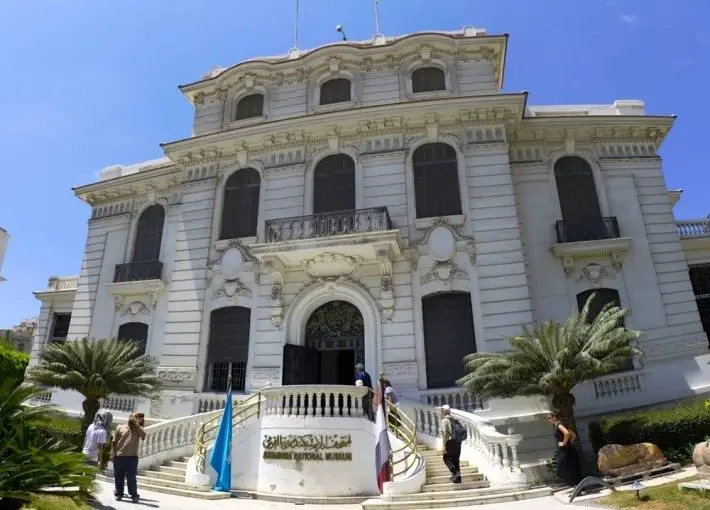
The Alexandria National Museum is housed in a restored Italian-style palace in the Tariq al-Hurriya district of central Alexandria, originally built in the early 20th century as a private mansion and later used as the American consulate. Opened as a museum in 2003, it presents the full sweep of Alexandria’s history across three floors, moving chronologically from the pharaonic era in the basement through the Greco-Roman, Coptic, and Islamic periods on the upper floors. The building itself — with its ornate facade, arched windows, and central atrium — adds architectural context to the collections it holds.
The museum’s approximately 1,800 objects were selected from the storerooms of the larger Egyptian Museum in Cairo and from local Alexandrian excavations, with particular emphasis on material that reflects Alexandria’s distinctively cosmopolitan character. Highlights include Greco-Roman portrait busts, gilded mummies with painted cartonnage, jewelry, terracotta figurines, and a collection of objects recovered from underwater excavations in Alexandria’s Eastern Harbour — where the royal quarters of Cleopatra VII and the Ptolemaic palace precinct now lie submerged beneath the sea.
The museum fills a genuine gap in Alexandria’s cultural infrastructure, providing visitors with a coherent narrative of the city’s history that the larger but less organized Greco-Roman Museum struggled to offer before its renovation. Its manageable scale makes it one of the more visitor-friendly museums in Egypt — well-labeled, logically sequenced, and completable in a focused two-to-three-hour visit.
Alexandria was founded by Alexander the Great in 331 BCE and served as the capital of Ptolemaic Egypt for nearly three centuries, becoming the most important city in the ancient Mediterranean world. Under the Ptolemies it was home to the famous Library of Alexandria, the Mouseion (the institution that gave us the word ‘museum’), the Pharos lighthouse, and a royal quarter of extraordinary scale. The city later became a center of early Christianity and one of the most significant cities of the Byzantine Roman Empire before the Arab conquest of 641 CE transformed it into an Islamic provincial capital.
The palace that now houses the museum was built in the early 20th century for a wealthy Alexandrian merchant family in the ornate Italian neoclassical style popular among Alexandria’s cosmopolitan elite of that period. It was subsequently used by the US consulate before being acquired by the Egyptian government for conversion to a museum.
The underwater archaeology component of the museum’s collection reflects ongoing excavations in Alexandria’s ancient harbors, where the combined effects of ancient earthquakes and rising sea levels have submerged a substantial portion of the ancient city — including the island of Antirhodos where Cleopatra’s palace stood — beneath several meters of water.
Objects recovered from submerged ancient ruins in Alexandria's Eastern Harbour, including statuary and architectural elements from the drowned Ptolemaic royal quarter.
Greco-Roman period mummies with gilded cartonnage masks and painted linen wrappings reflecting the Egyptian-Hellenistic cultural fusion of Alexandria's prosperous population.
Marble and granite busts of Ptolemaic rulers and officials showing the blend of Egyptian and Hellenistic sculptural conventions developed in Alexandria's royal workshops.
The restored Italian neoclassical mansion — with its ornate staircase, decorative ceilings, and central hall — provides an architecturally distinguished setting for the collections.
Packages travelling to Alexandria, where Alexandria National Museum is located.

Start From


Start From


Start From


Start From


Start From

See what our happy travelers say about us



