
Testimonials
Our Clients Reviews
See what our happy travelers say about us
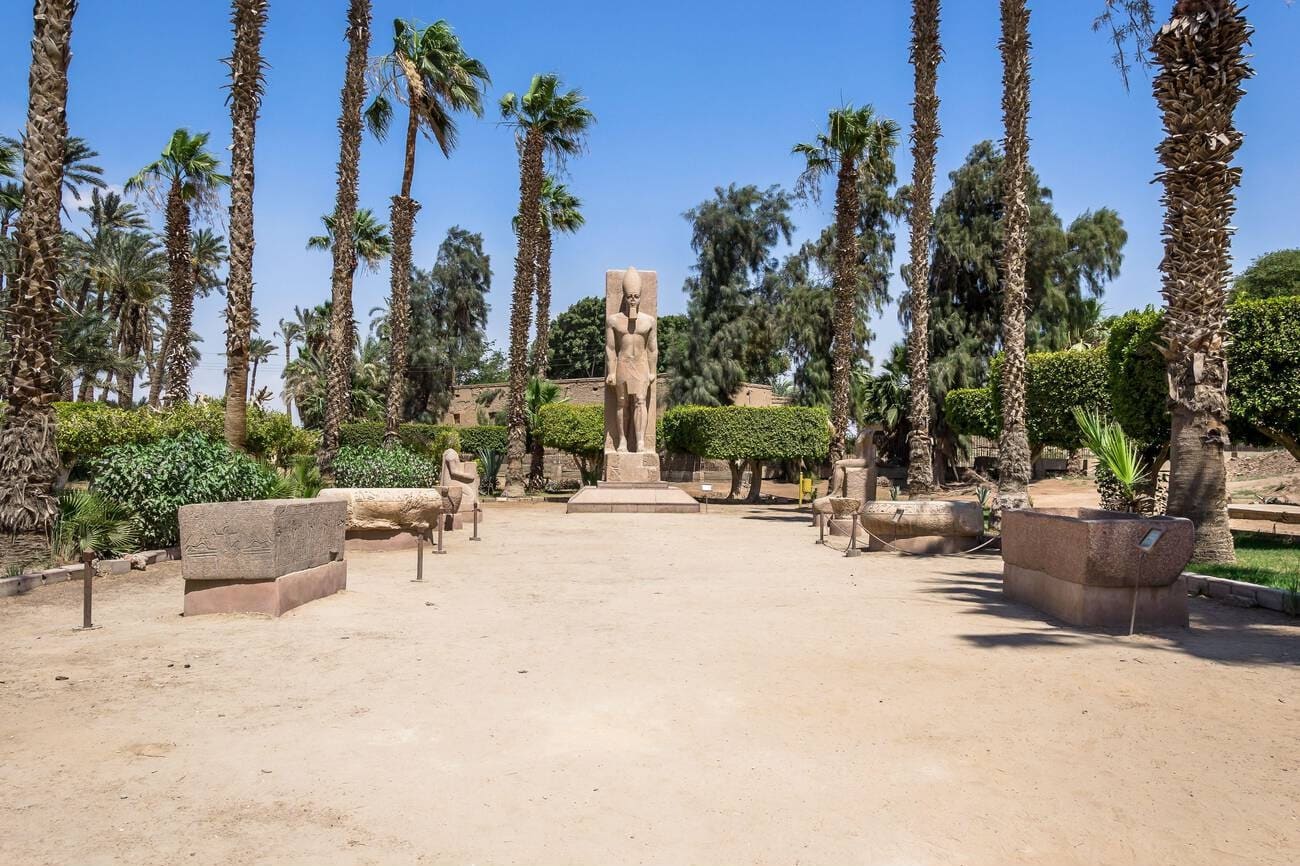
The Memphis Open Air Museum is a small but significant outdoor and covered museum at the site of ancient Memphis, the first capital of unified Egypt, located in the modern village of Mit Rahina approximately 24 km south of Cairo. Memphis was founded around 3100 BCE by Pharaoh Menes (traditionally identified with Narmer) following the unification of Upper and Lower Egypt, and it served as the country’s political and administrative capital for much of the Old and Middle Kingdom periods. Today virtually nothing of the ancient city stands above ground — its monuments were robbed for building material over millennia — but the site preserves several significant statues and architectural fragments in an open-air garden setting.
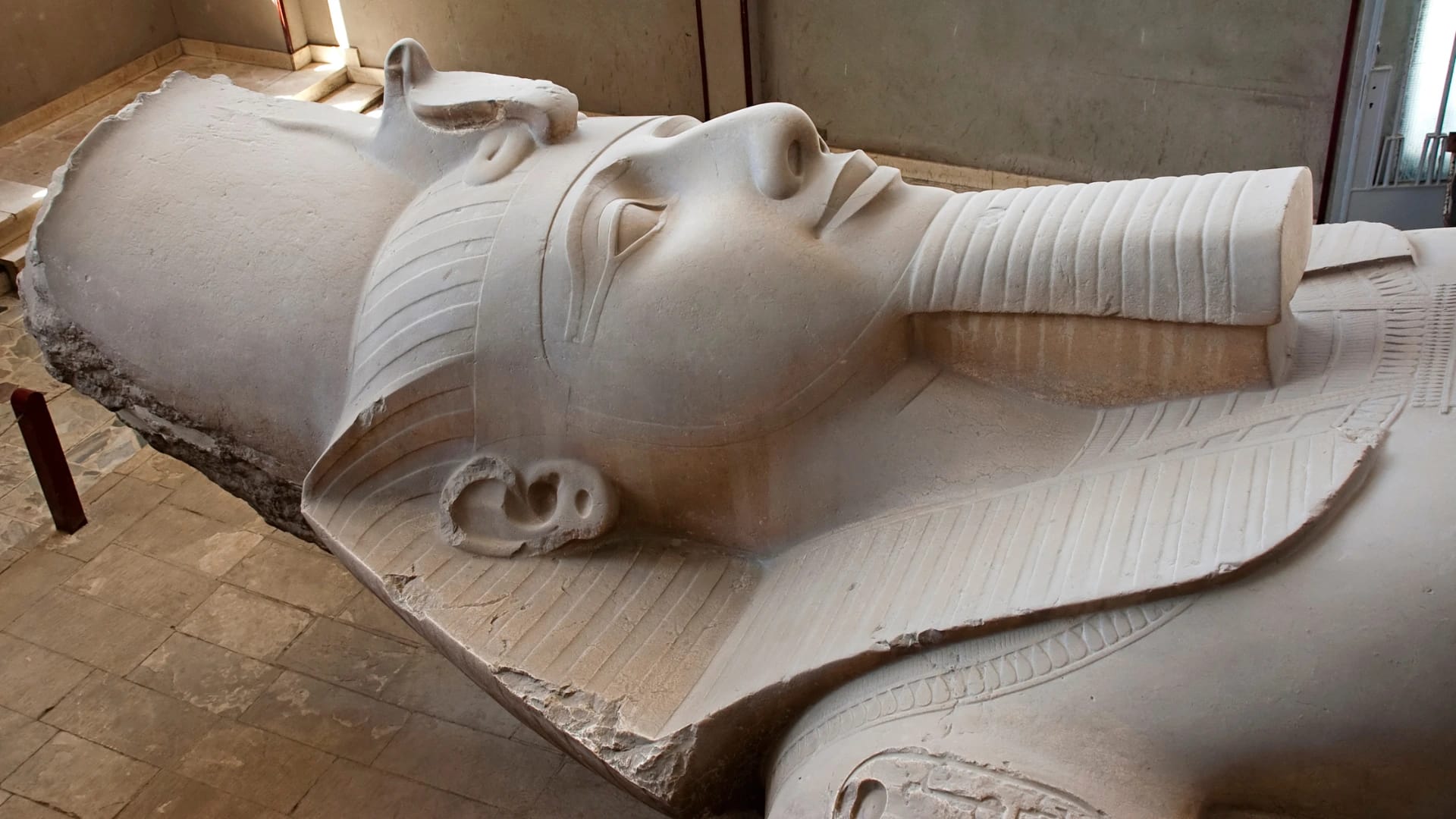
The museum’s centerpiece is a colossal limestone statue of Ramesses II, originally standing approximately 13 meters tall and now resting horizontally in a purpose-built shelter because its base and feet are lost. Despite lying on its back, the statue displays the extraordinary quality of its carved surface — the face is one of the finest royal portrait sculptures surviving from the 19th Dynasty, with smooth, idealized features and a serene expression that has made it one of the most frequently reproduced images of Ramesses II. A second, smaller alabaster sphinx of similar age stands in the garden.
The surrounding garden also contains architectural fragments, column bases, statue pedestals, and carved blocks from Memphis’s ancient temples, giving a sense of the scale of what once stood here even though little survives above a foundation level.
Memphis was founded at the apex of the Nile Delta as the strategic point at which the narrow Upper Egyptian Nile valley opens into the broad Lower Egyptian floodplain — a position of supreme economic and logistical importance. The city’s ancient Egyptian name, Ineb-hedj (‘White Walls’), referred to its fortified palace, and the name ‘Memphis’ used by the Greeks is derived from the Egyptian name of the pyramid complex of Pepi I at Saqqara (Men-nefer).
Memphis remained one of Egypt’s most important cities throughout antiquity, even after Thebes rose to prominence during the New Kingdom. It was a major administrative center during the Late Period and served as the winter capital of the Ptolemies. Alexander the Great was crowned pharaoh at Memphis in 332 BCE, and the city continued to be inhabited into the early Islamic period.
The systematic destruction of Memphis began in the medieval Islamic period, when its limestone monuments were quarried for building material for Cairo and other cities. By the 19th century, essentially nothing of the ancient city remained above ground. The statue of Ramesses II visible in the museum today was discovered partially buried in 1820 and excavated by local workmen; it was intended to be transported to the British Museum but the project proved technically unfeasible, and it was left in place.
A 13-meter royal statue lying horizontal in a purpose-built shelter — the face is considered one of the finest royal portrait sculptures surviving from the 19th Dynasty.
An approximately 80-tonne sphinx carved from a single block of alabaster, standing in the open garden — one of the largest alabaster sculptures from ancient Egypt.
Architectural elements, column bases, and carved blocks from Memphis's ancient temples arranged in the open-air garden, giving a sense of the city's former monumental scale.

See what our happy travelers say about us
