





 Day Tour
Testimonials
Our Clients Reviews
See what our happy travelers say about us


The Citadel of Saladin is a medieval fortified complex on a spur of the Muqattam Hills overlooking central Cairo, built by Saladin (Salah al-Din al-Ayyubi) beginning in 1176 CE and continuously expanded by subsequent Mamluk and Ottoman rulers for four centuries. Functioning as the seat of Egyptian government from the 13th century until the 19th century — when Muhammad Ali Pasha moved the administrative center to Abdin Palace — the Citadel remained the political heart of Cairo for over 700 years. Today it is one of the most comprehensive medieval Islamic military complexes open to visitors anywhere in the Middle East.
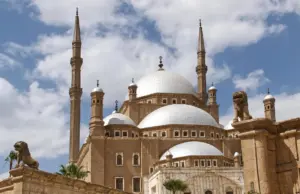
The Citadel’s most visible landmark is the Mosque of Muhammad Ali — the ‘Alabaster Mosque’ — whose twin Ottoman-style minarets rise 82 meters above the fortification walls and dominate Cairo’s skyline. Built between 1830 and 1848, the mosque occupies the highest point within the complex and contains Muhammad Ali’s tomb. The Citadel also contains the older Mosque of al-Nasir Muhammad (1318–1335 CE), the finest Mamluk mosque in the complex and the only one with original Mamluk decorative work surviving; the National Military Museum in a restored 19th-century palace; the Police Museum; the Carriage Museum; and multiple towers and wall sections from the original Ayyubid fortification.
The Citadel’s elevated position gives some of the most comprehensive city views available in Cairo — from the pyramids on the western horizon to the minarets of the medieval city below, to the desert escarpment of the Muqattam Hills to the east.
Salah al-Din al-Ayyubi (Saladin) founded the Citadel in 1176 CE as part of a comprehensive program of fortifying Cairo following his takeover of Egypt from the Fatimid dynasty in 1171 CE. Saladin’s military engineer al-Qadi al-Fadil designed the fortifications using quarried stone from the small pyramids at Giza — the casing stones stripped from the lesser pyramids are documented as building material for the Citadel walls, explaining the absence of casing stone from those monuments today.
The Citadel was the site of the Mamluk Massacre of 1811, one of the most dramatic political events in modern Egyptian history: Muhammad Ali Pasha invited the Mamluk leaders to a celebration at the Citadel, then had them ambushed and killed in the narrow gate passage known as the Bab al-Azab as they attempted to leave. The massacre eliminated the Mamluk military elite and secured Muhammad Ali’s undisputed control over Egypt.
Saladin’s original fortification included two distinct enclosures — the Northern Enclosure (the public administrative zone) and the Southern Enclosure (the private royal residence) — separated by a wall that no longer survives. The Northern Enclosure, with its mosques, military installations, and administrative buildings, is the area open to visitors today.
The dominant alabaster-clad mosque with twin 82-meter minarets and the tomb of Egypt's modernizing founder — the most visible building in Cairo's skyline, its courtyard offering panoramic city views.
The oldest mosque in the Citadel (1318–1335 CE) with Mamluk decorative tiles, Gothic-influenced columns from the Levant, and original carved stone work — more historically authentic than the Muhammad Ali Mosque.
Housed in a restored 19th-century palace, displaying Egyptian military history from the pharaonic period through modern times — with particular emphasis on the 1973 Yom Kippur War.
Original 12th-century stone walls and towers built by Saladin, including the Burj al-Muqattam tower — the oldest surviving elements of the complex and the foundation of 700 years of Egyptian political authority.
From the Citadel's ramparts and mosque courtyards, comprehensive views of central Cairo — from the Giza pyramids in the west to the medieval mosque minarets below and the Muqattam escarpment to the east.
These packages visit this site as part of the itinerary.


Start From


Start From


Start From

See what our happy travelers say about us



