




 Attraction
 Attraction
 Attraction
 Attraction
 Attraction
 Attraction
Testimonials
Our Clients Reviews
See what our happy travelers say about us
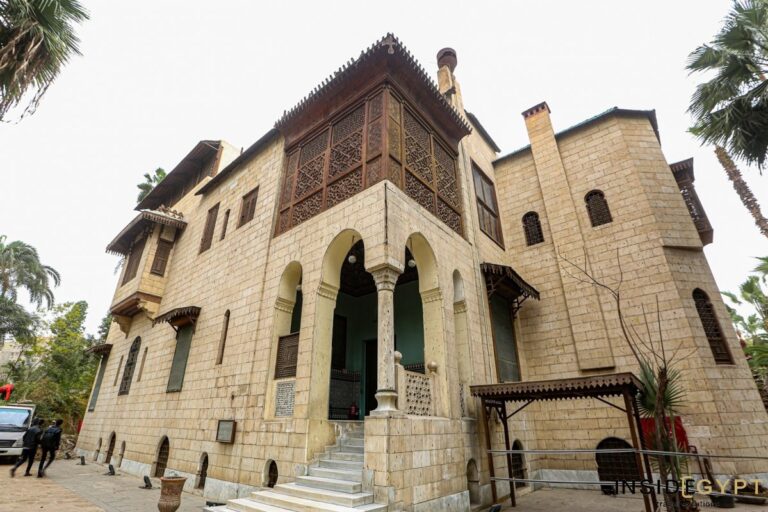
The Manial Palace Museum occupies an extraordinary complex on Rhoda Island in the Nile, built between 1899 and 1929 by Prince Mohamed Ali Tewfik (1875–1955), uncle of the last Egyptian king Farouk. The palace is one of the most architecturally eclectic buildings in Egypt, blending Ottoman, Moorish, Persian, Syrian, and Rococo decorative traditions in a series of interconnected pavilions, gardens, and reception halls that reflect the prince’s extensive personal collection of Islamic art, decorative objects, royal hunting trophies, and historic memorabilia.
The complex consists of five main buildings: the Residence (the prince’s private apartments), the Reception Palace, the Hunting Museum, the Private Mosque, and the Clock Tower Pavilion. Each building is decorated in a distinct style — the mosque interior is tiled in Persian-influenced faience; the reception halls feature Damascene carved wood paneling and mother-of-pearl inlay; the private apartments have French Rococo wallpapers and gilded furniture alongside Moroccan tilework. The architectural and decorative eclecticism is deliberate and personal, reflecting the prince’s lifetime of collecting across different cultures.
The surrounding gardens — approximately 15 acres of Nile island landscape — contain rare trees, a lily pond, and a hunting reserve that adds a green and tranquil dimension to the visit.
Prince Mohamed Ali Tewfik was the son of Khedive Tewfik and spent much of his long life as a collector and patron of arts while formally serving as an Egyptian royal. Unlike his nephew King Farouk, Mohamed Ali was known for his scholarly interests, his Islamic art expertise, and his personal piety. He designed and built the Manial Palace complex over 30 years, beginning in 1899 and making additions and modifications through the 1920s.
The prince died in 1955 without direct heirs, and the palace and its contents were inherited by King Farouk and subsequently nationalized following the 1952 Revolution. The Egyptian government opened the complex as a museum in 1963, preserving the rooms in essentially their original state with the prince’s collections in place.
The Hunting Museum component of the complex is particularly unusual — it displays hundreds of taxidermied animals collected by the prince and members of the Egyptian royal family during hunting expeditions across Africa, Asia, and Europe. The collection is both a record of early 20th-century aristocratic hunting culture and an inadvertent natural history archive.
The main formal reception building with Damascene carved wood paneling, mother-of-pearl inlay furniture, and painted ceilings representing the highest quality Islamic decorative craftsmanship of the early 20th century.
A personal mosque decorated with Persian-influenced faience tilework in blue, green, and white — architecturally unlike any mosque in Cairo and the most visually distinctive element of the complex.
The prince's private rooms combining French Rococo wallpapers, Moroccan tilework, Ottoman furniture, and Persian carpets in the personal eclectic style that defines the entire complex.
Fifteen acres of Nile island gardens with rare trees, a lily pond, and a hunting reserve — among the few large historic gardens accessible to the public in central Cairo.
Hundreds of taxidermied African and Asian animals collected during royal hunting expeditions — an unusual cultural artifact of early 20th-century aristocratic Egypt.
Packages travelling to Cairo, where Manial Palace Museum is located.



Start From

See what our happy travelers say about us



