

The Bent Pyramid
The Bent Pyramid of Dahshur is one of Egypt’s most intriguing pyramids, showcasing an experimental phase in pyramid construction. Built during the reign of Pharaoh Sneferu in the 4th Dynasty (circa 2600 BCE), this pyramid stands out due to its distinctive shape, with a noticeable change in its slope angle partway up. Unlike the later smooth-sided pyramids, the Bent Pyramid reveals an essential transition in architectural techniques, providing valuable insight into the development of Egypt’s iconic structures.

History of The Bent Pyramid
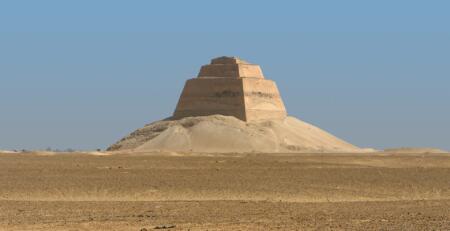
Pharaoh Sneferu, the father of Khufu (who built the Great Pyramid of Giza), played a crucial role in the evolution of pyramid construction. Before constructing the Bent Pyramid, Sneferu had begun work on the Meidum Pyramid, which later collapsed, likely due to structural flaws. The Bent Pyramid represents another attempt at creating a smooth-sided pyramid, but structural concerns forced a sudden modification in design. Following this, Sneferu ordered the construction of the Red Pyramid, Egypt’s first successful true pyramid, located nearby in Dahshur.
Who Build The Bent Pyramid?
Pharaoh Sneferu, the first ruler of the 4th Dynasty (circa 2600 BCE), commissioned the Bent Pyramid as part of his ambitious pyramid-building projects. Sneferu is considered one of Egypt’s greatest pyramid builders, responsible for multiple pyramid constructions, including the Meidum Pyramid, the Bent Pyramid, and the Red Pyramid. His architects and laborers experimented with different designs in their quest to create the perfect smooth-sided pyramid. The Bent Pyramid, with its sudden change in angle, represents a critical learning stage in this process, ultimately leading to the construction of the first true pyramid at Dahshur—the Red Pyramid.
Why Is It Called the Bent Pyramid?
The pyramid’s unusual name stems from its distinct change in slope. The lower portion of the pyramid rises at a steep 54-degree angle, but midway through construction, the angle was reduced to 43 degrees. This adjustment gave the pyramid its unique “bent” appearance. Scholars believe this alteration was made to prevent structural collapse, as the steep angle may have made the original design unstable.
The Architecture of Bent Pyramid
The Bent Pyramid stands at 101 meters (331 feet) in height, with a base length of 188 meters (617 feet) on each side. Despite its irregular shape, it remains one of the best-preserved pyramids from the Old Kingdom, retaining much of its original smooth Tura limestone casing—a rarity among Egyptian pyramids.
Unique Design and Construction
- The pyramid’s change in slope midway through construction is a rare feature among Egyptian pyramids.
- It has two entrances—one on the north face and another on the west—unlike most pyramids, which typically have only a single entrance.
- The inner chambers are arranged in a complex layout, with corbelled ceilings designed to support the immense weight of the structure.
Interior Chambers
Visitors who enter the Bent Pyramid can explore its intricate passageways and chambers. Inside, there are two separate chamber systems connected by narrow corridors:
- Northern Chamber – Located beneath the pyramid’s central core, featuring a high corbelled ceiling.
- Western Chamber – Accessed via the second entrance, containing a unique wooden scaffolding structure used by ancient builders.
The Satellite Pyramid
Adjacent to the Bent Pyramid lies a satellite pyramid, which was likely built for ritual purposes or as a symbolic burial site for Pharaoh Sneferu’s ka (spirit). This smaller structure, located to the south of the main pyramid, follows a similar construction style, though on a much smaller scale. Unlike other subsidiary pyramids of later periods, the satellite pyramid at the Bent Pyramid still retains some of its original smooth casing stones, offering valuable insight into how these monuments originally appeared. The presence of this secondary pyramid emphasizes the evolving architectural and religious concepts of the Old Kingdom.
The Bent Pyramid Temple
Located to the east of the Bent Pyramid is a mortuary temple that was constructed as part of the pyramid complex. Though smaller in scale than later temples, it holds significant historical value. The temple features an offering hall, where rituals and ceremonies were conducted to honor Pharaoh Sneferu. Archaeological excavations have revealed remnants of altars, carved reliefs, and offering tables, indicating that it was an essential site for religious practices. This temple serves as an early example of pyramid temple design, which was further developed in later periods, such as the grand mortuary temples of the Giza pyramids.
Facts about the Bent Pyramid
- It is one of the best-preserved pyramids, retaining much of its original outer casing.
- The pyramid’s two entrances make it an architectural anomaly.
- Pharaoh Sneferu built more pyramids than any other pharaoh, perfecting the art of pyramid construction.
- The change in slope likely prevented a structural collapse, influencing later pyramid designs.
- Unlike other pyramids, the Bent Pyramid does not have extensive inscriptions or decorative reliefs inside.
- It is believed that the Bent Pyramid was originally intended to be the first smooth-sided pyramid, but design flaws led to its unique shape.
- The pyramid’s interior is among the most accessible of all Egyptian pyramids, allowing visitors a rare opportunity to explore its chambers.
- The Bent Pyramid was likely abandoned as a royal burial site due to structural concerns, leading Sneferu to build the Red Pyramid.
- The Bent Pyramid’s original polished limestone casing gives us a glimpse of how pyramids originally appeared in ancient times.
- Some archaeologists believe that the pyramid’s distinct shape may have had symbolic significance, possibly representing the merging of two different cosmic forces or beliefs in ancient Egyptian religion.
Request a Call
Our latest Posts





At Top Class Egypt Travel, we specialize in curating extraordinary travel experiences that go beyond the ordinary. From the awe-inspiring pyramids of Giza to the vibrant bazaars of Cairo, our itineraries are crafted to immerse you in the rich tapestry of Egyptian history, culture, and natural beauty.





Leave a Reply