
Testimonials
Our Clients Reviews
See what our happy travelers say about us
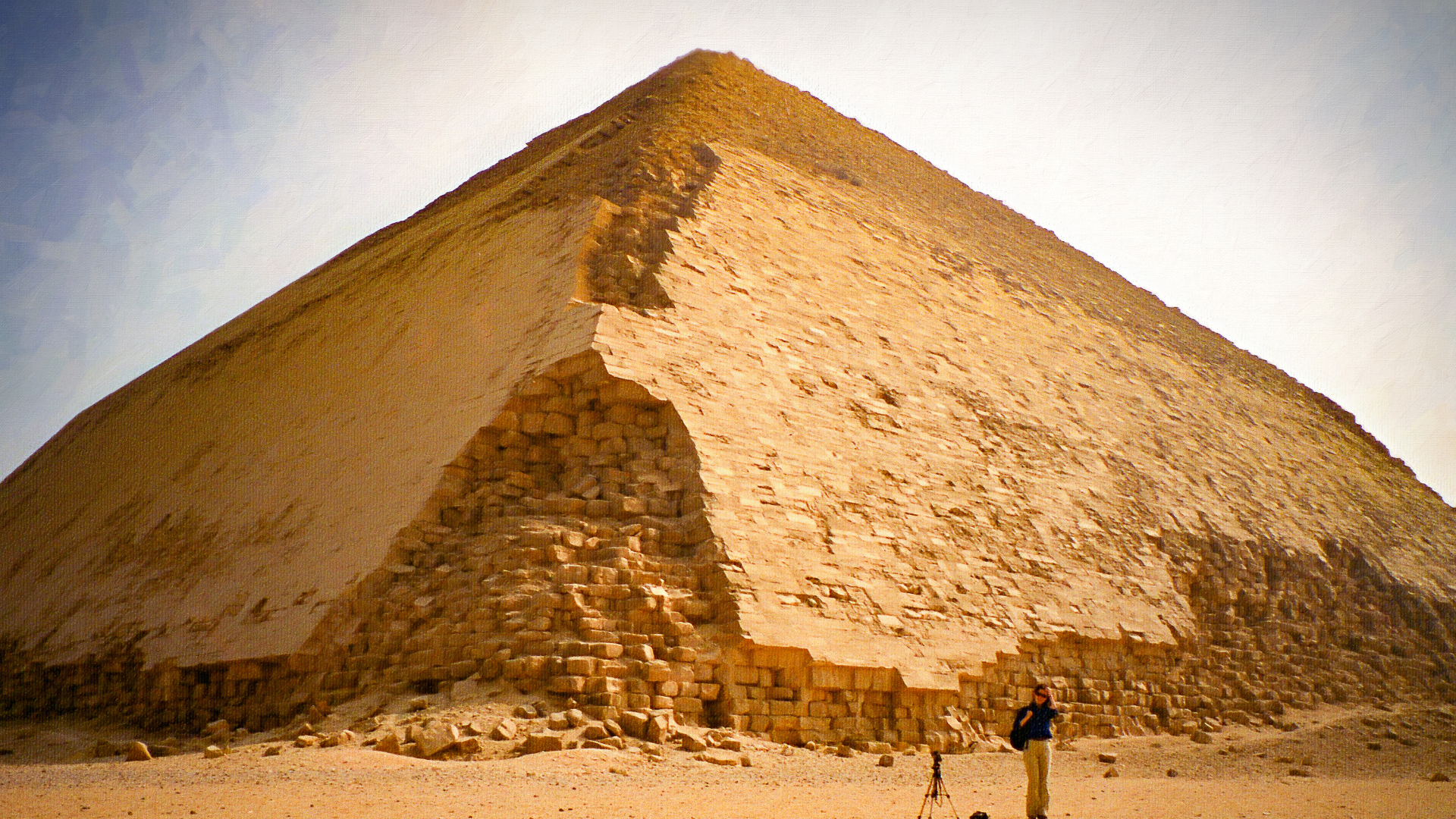
Located approximately 40 kilometers south of Cairo, the Dahshur Necropolis is one of Egypt’s most significant yet tranquil archaeological sites. While the Giza Plateau draws the largest crowds, Dahshur offers a more intimate and profound encounter with the Old Kingdom’s architectural genius. It was here that King Sneferu (father of Khufu) transitioned from the "step" design to the first successful smooth-sided pyramids, forever changing the skyline of human history.
As a UNESCO World Heritage site, Dahshur remains remarkably peaceful, allowing travelers to explore these massive monuments without the distractions of modern urban sprawl.
The Bent Pyramid is perhaps the most intriguing structure in Egypt, famous for the sudden change in its angle of inclination.
The Experiment: Halfway through construction, the builders realized the 54-degree angle was too steep to remain stable. They adjusted the upper half to 43 degrees, creating its distinctive "bent" appearance.
Original Casing: This monument is exceptional because it retains much of its original, smooth limestone outer casing—the best-preserved of any pyramid in Egypt—giving you a true sense of how these structures looked 4,500 years ago.
The Thrill of Discovery: Visitors can now enter the Bent Pyramid, navigating its narrow, adventurous corridors to reach the vaulted burial chambers deep within.
After the "lesson" of the Bent Pyramid, Sneferu’s architects achieved perfection with the Red Pyramid. It is the third-largest pyramid in Egypt and the world’s first successful smooth-sided pyramid.
The Red Hue: It takes its name from the reddish rusty tint of the local limestone blocks used for its core, which become particularly vibrant during the sunset hours.
The Burial Chamber: Climbing into the heart of the Red Pyramid is a highlight for many. The descent leads to three magnificent corbelled (stepped) ceilings that are marvels of ancient engineering, designed to support the immense weight of the stone above.
In addition to Sneferu’s giants, the Dahshur landscape is dotted with the remains of Middle Kingdom monuments.
The Black Pyramid: Built by Amenemhat III [or similar], this mud-brick structure has largely eroded over time, leaving behind a dark, jagged core that looks like a natural mountain rising from the desert.
Royal Jewelry: Dahshur was also the site where incredible Middle Kingdom treasures were discovered in the tombs of royal princesses, many of which are now showcased in the Egyptian Museum [or similar].
The "Royal Trilogy" Day: To fully understand the evolution of Egyptian engineering, we recommend a full-day tour starting at the Step Pyramid of Saqqara [or similar], followed by a deep dive into Dahshur, and ending with the Great Pyramids of Giza.
Beat the Crowds: Dahshur is significantly quieter than Giza or Saqqara. It is the perfect place for "top-class" photography and quiet reflection without the pressure of large tour groups.
Physical Preparation: Entering the pyramids involves climbing through low, narrow tunnels. We recommend wearing comfortable athletic shoes and being prepared for a bit of a workout!
Desert Picnic: The vast, open desert around Dahshur is ideal for a private catered lunch. There is nothing quite like dining with a view of the Bent Pyramid silhouetted against the Sahara.
Traveler’s Perspective: To visit Dahshur is to witness the "trial and error" of greatness. It is where the Pharaohs learned to touch the sky, and standing between these two massive sentinels, you feel the raw power of human ambition in its purest form.

See what our happy travelers say about us