




 Attraction
 Attraction
 Attraction
 Attraction
 Attraction
 Attraction
Testimonials
Our Clients Reviews
See what our happy travelers say about us
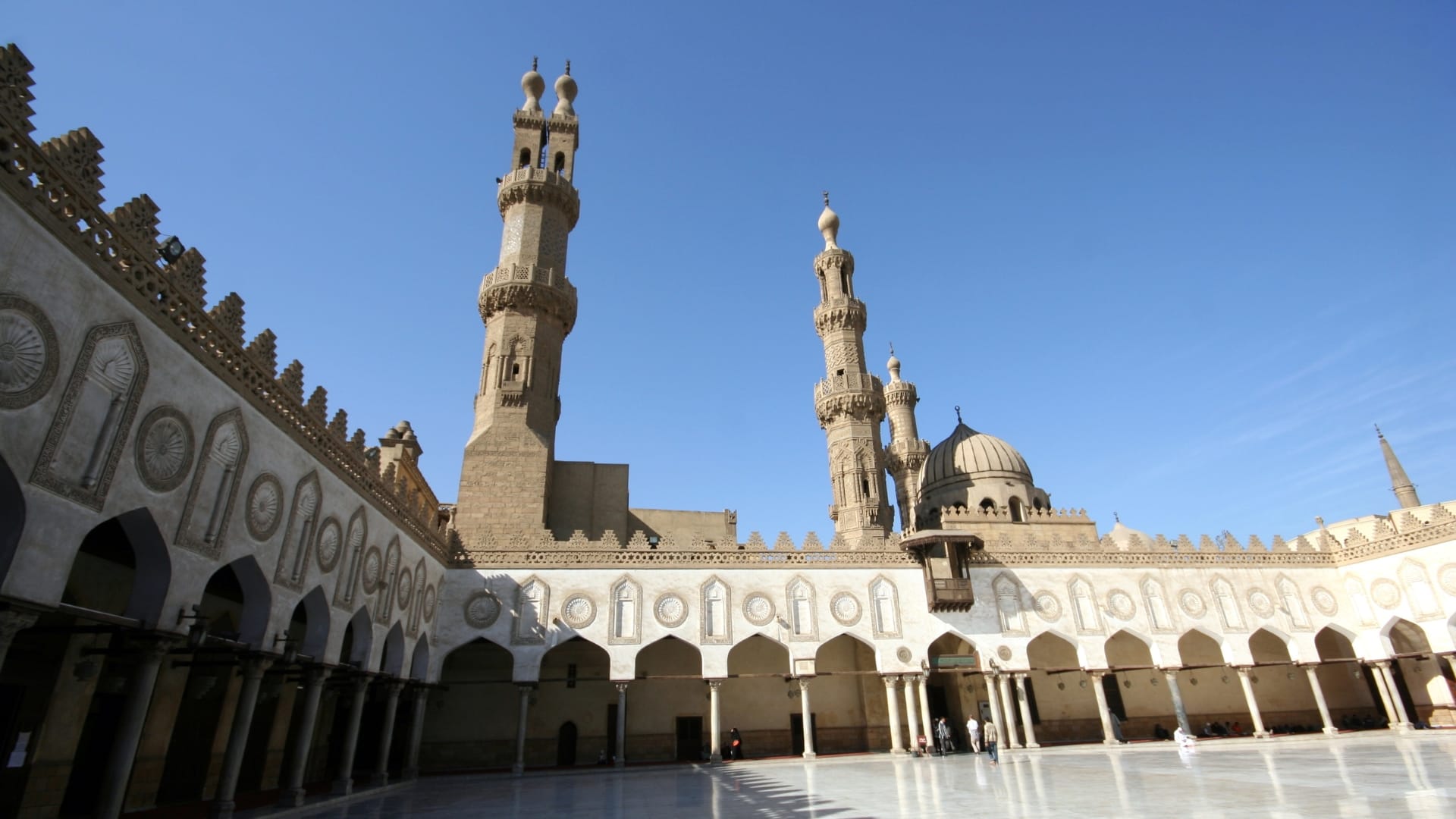

Al-Azhar Mosque in Cairo is the oldest continuously functioning university in the world and the most influential institution in Sunni Islam, founded in 970 CE — just one year after the Fatimid army established Cairo as Egypt’s new capital. For over a thousand years, Al-Azhar has served simultaneously as a mosque, a theological university, and the supreme religious authority of Sunni Islam across the global Muslim community. Today al-Azhar University, of which the mosque forms the historic core, teaches over 400,000 students in faculties across Egypt.
The mosque’s architecture is a visual history of Islamic Cairo: the original Fatimid structure (970 CE) is overlaid by Mamluk additions, Ayyubid modifications, and Ottoman expansions, each dynasty leaving its architectural mark. The main prayer hall, entered through a succession of courts, contains a forest of columns from different periods and a series of mihrabs reflecting the stylistic evolution of Islamic decoration over ten centuries. The exterior is punctuated by five minarets of varying heights and designs added across different periods.
For visitors, Al-Azhar offers a rare opportunity to experience a mosque that functions simultaneously as an ancient monument, an active center of daily prayer for thousands of worshippers, and the institutional home of the highest authority in Sunni Islamic law. The courtyard and prayer hall are open to non-Muslim visitors outside prayer times, and the experience of walking through the colonnaded iwans alongside students, scholars, and ordinary worshippers gives a sense of al-Azhar’s living continuity that no museum can replicate.
Al-Azhar was founded in 970 CE by the Fatimid general Jawhar al-Siqilli as the congregational mosque of the new Fatimid capital. The Fatimids were Ismaili Shia Muslims, and al-Azhar’s original function was as a center of Ismaili teaching — only after Saladin’s Ayyubid takeover of Egypt in 1171 CE was it reoriented toward Sunni Shafi’i teaching, which it has maintained ever since.
During the Mamluk period (1250–1517 CE) al-Azhar became the pre-eminent center of Islamic scholarship in the world, attracting scholars and students from Morocco to Central Asia. It developed the system of stipended student-scholars (riwaq system) organized by geographic or ethnic origin that allowed Muslims from across the Islamic world to study in Cairo under Mamluk patronage. The institution’s prestige survived the Ottoman conquest of 1517 and continued to grow through the 18th and 19th centuries.
Al-Azhar’s modern function as the supreme Sunni religious authority was formalized during the reign of Muhammad Ali (1805–1848) when it was integrated into the Egyptian state. Today the Grand Sheikh of al-Azhar, appointed by the Egyptian president, is the most authoritative single voice in Sunni Islamic law and theology worldwide. The institution issues fatwas (religious rulings) on contemporary questions, trains imams for mosques across the Muslim world, and operates schools and universities in Egypt and internationally.
A vast hypostyle hall with columns from different centuries, multiple mihrabs reflecting evolving Islamic decorative styles, and an atmosphere of active scholarship and worship continuous since 970 CE.
Five minarets of different heights, forms, and periods punctuate the exterior — a visual record of dynastic patronage from the Mamluks through the Ottomans spanning five centuries.
The earliest sections of the mosque dating to 970 CE are visible in the prayer hall's innermost columns and structural elements — the oldest surviving element of Cairo's founding.
The courtyards of al-Azhar are regularly occupied by students reading, memorizing Quran, and debating — providing a living glimpse of the scholarly culture that has functioned here for over 1,000 years.
Packages travelling to Cairo, where Al-Azhar Mosque is located.



Start From

See what our happy travelers say about us



