
 Nile Cruise
 Cruise Ship
Testimonials
Our Clients Reviews
See what our happy travelers say about us

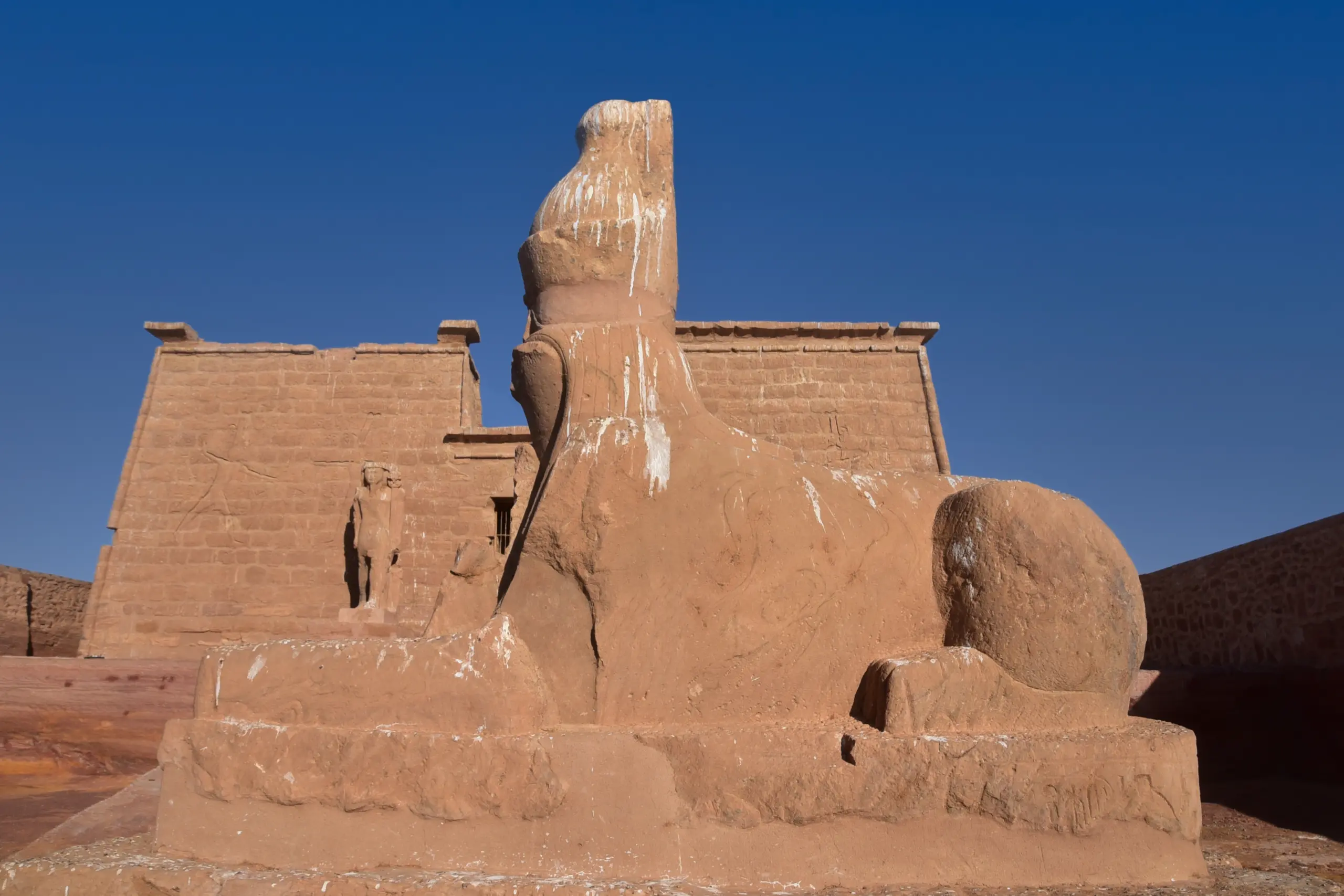
Wadi El-Sebua — ‘The Valley of the Lions’ in Arabic — is an archaeological zone on the west bank of Lake Nasser containing three relocated Nubian temples. The site takes its name from the avenue of lion-headed and human-headed sphinxes leading to the forecourt of the main Temple of Ramesses II, the zone’s centerpiece. The two other temples — the Temple of Dakka (Ptolemaic and Roman) and the Temple of Maharraqa (early Roman) — are nearby and form part of the same visitor circuit.
The three temples were originally located at separate sites along the Nile and were relocated to this consolidated area during the UNESCO Nubian salvage campaign of the 1960s. Today the site is accessible primarily by Lake Nasser cruise. The zone gives visitors a concentrated experience of the diversity of Nubian monumental architecture across different periods — from the New Kingdom grandeur of Ramesses II’s sphinx avenue to the compact Ptolemaic sanctuary of Dakka to the unfinished Roman kiosk at Maharraqa — all within walking distance of each other in a remote desert lakeside setting.
The original Temple of Wadi es-Sebua was built by Ramesses II in the 19th Dynasty (c. 1265 BCE) on the west bank of the Nile, approximately 140 km south of Aswan. The sphinxes lining its processional avenue — alternating lion-headed and human-headed — gave the site its Arabic name.
The Temple of Dakka was begun by the Nubian Meroitic king Arkamani in the early 3rd century BCE and expanded significantly by Ptolemy IV and later Roman emperors, making it a rare monument with both Nubian and Ptolemaic royal dedications. The Temple of Maharraqa represents a small Roman-era sanctuary where construction was apparently abandoned in the 1st century CE.
All three temples were relocated to New Wadi El-Sebua between 1961 and 1966 as part of the UNESCO salvage effort.
An avenue of alternating lion-headed and human-headed sphinxes leads to the temple forecourt — the most complete Nubian sphinx processional way surviving in situ.
The inner sanctuary of the Ramesses II temple is partially rock-cut and contains painted reliefs with original polychrome pigments partially preserved.
A Ptolemaic temple with joint Meroitic and Egyptian royal dedications — a rare architectural record of the political intersection between the Nubian Meroitic kingdom and Ptolemaic Egypt.
The site sits at the edge of Lake Nasser surrounded by desert escarpment with no modern infrastructure visible — an unusually isolated landscape for a major ancient monument.

See what our happy travelers say about us



