
Testimonials
Our Clients Reviews
See what our happy travelers say about us
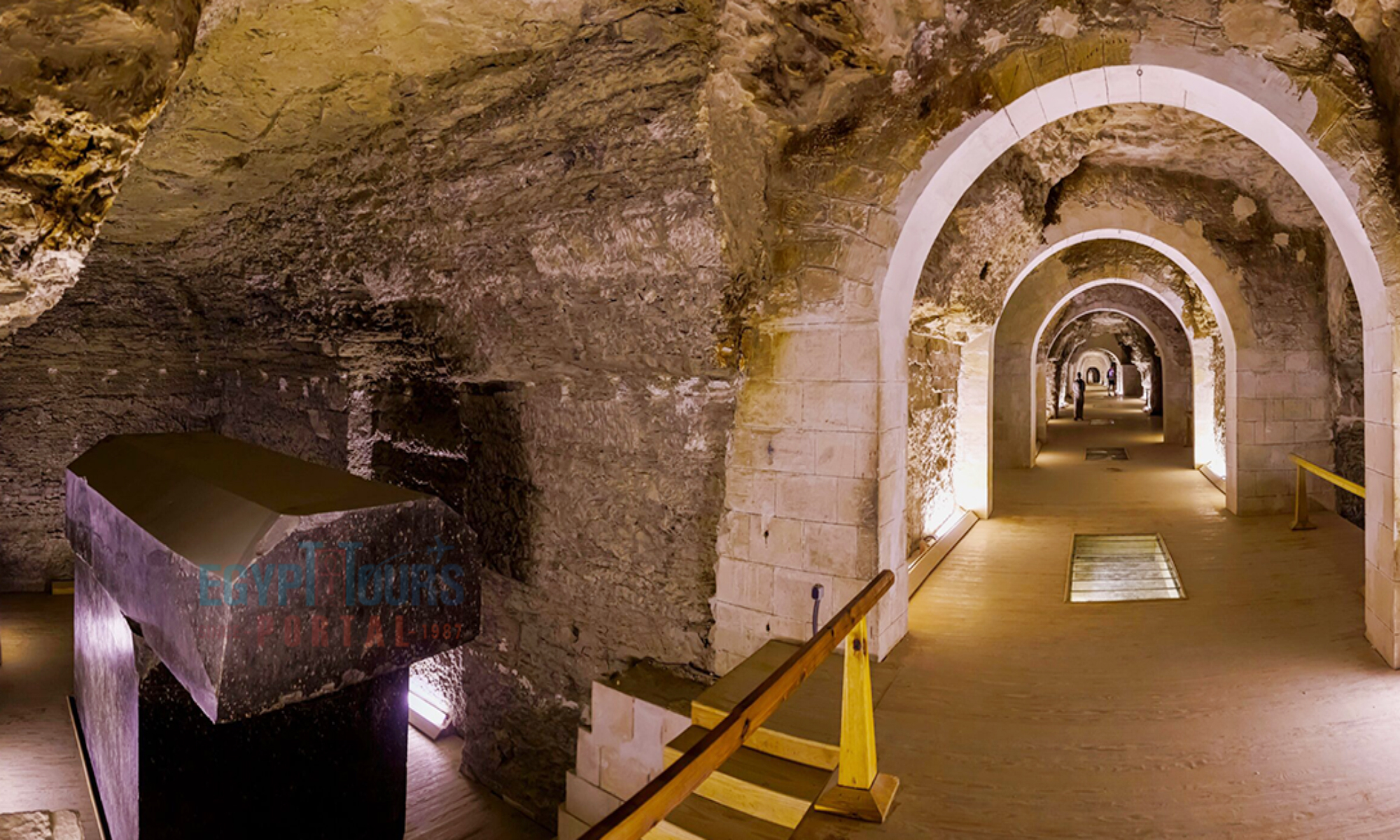
The Serapeum of Saqqara is one of the most mysterious and awe-inspiring underground monuments in Egypt. This vast subterranean complex, discovered by Auguste Mariette in 1850, served as the burial place of the sacred Apis bulls — believed to be manifestations of the god Ptah — from the time of Ramesses II through the Ptolemaic period.
The main gallery stretches over 300 meters underground and contains 24 massive granite and basalt sarcophagi, each weighing between 60 and 80 tons. The precision with which these enormous sarcophagi were carved and placed in narrow underground chambers continues to baffle engineers and archaeologists. How the ancient Egyptians transported and installed these massive stone containers in such confined spaces remains one of Egypt's greatest unsolved mysteries.
Walking through the dimly lit tunnels of the Serapeum is a profoundly atmospheric experience. The sheer scale of the sarcophagi, combined with the mysterious underground setting, makes this one of the most unique archaeological sites in all of Egypt. The site is included in the Saqqara complex ticket and is easily combined with visits to the Step Pyramid and other Saqqara monuments.

See what our happy travelers say about us
Posted onVerified Top Class Egypt travel is the perfect name of this company!! I just arrived home 3 days ago from my second trip with Top Class Egypt Travel. Last summer it was 4 weeks and this summer it was 5 weeks and what an experience! I was in contact with Mahmoud and Amr in both of my trips, I know Emad was also very active behind the scenes in the planning, and everything was so easy and professional. I said what I wanted and they gave me so many options to choose from and came with amazing suggestions for me too. My trip wasn’t just about the temples, I wanted to experience the country and it’s people spiritually too so they knew exactly what I wanted and needed to see and explore. From Cairo throughout all Egypt and then back, I got to see and experience the most amazing places I’ve ever imagined and I know I will never be the same again 🙏🏻 To experience being in the desert in El Gouna and watch the sunset and see the stars in the sky and to sail and snorkel in the Red Sea, exploring the wonders of Mother Earth is something I will always treasure in my heart. Well, every experience I had in my journey is something precious to me. Even when I got food poisoning (absolutely my fault, I knew I wasn’t supposed to eat vegetables but forgot about it 🙈) on day two and Amr had to take me to the hospital! This sickness affected my hole trip and I had to change my schedule a lot because of that. Amr, Emad and Mahmoud were all in to make my experience the best and very patiently helped me make different memories than we had planned before and I can’t be happier with the solutions they came up with! 🥰 They had to put in a lot of work to change previous bookings and make new ones for me and it was never any problem for them. My wellness and experience was number one for them 🙏🏻 I was so supported and guided and not for a second felt I alone even though I was travelling alone and sick 🥰 I was so taken care of and felt so secure. My previous trip went all very smoothly and was perfect too (no sickness in that trip though 🤭) Every guide, driver, transportation, hotel, Nile cruise and the office was superb. To Amr, Emad and Mahmoud, I send all my best wishes and thank you’s to you with my highest recommendations for your wonderful company 🙏🏻 It matters so much to travel with a company that has your interests, experiences and wellbeing at heart and you never know what can happen in your journeys. The people behind Top Class Egypt Travel is that company! They are a part of my family now and I can’t wait to schedule my next adventure with them and meet my Egyptian family again soon! ❤️Posted onVerified Couldn’t been a better tour I went on a two day trip to see the pyramids and all of the attractions around them, a mosque, and two egyptian museums and our tour guide Mohammad, or Super-Moe, was a great guide and made this tour amazing. I highly recommend Top Class Egypt Travel for anyone traveling to EgyptPosted onVerified What an Amazing Experience We had a most amazing two-week trip to Egypt! We were a family of 9. Amr Saladin of Top Class with the help of Mahmoud Nour tailored an unforgettable experience for us. We had very knowledgeable guides everywhere we went. Thank you to Ahmed Ali who was our guide for two days in Cairo. Mohammed Hasan, our private Egyptologist on the 4 night Nile Cruise was very knowledgeable and patient. Thank you Top Class! You are a Top Act and we highly recommend you!Posted onVerified Thank you Top Class Amr Saladin of Top Class with the help of Mahmoud Nour designed an amazing two week trip for our family of 9! We had wonderful guides in each place we visited. Ahmed Ali, our Egyptologist in Cairo is very knowledgeable and always cheerful. Special thanks to Mohammed Hasan, who was our Egyptologist down the Nile River cruise. He explained everything clearly and patiently! Thank you to Top Class for everything!Posted onVerified Excellent Service Excellent service. We had a fantastic and memorable trip because of Top Class attention to detail. The guides we had were very knowledgeable and attentive.Posted onVerified Memorable Egypt Experience - Beyond Expectation We booked a 15 Days tour of Egypt through Top Class Egypt Travel. We spent 8 days in Cairo and 7 days Nile Cruise from Luxor to Aswan and back covering all the historical sites. Mr. Amr Saladin accommodated our itinerary and made suggestions to make sure that our trip would be comfortable and memorable. .Thank you. On the site seeing trips, our Egyptologist guides Mr. Mohamed Sultan and Mr. Mohamed Hasan made our trip memorable. They were friendly, courteous, knowledgeable and professional. They made all the sites visits memorable with historical explanations. They took good care of us. Thank you. Overall we were very happy with the trip. Beyond expectation.Posted onVerified Spectacular The tour was absolutely amazing, definitely recommend. It was very educational, so many beautiful pictures for memories. Tour guide was very professional.Posted onVerified A Dream trip that came true!! Memories we will cherish foreverver I contacted Mahmoud after watching a trave bloggers video. Mahmoud created an itinerary that INCLUDED every place we wanted to see!!! Including Dendera. .... a site that two other travel companies told us was impossible to include!! Mahmoud arranged the itinerary to best fit my Son's dream, "must see places and best photo spots," all while taking into consideration my 6 year old granddaughter. Top Class Egypt Travels and Mahmoud, were quick to get back to me with any and all questions that I had. They had everything in place and I was assured of the itinerary, accommodations, cruise ship, guides, and transportation before I made a payment. This gave me Peace of mind: that everything was taken care of and if we had any questions we could contact them 24/7. This company really delivers what they promise. They stand by EXCELLENT customer service. The guides: Excellent guides that fit our family. The first guide in Cairo, Mohamed, was friendly, full of knowledge about the pyramids and local culture. It was a rainy day but he arranged our schedule so we avoided the rain!!! He taught us about history, culture,and politics, all in an easy to understand, interesting way. He also took time to take us to the best photo spots AND took great photos of us. We mentioned that our wall charger was missing from our luggage. At the end of the day, he surprised us by stopping back by with a charger! Above and beyond, our first day was amazing! In Luxor, we met up with our guide Hassan Ashor. We spent 6 days with him. He was EXCELLENT. He started out as our guide by the end of 6 days. We considered him as fanily. Hassan talked about history as if it were a story. He even captured our 6 year old attention ! She is still talking about Hassan and mummies! If we mentioned to Hassan that we needed something or wanted to see something, he rearranged our day to fit it in. When Mahmoud told me this was a custom tour, I didn't know we would truly be able to have that much flexibility! Hassan surprised us with a felucca ride and a horse with a carriage ride. Our 6 year old was ecstatic! We stayed out late the last two nights, having dinner and great conversation. The last night, our hearts broke as we said our goodbyes. Cario , before departure, we had Mr. Sultan. He was extremely knowledgeable. We went to the museum. I was worried it would be boring for our 6 year old, but he held her interest and kept us moving. Perfect for seeing the highlights and learning history! Afterwards, we headed to Coptic Cario. Extremely interesting and a great pace that fit my family perfectly. To finish the day, we stopped at the market for shopping, photos, and coffee. We could have talked for hours over coffee. We hated for day to end. Mahamond Sultan was fabulous. I talked to other fanilies that were touring at the same time we were and knew our experience with ALL the guides that Top Class Egypt Travel, provided was exceptional and not the norm of other travel agencies. We definitely had great guides, the perfect flexible itinerary and no waiting in lines at any place. VIP treatment. This is where Top Class Stands out. Excellent guides, customized itineraries and VIP treatment. Perfect for families or couples that wish to escape from large tour groups, to have a personal experience with getting to learn about Egypt. Transportation: Excellent private vans. They were extremely nice and clean. Drivers were experienced safe drivers, spoke English, always on time, kept our belongings safe, had water on hand, and kept the vehicles clean. We were extremely impressed. Domestic flights: The times were picked to take make the most of each day. We had transportation from flights to hotel and hotels to flights. Everything was arranged, and we didn't have to do anything! At no time were we left, not knowing what to do. A representative met us at the airport and took care of ALL paperwork. When one luggage was missing (held up at Heathrow), our representative Mahamond had the driver take us to the mall for clothing and the pharmacy. To top it all off, they tracked our luggage! It arrived safely the next day. Accommodations The hotels were the best of the best. The cruise was on the Mayfair. Absolutely the best cruise ship, excellent food, and exceptional staff. Again, a representative met us, took us to our hotels, and handled AĹL the paperwork. We had the VIP treatment from start to finish. Price: LESS than the other 2 major companies I contacted AND..... Top Class Egypt included MORE, more days, more places, a better ship, and a PRIVATE guide vs. group! I was shocked at the price. Affordable is an understatement. I broke down the price, and no other company could come close to it. Last but not least safety: We have visited many countries. Egypt was one of the places we felt extremely safe. Every Egyptian we met was friendly and kind to us. The culture there is welcoming and warm. If you have any fears, rest assured that Top Class Egypt is there for you 24/7. If we had any questions, they immeasurable responded. Guides and drivers are top notch. There is security everywhere we went and safety was never a concern for us. I can not say enough good things about Top Class Egypt, Mahmoud who planned our itinerary, the guides, the representatives, and the company. What started out as a wish list of places my son hoped to see but didn't think we would be able to,...Mahmoud made it happen!!!! During our trip,at the end of each day, my son would write about what we did... Each day was titled. "The best day of my life." 8 perfect days = perfect Dream vacation! Thank you, Mahmoud, Hassan Ashor, Mahomed, Mr. Sultan and Top Class Egypt Travel, for making this a trip of a lifetime and becoming lifelong friends. We won't be saying goodbye, we will be saying....until we meet again!Posted onVerified Most memorable trip ever!!!! The most precious item of childhood bucket list, Beautiful Egypt tour finally accomplished!!! Thanks to Top Class Egypt tours for making this happen and make our trip so memorable. A big thanks to our Egyptologist guides Mr. Mahmoud Sultan and Mr. Mohammed Hasan who made our time travel to ancient Egypt so exquisite!! Mr. Mahmoud Sultan guided us in Cairo and Alexandria. With him, we visited the ever-wonder Great Pyramids, museums, Coptic Cairo, Mohammed Ali Mosque in Cairo. In Alexandria we visited the Great library and the Citadel. Mr. Mahmoud Sultan is extremely knowledgeable, very caring, very thorough and precise in his description and a very nice company to be with. He can adeptly illustrate the great Egyptian civilization components to any amateur history-enthusiast. Mr. Mohammed Hasan took us in the Nile Cruise starting from Aswan to Luxor including Abu Simbel. Mr. Hasan walked us through the Philae temple, Abu Simbel, Kom Ombo, Edfu, Karnak Temple, Luxor temple and Valley of the Kings, Queens and Artisans in Luxor. Mr. Hasan is extremely eloquent and has an unique ability of storytelling which made us living the moments and experiencing a smooth surpass through the times of Great Pharaohs as well as Greco-Roman era of the ancient Egypt. Mr. Hasan often adds a tinge of humor in his description which makes the whole experience enjoyable. He describes every monuments with multiple perspectives of why, when, where, who and how in a very detailed logical fashion which always maintains the interest. From the arrangement point of view, Top Class Egypt Travel has taken great care of us in the whole trip. Excellent coordination, on time transport from all point A to point B, airport pick-up, hotel transfer, everything was impeccable. There was no waiting for a single thing, a wholesome experience was beautifully planned, gave back a very high value of trusting them. Many thanks to Mr. Amr Salah, the Chief, being all the time accessible through Whatsapp, supporting and accommodating us throughout and supervising to ensure everything goes right. I would highly recommend Top Class Egypt Travel to make the mission for Egypt memorable for the lifetime. Countless regards and compliments to the Egyptologists Mr. Mohammed Hasan and Mr. Mahmoud Sultan!!!Posted onVerified Excellent Seven Day Private Tour Overview We were referred to Top Class Egypt Travel by an Australian friend domiciled in the Middle East who visits Egypt regularly. Her recommendation was gold. Top Class is an extremely professional outfit. It made our visit easy, enjoyable, safe and highly rewarding. I have no hesitation recommending this company and its owners. Itinerary The company will create an itinerary designed specifically for your needs. We are an older couple and contacted the company from Australia by email with our wishlist. We had 7 days available and, from our research, a list of historic sites we wanted to visit in Cairo, Luxor, Aswan and Abu Simbel. We requested that Top Class provide us with domestic air fares, accommodation (except for Cairo where we would make our own arrangements) and a private vehicle with a driver and guide in each location. Our agent came back to us within a couple of days with an itinerary that absolutely met our needs and some additional options. Price Pricing was extremely competitive. We had previously consulted a foreign provider who required a $US400 deposit to create the itinerary and a total price which was three times that offered by Top Class. Service When we we landed in Cairo we were met in the arrivals area by the company's Cairo representative. He had already arranged out entry visas ($25 per person). He fast-tracked us through passport control and immigration and we were ready to collect our baggage within minutes of landing. No queues. Yes! That kind of service was standard for Top Class throughout our trip. We skipped the queue at just about every location we visited and at the end of each day we were advised that if we needed assistance someone would be available to help 24/7. On one ocassion we needed a vehicle and driver to meet a flight. This was provided at short notice without extra cost. Accommodation The hotels which Top Class booked for us in Luxor and Aswan were both 5-star (Steigenberger and Movinpick) and way above the standard of the so-called 5-star hotel we booked for ourselves in Cairo. We favoured the Cairo hotel because of a long standing club membership with the management chain. Unfortunately, we were charged exhorbitant prices for tired and run down rooms with no benefit gained from our previous association. I am confident that if I had left the arrangement of accommodation in Cairo to Top Class we would have paid less for much much better. Drivers and Guides We could not ask for anyone better to show us around. Our drivers were experienced and safe. Their vehicles were well maintained, comfortable and air-conditioned. Our guides were tertiary educated, excellent english speakers, pleasant, helpful and kind. We were fortunate to have the same driver and guide for our visits to Luxor, Aswan and Abu Simbel which contained the bulk of the monuments and temples we wanted to see. Our guide, Mohammed Hasan, has been guiding tourists of all nationalities for 20 years. He is an encyclopedia of ancient Egyption history, politics, religion and art. Thanks to Mohammed we received a deeper understanding of the meaning and significance of what we saw than we would have had we travelled alone. We were particularly pleased that on many ocassions he was able to ensure we visited some of the more popular monuments at times of least or minimal crowding. In Cairo, our guide Abdelselam Donia, was equally accomplished helping us to navigate the chaos of Cairo with relative ease and providing us with insight and understanding of the city and its culture. Safety We arrived in Egypt a fortnight after hostilities had erupted in Gaza, so like everybody else we had safety concerns. The truth is we never at anytime felt unsafe. Our guides and drivers ushered us quickly and easily through police and military road blocks and through the tight security at monuments allowing us to avoid any discomfort or issue. Last word Top Class Egypt Travel is one of the better travel agencies we have dealt with. We found them easy to communicate with, always willing to assist and always available when we needed them.Load more
Fill in your details and we'll confirm within 24 hours
Thank you! We'll get back to you within 24 hours.